
The journey of the Atma continues beyond physical mortality, traversing the multidimensional landscapes of the astral realm. While the gross body disintegrates into the five primordial elements, the subtle body carries lingering desires, devotional merits, and karmic imprints across various cosmic planes until final liberation or cosmic dissolution.
Human life remains one of the most profound mysteries in the cosmos. For countless millennia, seekers and philosophers have contemplated our true purpose on this Earth, our ultimate destination, and the enigmatic threshold of physical death. Does human consciousness cease entirely when breath departs, or does the individual soul embark upon an expansive new pilgrimage? Ancient Vedic scriptures, the Upanishads, and the timeless treatises of Yoga Vasistha provide a singular revelation: the physical body is merely a temporary vessel. When biological existence draws to a close, consciousness sheds its heavy earthly sheath and transitions into the subtle world, where the deeper journey of the Atma unfolds across unseen dimensions.
This unseen astral plane, known in Vedic tradition as the Sukshma Loka, is not a distant, unreachable realm located far away in the stars; rather, it interpenetrates our physical reality and exists both around us and within our deeper awareness. Within this multidimensional matrix, restless entities, earthbound spirits, and purified devotee souls continue their distinct trajectories. Here, the energetic blueprints of sacred temples remain alive, and the grand cyclical drama of universal dissolution prepares its cosmic stages. Exploring these hidden corridors of existence illuminates not only what awaits us after physical death, but also how our current thoughts, desires, and spiritual practices actively construct our future reality.
In this comprehensive exploration, we delve into the core secrets of the subtle realms, tracing the evolution of the Atma from the formation of the subtle vehicle to the highest peaks of Himalayan meditation. We will examine the divergent paths taken by negative and devotional souls, explore the mechanisms of divine astral vehicles, unpack the three grand cosmic dissolutions, and examine the modern perspectives surrounding extraterrestrial influences on human consciousness. This journey invites every sincere seeker to transcend material limitations and understand the eternal nature of the soul.
Read the complete Telugu edition of this article.
Atma and the Architecture of the Subtle Body
The ancient sages revealed that while the gross physical body is composed of all five physical elements—earth, water, fire, air, and space—the subtle body, known as the Sukshma Sharira, is constructed from only the three finer elements: space, air, and fire. This luminous energetic sheath serves as the immediate vehicle and dwelling place of the individual Atma when the physical container expires. Within this subtle vehicle reside the mind, intellect, ego, and the entire reservoir of memories, unfulfilled desires, and karmic tendencies accumulated across lifetimes.
When biological death occurs, the Atma does not instantly dissolve into the formless absolute unless it has achieved complete self-realization. Instead, it remains enclosed within the subtle body, which acts as a bridge between lifetimes. The philosophical concept of the <a href=”https://en.wikipedia.org/wiki/Subtle_body”>subtle body</a> explains why an individual’s distinct personality, emotional leanings, and deep-seated attachments endure beyond the cessation of physical brain activity. Because the subtle body is governed by thoughts and emotional impressions, it gravitates naturally toward environments that correspond to its dominant internal vibrations.
If an individual lived a life anchored in heavy sensory cravings, unresolved attachments, or intense greed, the subtle body remains tethered to the physical Earth plane. For example, when an individual possessed an overpowering craving for intoxicating substances or worldly possessions, the Atma, still encased in those intense desire-patterns, attempts to satisfy these yearnings even without a gross physical instrument. Such earthbound entities often linger near living beings whose vibrational frequencies match their own, seeking vicarious fulfillment through another person’s physical senses and inadvertently generating mental discord in those environments.
RECOMMENDED BOOK
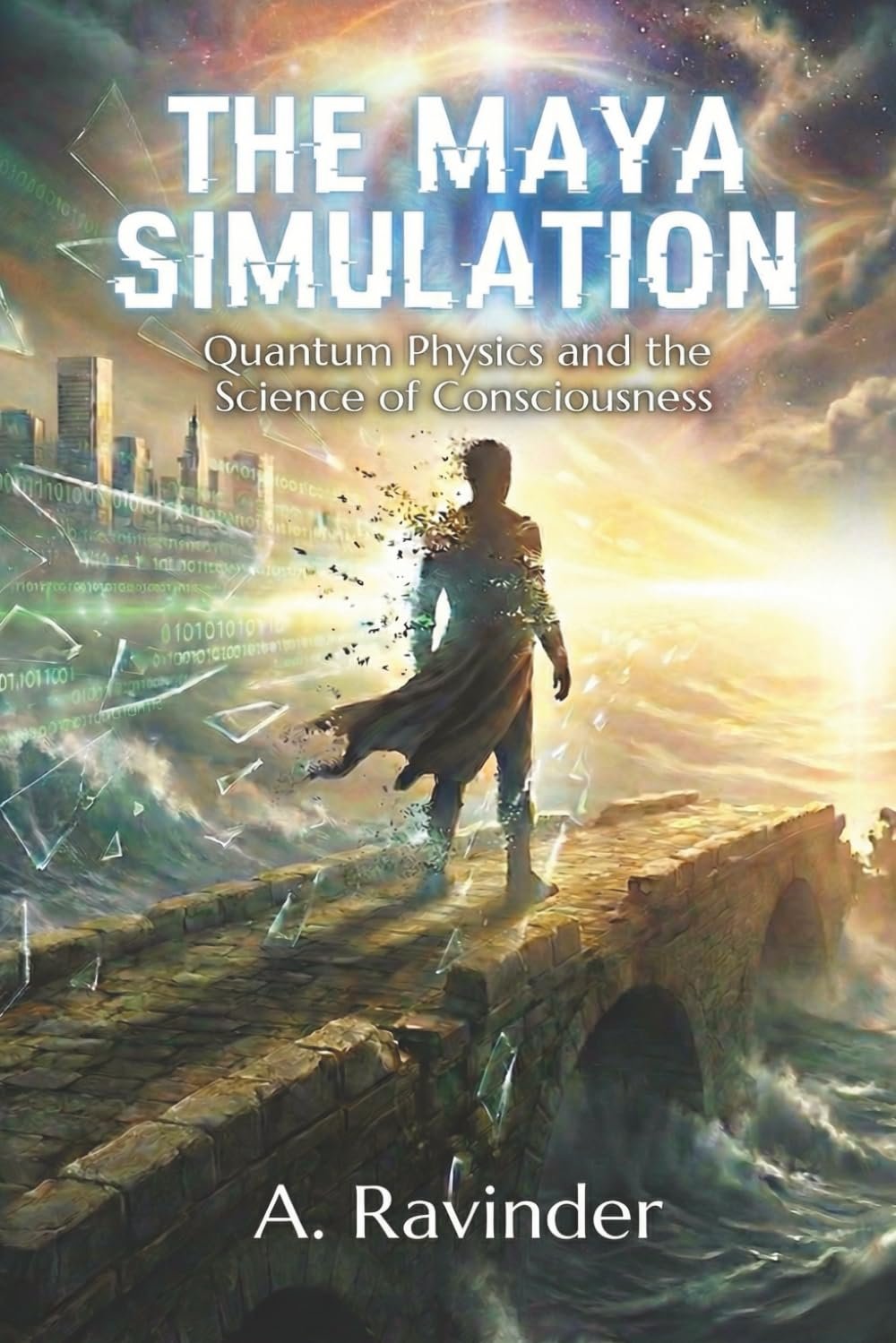
The Maya Simulation: Quantum Physics and the Science of Consciousness
by A. Ravinder
A guide that bridges the ancient wisdom of the Yoga Vasistha with quantum physics and modern consciousness science — for readers ready to question the nature of reality and calm the mind with practical tools like the Zero Voice Technique.
As an Amazon Associate, RamthaMedia can earn from qualifying purchases.
Atma Bound by Desires in the Restless Netherworld
Souls that depart the physical world burdened with intense anger, malice, extreme possessiveness, or abrupt trauma often enter a state of severe restlessness. In traditional Indian folklore and scriptural narratives, these lingering entities are categorized under various designations such as Bhutas, Pretas, Pisachas, and Brahma Rakshasas. Far from being mere mythological monsters, these terms describe distinct psychological and vibrational states of the Atma when it remains trapped within lower astral turbulence due to heavy karmic burdens.
Because these negative astral entities are consumed by unquenchable hunger, possessive longings, and emotional agony, they frequently influence living human beings who are emotionally vulnerable or spiritually unguarded. Their agitated presence can manifest as sudden household disturbances, chaotic atmospheres, and irrational emotional outbursts among individuals residing in afflicted spaces. When such an entity attaches itself to a living person, it can distort that individual’s behavioral patterns, cloud their intellect, and lead to an acute loss of emotional equilibrium.
These lower entities belong to impure, negative vibrational bands where genuine peace cannot exist. Having accrued a heavy imbalance of demerit and negative actions during their physical incarnations, they are temporarily barred from ascending to luminous, higher astral regions. They remain suspended in an earthbound state of suffering until the heavy momentum of their negative impressions gradually exhausts itself or until they receive spiritual assistance through ancestral rites and sacred prayers.
Atma on the Devotional Path to Higher Sanctuaries
In striking contrast to restless entities, individuals who dedicate their earthly lives to spiritual discipline, selflessness, and heartfelt devotion follow an entirely different trajectory after physical departure. Known as Bhakta Atmas, these devotional souls possess minimal worldly attachments and have directed their life energies toward the Divine. For them, physical death is simply an uplifting transition into realms of profound serenity and continuous spiritual communion.
Scriptures explain that the subtle plane contains luminous counterparts of sacred pilgrimage sites, ashrams, and temples. A devout Atma naturally gravitates toward these sanctified spaces, such as the energetic presence of ancient temples, continuing its worship in the subtle world. Visiting the <a href=”https://ramthamedia.in/sri-venkateswara-swamy/”>sacred abode of Sri Venkateswara Swamy</a> in consciousness or attuning to holy vibrations creates an inner sanctuary that shelters the soul in the after-death state. While negative souls experience degradation, the devotional Atma achieves an elevated destination (Sadgati), ascending continuously through the power of pure spiritual merit.
Because these purified souls have systematically dissolved jealousy, malice, and obsessive attachment, their subtle bodies become light, radiant, and responsive to higher cosmic frequencies. Free from the gravitational pull of earthly desires, they abide joyfully in the presence of the Divine, learning deeper spiritual truths and radiating protective, beneficial energies toward the living world.
Atma and the Sacred Himalayan Ascents
Among devotional and contemplative souls, those who have attained advanced states of meditative stillness travel toward the subtle dimensions of the majestic Himalayas. In the sacred geography of Sanatana Dharma, the Himalayas are far more than physical rock and ice; they serve as timeless energetic powerhouses where great yogis, rishis, and liberated beings sustain eternal fields of tapas.
Within the subtle atmospheres of holy sanctums like Amarnath, Mount Kailash, Lake Manasarovar, and Badrinath, advanced souls engage in profound meditation. Highly evolved masters in these dimensions project massive spheres of luminous energy—astral academies of higher wisdom—where ascending souls receive instruction in the cosmic laws governing the universe. Each spiritual stage mastered on this journey represents an elevation to a higher realm of consciousness, purifying the Atma until it is prepared for ultimate liberation.
As these souls progress through the ascending tiers of the cosmos, they transcend the intermediate heavens and approach the exalted spiritual abodes known as Mahaloka, Vishnupuri, and Shivapuri. Attuning to the <a href=”https://ramthamedia.in/shiva-parvati/”>divine presence of Lord Shiva and Parvati</a> in these celestial heights dissolves the last remnants of individuality, establishing the soul in unbroken union with the Supreme Self.
Atma Traversal in Divine Astral Vimanas
Just as mechanical vehicles transport individuals across physical landscapes, spiritual texts describe how celestial vehicles—known as divine Vimanas—navigate the subtle worlds. These are not metal contrivances dependent upon physical fuel, but radiant constructs formed of pure light and consciousness, propelled by the concentrated spiritual energy of the traveling Atma.
Devotees who have dedicated their lives to particular manifestations of Divinity find themselves carried by these divine vehicles to their chosen realms. Vaishnava devotees journey toward the eternal beauty of Vaikuntha or Vishnupuri, Shaiva practitioners ascend directly to the supreme stillness of Shivapuri, and followers of Advaita Jnana merge into the infinite expanse of Nirakara Brahman. The eternal spiritual essence described in <a href=”https://www.britannica.com/topic/atman”>Britannica</a> mirrors this fundamental reality: the essential self is transcendent, timeless, and completely distinct from its temporary vehicles.
The movement of these divine vehicles is entirely frictionless, responding instantaneously to the pure intent and devotion of the soul. Within these higher dimensions, the constraints of time, physical gravity, and spatial separation dissolve, allowing the purified Atma to experience the vast majesty of creation while abiding in unbroken spiritual bliss.
Atma During Cosmic Cycles of Pralaya
Vedic cosmology views the universe not as a linear, one-time creation, but as an eternal, cyclical movement through four great epochs: Satya Yuga, Treta Yuga, Dvapara Yuga, and Kali Yuga. At specific cosmic intervals, the universe enters phases of dissolution, known as Pralaya, which unfold across three distinct levels of magnitude according to the <a href=”https://en.wikipedia.org/wiki/Pralaya”>classical Hindu cosmology of cosmic dissolution</a>.
The first level is the Ardha Pralaya, or intermediate dissolution, occurring at the conclusion of every Manvantara (a span of 71 Chaturyugas). During this phase, all gross life forms on Earth perish as the physical surface undergoes renewal. However, the unliberated subtle bodies of souls remain preserved within the subtle world. When a new Satya Yuga dawns, these souls re-enter physical incarnation to continue their spiritual evolution.
The second level is the Mahapralaya, the great cosmic dissolution. During this cataclysm, Lord Vishnu assumes the form of twelve blazing suns, unleashing the Kalagni—the all-consuming fire of time. The terrestrial worlds, heavens, and nether regions are completely consumed, and even subtle bodies are dissolved into elemental energy. Yet, the self-realized Atma remains entirely untouched, resting securely in the supreme reality while lesser souls abide in a state of suspended cosmic dormancy.
The third and ultimate level is the Mahakalpa Pralaya, the supreme dissolution. At this pinnacle of cosmic withdrawal, the entire universe, including all galaxies, dimensions, and multiverses, collapses into the unmanifest consciousness of Mahashiva. All differentiated names, forms, and causal blueprints merge into the unconditioned, attribute-free Nirguna Brahman. This represents the absolute cosmic rest before the divine will initiates a new dawn of universal manifestation.
📖 Astral Projection: Igor Galibov’s Insights on Energy Bodies
Atma and the Enigma of Extraterrestrial Influences
Alongside traditional scriptural metaphysics, modern inquiry has introduced a fascinating dimension: the interaction between the subtle realms and non-human intelligences, often conceptualized as extraterrestrials or interdimensional beings. According to these contemporary perspectives, the subtle spheres surrounding our planet are inhabited not only by human souls, but also by advanced intelligences originating from diverse star systems across the cosmos.
Proponents of this view suggest that throughout human history, these advanced interdimensional entities have subtly influenced terrestrial consciousness. They are thought to have provided subtle inspirations that catalyzed scientific discoveries, mathematical systems, architectural marvels, and revolutionary technological breakthroughs, including the modern advent of artificial intelligence and deep-space astronomy. Some theorists even propose that certain philosophical movements and societal structures were shaped under their subtle guidance.
Whether one interprets these phenomena through the lens of ancient Deva-Asura interactions or through the modern vocabulary of extraterrestrial intelligence, the underlying premise remains consistent: human civilization has never evolved in isolation. A vast, invisible network of conscious beings operates within the subtle dimensions, participating in the grand tapestry of universal evolution.
Atma Awakening — The Synthesis of Soul Evolution
When we synthesize the teachings of the subtle worlds, a clear and liberating truth emerges regarding the trajectory of human consciousness. Following bodily death, the Atma inevitably follows one of two primary pathways determined by its dominant vibrations: the heavy, earthbound existence of restless, desire-driven entities, or the radiant, ascending journey of devotional and contemplative souls toward divine abodes.
The cosmic rhythm moves continuously through the cyclical transformations of the Yugas and the rhythmic purifications of the three Pralayas. Even when entire solar systems and subtle planes dissolve into the supreme silence of Mahashiva during cosmic dissolution, the immortal consciousness of the Atma remains indestructible, pure, and eternally luminous.
Recognizing the fleeting nature of physical existence inspires profound clarity in our daily lives. By systematically reducing selfish desires, releasing possessiveness, and cultivating sincere devotion and self-inquiry, we harmonize our subtle body with higher spiritual frequencies. In doing so, we ensure that our final departure from this physical world becomes an effortless entry into supreme peace and ultimate spiritual realization.
👉 Home Temple Pooja Stand with Door, LED Light and Storage
Spiritual Meaning
The deeper philosophical truth embedded within the description of the subtle world is that our external environment is an exact reflection of our internal state of consciousness. The subtle body, composed of the mind, intellect, and memory impressions, acts as a self-created reality. When an individual identifies with transient sensory pleasures, the soul constructs an astral prison of unsatisfied cravings that endures long after the physical senses have ceased to function. Conversely, when consciousness is anchored in devotion, purity, and universal love, the subtle body effortlessly transforms into a radiant vehicle capable of ascending to the highest realms of wisdom.
The teachings on the three grand cosmic dissolutions—Ardha Pralaya, Mahapralaya, and Mahakalpa Pralaya—serve as an ultimate reminder of universal impermanence. Everything that has a beginning in time, from the smallest cell to the vastest multiverse, must eventually dissolve back into its unmanifest origin. Only the pure witness consciousness, the eternal Atma, remains untouched by the fires of cosmic destruction. Meditating on these cosmic cycles frees the spiritual seeker from the crippling illusions of worldly permanence, pride, and material possessiveness.
The journey through the astral planes ultimately points toward self-transcendence. Ascending to higher heavenly abodes or receiving wisdom from luminous masters in the subtle Himalayas are glorious milestones, but they are not the final goal. The ultimate purpose of the soul’s long odyssey across lifetimes, planes, and cosmic cycles is the total dissolution of the false ego and complete realization of oneness with the Supreme Brahman.
To apply these profound metaphysical insights in modern daily life, we must cultivate mindful awareness of the thoughts, desires, and emotional impressions we absorb each day. Every judgment, intense craving, or act of hostility thickens the subtle body’s material attachments, while every act of selfless service, sacred study, and silent meditation refines its vibrational frequency. By viewing life as a temporary pilgrimage and practicing detachment from transient outcomes, we can remain centered amidst daily stresses, ensuring that our spiritual awareness remains luminous and serene.
Chapter Summary
This comprehensive discourse elucidates the post-mortem journey of the Atma across the multidimensional realms of the subtle world (Sukshma Loka). It examines the architecture of the subtle body, which is composed of space, air, and fire, carrying mind, intellect, and desire-patterns beyond bodily death. The text contrasts the earthbound, turbulent states of desire-ridden entities (Bhutas and Pretas) with the luminous, ascending pathways of devotional souls (Bhakta Atmas) who worship near subtle temples and receive advanced guidance in the higher planes of the Himalayas. It details the mechanisms of conscious astral vehicles (Vimanas) navigating toward divine abodes such as Vishnupuri and Shivapuri. Furthermore, the article explores the three tiers of cosmic dissolution (Ardha Pralaya, Mahapralaya, and Mahakalpa Pralaya) where all manifest creation periodically merges into Nirguna Brahman, alongside modern perspectives on extraterrestrial subtle influences. It concludes with an empowering call to cultivate spiritual wisdom and desirelessness for ultimate peace.
Scripture Notes
- Main Message: The central message of the Vedic revelations regarding the subtle world is that physical death is not the termination of conscious existence, but a transitional threshold where the Atma reaps the vibrational harvest of its earthly thoughts and deeds. Purity of heart, devotion to God, and detachment from material cravings ensure an exalted path of spiritual ascent, whereas unchecked sensory desires trap consciousness in lower, restless astral states.
- Philosophical Teaching: The underlying philosophical doctrine is the absolute immortality and transcendence of the Atma as taught in the Upanishads and Yoga Vasistha. The physical and subtle bodies are temporary, elemental coverings subject to creation, modification, and cosmic dissolution. The wise seeker recognizes the illusory nature of all material and astral phenomena, turning inward through self-knowledge (Atma Jnana) to realize the unchanging, non-dual reality of Brahman beyond all cycles of time.
📖 The Miraculous Journey of Karkati to Supreme Self-Knowledge | Yoga Vasistha S3 EP-41
Frequently Asked Questions
What happens to the Atma immediately after the physical body dies?
Upon biological death, the Atma departs the physical container while remaining encased within its subtle body (Sukshma Sharira). This subtle sheath preserves the mind, intellect, unfulfilled desires, and karmic impressions, guiding the soul naturally toward astral planes that correspond to its dominant internal vibrations.
What is the difference between the physical body and the subtle body?
The physical body is constructed from all five elements—earth, water, fire, air, and space—and disintegrates at death. The subtle body is composed only of the three finer elements: space, air, and fire. It houses consciousness, emotions, thoughts, and impressions, serving as the vehicle of the soul between lifetimes.
Why do some souls become restless spirits like Bhutas or Pretas?
Souls that depart with overpowering sensory attachments, unquenched desires, intense hatred, or unresolved trauma remain energetically anchored to the physical Earth. Lacking a physical body to fulfill their cravings, they wander in state of distress, creating psychological and vibrational discord until their negative karmic momentum subsides.
What happens to individual souls during Mahapralaya and Mahakalpa Pralaya?
During Mahapralaya, cosmic fire dissolves both gross and subtle realms, leaving liberated souls unaffected while unliberated souls rest in suspended cosmic dormancy. In Mahakalpa Pralaya, the entire multiverse merges completely into the unmanifest consciousness of Mahashiva or Nirguna Brahman until a new cosmic dawn.
{“@context”: “https://schema.org”, “@graph”: [{“@type”: “BreadcrumbList”, “itemListElement”: [{“@type”: “ListItem”, “position”: 1, “name”: “Home”, “item”: “https://ramthamedia.in/”}, {“@type”: “ListItem”, “position”: 2, “name”: “Spirituality-English”, “item”: “https://ramthamedia.in/en/category/spirituality-english/”}, {“@type”: “ListItem”, “position”: 3, “name”: “Atma Journey and the Secrets of the Astral Realms”}]}, {“@type”: “FAQPage”, “mainEntity”: [{“@type”: “Question”, “name”: “What happens to the Atma immediately after the physical body dies?”, “acceptedAnswer”: {“@type”: “Answer”, “text”: “Upon biological death, the Atma departs the physical container while remaining encased within its subtle body (Sukshma Sharira). This subtle sheath preserves the mind, intellect, unfulfilled desires, and karmic impressions, guiding the soul naturally toward astral planes that correspond to its dominant internal vibrations.”}}, {“@type”: “Question”, “name”: “What is the difference between the physical body and the subtle body?”, “acceptedAnswer”: {“@type”: “Answer”, “text”: “The physical body is constructed from all five elements—earth, water, fire, air, and space—and disintegrates at death. The subtle body is composed only of the three finer elements: space, air, and fire. It houses consciousness, emotions, thoughts, and impressions, serving as the vehicle of the soul between lifetimes.”}}, {“@type”: “Question”, “name”: “Why do some souls become restless spirits like Bhutas or Pretas?”, “acceptedAnswer”: {“@type”: “Answer”, “text”: “Souls that depart with overpowering sensory attachments, unquenched desires, intense hatred, or unresolved trauma remain energetically anchored to the physical Earth. Lacking a physical body to fulfill their cravings, they wander in state of distress, creating psychological and vibrational discord until their negative karmic momentum subsides.”}}, {“@type”: “Question”, “name”: “What happens to individual souls during Mahapralaya and Mahakalpa Pralaya?”, “acceptedAnswer”: {“@type”: “Answer”, “text”: “During Mahapralaya, cosmic fire dissolves both gross and subtle realms, leaving liberated souls unaffected while unliberated souls rest in suspended cosmic dormancy. In Mahakalpa Pralaya, the entire multiverse merges completely into the unmanifest consciousness of Mahashiva or Nirguna Brahman until a new cosmic dawn.”}}]}]}