

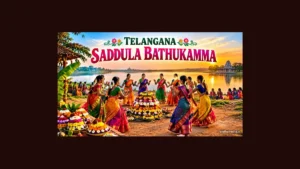
Bathukamma is a magnificent floral festival that stands as a living symbol of self-respect for the women of Telangana, nature worship, and social harmony. Beginning with Engili Pula Bathukamma and culminating in Saddula Bathukamma, this sacred celebration weaves water conservation and deep Ayurvedic health wisdom into daily devotion.
Across every village and town in Telangana, the melodious cadence of folk melodies echoes through the air as community courtyards transform into sprawling gardens of radiant blossoms. Bathukamma is far more than a conventional festival of flowers; it is a profound Sanatana cultural movement that reveres pristine nature, freshwater reservoirs, and primordial feminine divinity as living embodiments of the Divine Mother. Commencing with Engili Pula Bathukamma and celebrated with unyielding devotion across nine sacred days until the grand climax of Saddula Bathukamma, this ancient observance has achieved international acclaim as the proud emblem of Telangana identity.
While the cultural calendar of Telangana is filled with vibrant celebrations, the distinct splendor ushered in by Bathukamma remains peerless. During the inaugural days of the lunar month of Ashwayuja, the natural world undergoes a wondrous transition. As the monsoon recedes, village tanks and cascading streams brim with crystal waters, while the earth rejoices by adorning her crown with a multitude of seasonal wildflowers. Immersing their spirits in this seasonal harmony, women welcome Mother Gauramma into their homes, meticulously sculpting floral arrangements into majestic sacred spires.
The thoughtful layering of native flowers like tangedu, gunugu, marigold, chrysanthemum, rose, and velvet cock’s comb represents far more than visual artistry and traditional song. Hidden beneath these graceful community rhythms lies an extraordinary repository of ecological wisdom, seasonal healthcare, and emotional well-being developed by ancient seers. From bustling village commons and stone temple courtyards to fragrant flower markets packed with eager families, this magnificent nine-day festival offers timeless guidance on living in complete alignment with nature.
Read the complete Telugu edition of this article.
How Engili Pula Bathukamma Marks the Sacred Beginning with Nature
The sacred nine-day celebration of Bathukamma commences on the concluding day of the Bhadrapada month during Mahalaya Amavasya, transitioning into the auspicious first day of Ashwayuja. Known traditionally as Engili Pula Bathukamma, this opening day sets the tone for an extended devotional dialogue between human society and the natural world. Rising long before dawn, women across the countryside perform ceremonial head baths and walk together toward lush farmland ridges, wild meadows, and village borders to gather freshly blossomed wild flora. The vernacular name Engili Pula signifies flowers gathered before the morning meal is consumed or offered, representing untouched purity harvested in pristine morning air directly from the lap of Mother Nature.
The assembly of this initial floral tower reveals sophisticated folk geometry and botanical knowledge handed down through generations. Upon a circular brass platter known as a tambulam or bedam, women layer resilient white and pink gunugu blossoms as a wide, supportive foundation. Upon this base, concentric rings of bright golden tangedu flowers are arranged in ascending tiers, crowned at the pinnacle with a handcrafted turmeric idol of Mother Gauramma. Beyond its religious sanctity, this practice reflects the seasonal medicine of Ayurveda. As the damp monsoon ends, heightened humidity invites bacterial and viral illnesses; inhaling the volatile therapeutic aromas of wild tangedu and gunugu while gathering and handling them clears the respiratory pathways, while the early morning walk provides vital physical exercise and emotional rejuvenation.
Explore this related festival tradition: Vijayadashami and the True Mystery of Shami Tree, Ayudha Puja, and Ravana Dahan.
Why Bathukamma Celebrations Around Water Bodies Protect Nature
The social heart of Bathukamma beats beside community water bodies, drawing women toward village lakes, stepped wells, and rural irrigation reservoirs as the evening sun descends. Dressed in festive handloom attire, women gracefully balance their floral towers upon their heads, walking together toward ancient stone shrines, village banyan platforms, or the wide earthen bunds of local lakes. Placing their colorful Bathukammas at the center, they circle rhythmically in graceful synchronization, clapping in unison to timeless folk hymns that recount historical struggles, legendary heroines, domestic joys, and the boundless beauty of rural landscapes.
Choosing lake banks as the primary stage for these devotional dances reflects the visionary environmental stewardship of our ancestors. At the close of the monsoon, rural communities face the crucial task of preserving freshwater stores for the approaching dry months. Bathukamma turns water conservation into a sacred communal duty by gathering the entire village around these lifelines. Furthermore, the immersion of thousands of floral sculptures at the end of the ritual releases therapeutic plant compounds into the water. Rich in natural phytosterols and tannins, flowers such as tangedu and marigold inhibit harmful bacterial growth, dissolve stagnant organic scum, and purify community drinking reservoirs, ensuring biological hygiene for the entire region.
Grand Saddula Bathukamma Finale and the Science of Sacred Offerings
The devotional intensity reaches its summit on the ninth day with the observance of Saddula Bathukamma, the grand culmination of the floral festival. On this climactic day, every home becomes an artisanal workshop where families craft towering, multi-tiered floral pyramids that display intricate symmetry and artistic brilliance. Incorporating prized garden blooms such as fragrant roses, golden marigolds, pristine lotuses, and velvety cock’s comb alongside wild forest flowers, women build monumental spires that rise tier upon tier, each layer celebrating the immense variety of local flora with unparalleled aesthetic elegance.
Equally vital is the culinary science behind the traditional sacred offerings known as saddulu, which are prepared specifically for this final day. Derived from wholesome rustic grains, these prasads feature steamed, roasted, and crushed preparations of sorghum, maize, peanuts, black gram, green gram, and sesame seeds sweetened with pure jaggery or blended with grated coconut. Ancient Ayurvedic dietary rules dictate that as autumn commences, the human body requires nutrient-dense, warm, and lubricating foods to fortify the deep tissues (dhatus) and build immune resistance against impending seasonal chills. In the evening, women carry these colossal Bathukammas in grand processions to the water’s edge, whispering heartfelt prayers for prosperity and shedding tender tears as they gently release Mother Gauramma into the gentle currents, bidding her farewell until the coming year.
📖 Telangana History in Bathukamma Songs: Oral Tradition and Living Memory
Explore this related festival tradition: Telangana History in Bathukamma Songs: Oral Tradition and Living Memory.
How the Cultural Power of Bathukamma Elevates Dignity Worldwide
In the contemporary era, Bathukamma has emerged as a global festival representing the self-respect, creative resilience, and social empowerment of the women of Telangana. From quiet rural settlements to grand global metropolises, this floral observance bridges ancestral traditions with modern life. Metropolitan hubs such as Tank Bund in Hyderabad transform into dazzling carnivals of light and color, accommodating hundreds of thousands of women who assemble in unified celebration. Through this widespread resurgence, an ancient regional tradition has become a worldwide showcase of cultural elegance and environmental philosophy.
The most profound cultural characteristic of Bathukamma is its radical social equality. In a landscape often fragmented by caste distinctions, socioeconomic status, and modern career pressures, the floral circle remains entirely inclusive. Women from all backgrounds gather side by side, admiring one another’s handcrafted floral spires, joining hands in common song, and sharing sanctified grain offerings without reserve. In our modern concrete jungles where human beings increasingly suffer detachment from the natural environment, Bathukamma resurrects an organic connection to the earth, giving future generations a tangible pathway to cherish native ecology, female leadership, and collective harmony.
Scientific Dimensions and Sacred Customs of Bathukamma
A rigorous examination of Bathukamma customs reveals that every traditional stage of the festival seamlessly integrates ecological preservation, biological healthcare, and societal harmony. The five central pillars of the observance are systematically structured around seasonal realities:
Engili Pula Bathukamma initiates the cycle through dawn harvesting of therapeutic wildflowers like tangedu and gunugu, offering gentle cardiovascular exercise and vitalizing the lungs against changing weather. The geometric layering of the floral spires requires acute cognitive focus and artistic visualization, providing psychological calm and sensory stimulation through natural floral essences. Communal gatherings on earthen lake embankments transform freshwater management into an inescapable civic priority, while the botanical constituents of the immersed flowers sanitize reservoir beds and eradicate hazardous micro-organisms. The multi-grain saddulu offerings supply proteins, minerals, and essential fats to enhance human vitality, while the closing act of releasing the floral towers into flowing water fosters an inner acceptance of life’s impermanence and nature’s perpetual renewal.
Explore this related festival tradition: Bathukamma 2026: Nature, Songs and Telangana Cultural Life.
Spiritual Meaning of Bathukamma and Practical Everyday Wisdom
The paramount spiritual revelation embodied in Bathukamma is that every humble wild bloom, every drop of pure water, and every element of creation carries inherent divine sanctity. Nature is not a mere storehouse of resources waiting to be consumed by humanity; rather, it is the living, pulsating form of the Supreme Goddess who nourishes all conscious beings. By collecting wild, uncultivated blossoms from neglected hedgerows and lifting them onto an exalted altar, the tradition demonstrates that true spiritual divinity resides in simple, organic reality rather than ostentatious human artifice.
The rhythmic circular dance around the floral spires symbolizes the eternal wheel of time and the cyclical nature of cosmic creation, preservation, and dissolution. As women move hand in hand, stepping rhythmically to traditional melodies, individual egos melt away into a harmonious collective soul. In that shared sacred circle, individual burdens, domestic sorrows, and personal identities are absorbed into community brotherhood and universal devotion, demonstrating that human well-being blossoms only when society attunes itself to nature’s unhurried rhythm.
The final rite of immersing Bathukamma into lake waters conveys a deep spiritual lesson in non-attachment and divine surrender. Women pour immense creative energy, patience, and love into building these magnificent floral towers, yet at nightfall, they joyfully and tearfully commit them to the water. This poignant conclusion reminds the human spirit that every form manifested in this transient world must ultimately dissolve back into the formless primordial source, training our hearts to appreciate beauty fully without succumbing to possessiveness or grief.
Living the true essence of Bathukamma in our everyday lives means cultivating an active, daily reverence for the natural world around us. In an era dominated by digital screens and environmental degradation, we can honor this heritage by nurturing green spaces, planting native flowering flora, and vigorously protecting local rivers and neighborhood lakes from plastic waste. Furthermore, by practicing unconditional kindness toward our neighbors and stepping forward to support those in need, we revive the egalitarian, community-building spirit of the sacred floral circle in modern society.
Chapter Summary
Bathukamma stands as Telangana’s most iconic cultural and spiritual celebration, seamlessly combining feminine dignity, social equality, and advanced ecological science. Traversing nine days from Engili Pula Bathukamma during the new moon to the magnificent finale of Saddula Bathukamma, this ancient festival honors the Divine Mother through artistic spires of wild, medicinal flowers. Celebrated along the embankments of lakes and tanks, the collective dances and folk songs serve as powerful community vehicles for freshwater conservation and historic preservation. The concluding ritual immersion of floral arrangements naturally purifies village reservoirs, while the consumption of diverse multi-grain offerings (saddulu) builds physical immunity against seasonal ailments. Ultimately, Bathukamma dismantles social barriers, uniting communities in joyful, reverent coexistence with Mother Nature.
Scripture Notes
- Main Message: Classical Sanatana philosophical traditions and ancient Ayurvedic texts teach that the worship of trees, flowers, and natural elements is identical to honoring the supreme cosmic consciousness. By respecting the life-giving forces of the earth and protecting freshwater sources, human society secures ongoing physical vitality, social harmony, and spiritual peace. Bathukamma demonstrates that sincere spiritual devotion must express itself through tangible ecological responsibility and communal love.
- Philosophical Teaching: The Sanskrit aphorism Satyam Shivam Sundaram—Truth, Auspiciousness, and Beauty—finds living expression in Bathukamma. The tradition affirms that perceiving beauty in the natural world and cultivating love among living beings is the genuine purpose of human embodiment. Furthermore, the Vedic declaration Jalam pranah jalam sarvam (Water is life, water is everything) underscores that protecting water reserves is an absolute moral duty, establishing environmental balance as the highest form of spiritual sadhana.
📖 Bathukamma 2026: Nature, Songs and Telangana Cultural Life
Frequently Asked Questions
Why is the Bathukamma festival celebrated with such immense grandeur?
Bathukamma is celebrated with unmatched grandeur because it serves as the ultimate cultural symbol of self-respect for the women of Telangana, honoring feminine strength, social unity, and nature worship. Spanning nine sacred days, it unites communities across all walks of life to celebrate native ecology and ancestral heritage.
What does Engili Pula Bathukamma signify?
Engili Pula Bathukamma marks the inaugural day of the festival, observed on Mahalaya Amavasya or the first day of Ashwayuja. It signifies the gathering of pure, untouched medicinal wildflowers before dawn, which are arranged onto ceremonial plates as the first sacred offering of the nine-day cycle.
Why are Bathukamma festivities conducted specifically near lakes and water bodies?
Festivities are held along lake embankments to promote community awareness about water conservation following the monsoon. Additionally, the subsequent immersion of medicinal flowers like tangedu and gunugu naturally purifies community water stores by destroying aquatic bacteria and preventing algae accumulation.
What traditional offerings are prepared on the day of Saddula Bathukamma?
On Saddula Bathukamma, women prepare an array of nutritious multi-grain offerings called saddulu made from corn, sorghum, sesame seeds, peanuts, and pulses. These wholesome dishes, flavored with jaggery or grated coconut, are designed by traditional wellness systems to boost physical stamina during seasonal weather changes.
What is the central spiritual and social message of the Bathukamma festival?
The core message of Bathukamma is that true spirituality consists of living in peaceful harmony with nature and fellow human beings. By transcending barriers of caste and wealth, the festival inspires communities to protect natural water resources, value female leadership, and embrace the sacred cycle of life.