
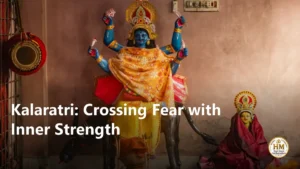
Kalaratri is the dark and formidable form of the Goddess whose role is protective: she destroys what threatens dharma and escorts the devotee through a difficult passage. This series compares her with Mahalakshmi, who brings abundance and order into the same conversation.
To look fear straight in the eye without bowing down before it lies at the heart of Kalaratri: Crossing Fear with Inner Strength. Drawing faithfully from the reviewed Telugu source, this exploration keeps the sacred boundaries clear so that ancient scripture, regional customs, and thoughtful modern reflections never blur into one another. When we learn to distinguish timeless sacred verses from domestic traditions and practical advice, the teaching speaks with fresh clarity rather than vague sentiment.
Kalaratri rises before the seeker as the dark, formidable manifestation of the Goddess, wrapped in the deep shadows of the midnight hour. While her untamed appearance can startle at first glance, her presence is fundamentally that of a fierce protector who stands guard over righteousness. She cuts down whatever imperils dharma, stepping forward to guide the trembling devotee safely through life’s most turbulent corridors. Alongside her, Mahalakshmi enters the conversation as an illuminating comparison, balancing that midnight intensity with the steady light of abundance, bringing order and domestic comfort into the very same sacred space.
Read the complete Telugu edition of this article.
Meeting Kalaratri in ancient tradition
As the darkest and most awe-inspiring form of the divine Mother, Kalaratri evokes an initial shiver of dread, yet her true nature is fiercely compassionate. She rises up to dismantle every force that threatens cosmic dharma, staying right beside the devotee during seasons of grief, confusion, and grueling personal trials. Introducing Mahalakshmi beside her offers a balanced counterpoint, reminding us how prosperity and order belong to the very same spiritual landscape as dark battles. We listen to such narratives with devotion, never mistaking our personal reading for a primary text or treating informal reflections as official temple notices. Recognizing that certain rites belong strictly to particular lineages keeps us from confusing a regional household habit with a universal spiritual command.
Understanding the fierce symbols of Kalaratri
The deep darkness surrounding her invites us to ponder the terrifying unknown, while her wild, disheveled hair, piercing gaze, and humble mount—the donkey—serve as vivid reminders that genuine spiritual fortitude rarely resembles conventional social elegance. Instead of running from dread, the seeker is called to acknowledge it, look it directly in the face, and bring it under the steady command of wisdom. Sacred imagery serves prayer best when it halts our distractions and draws the wandering mind into honest contemplation. Since various sanctums and venerable masters interpret each iconographic detail in their own nuanced ways, welcoming this diversity simply honors the living, breathing heart of the heritage.
The quiet inner meaning behind Kalaratri
Confronting our deepest anxieties without bowing before fear bears real fruit only when it transforms our daily conduct. In the heat of distress, quiet faith can pause an impulsive outburst, steer an agitated heart back to a forgotten promise, and carve out a calm clearing where clear discernment becomes possible. The aim is never to collect thrilling spiritual sensations, but rather to help a person grow more steadfast in truth, patient under strain, and dependable when others rely on their word.
These spiritual reflections inevitably spill out into how we treat people around us. Lighting a brass lamp, whispering a sacred mantra, or offering fresh garlands before a decorated icon only reaches its true fulfillment when it inspires gentleness toward family members, fair regard for laborers, truthful conversation, and a ready hand for a neighbor caught in distress. We see these thoughtful connections as living applications of ancient wisdom rather than magical returns guaranteed by the performance of any ceremony.
Welcoming Kalaratri in simple home worship
When gathering for night prayer, keep the observance modest, grounded, and safe. Set your oil lamp firmly on a clear surface where it cannot spark a fire, chant a beloved, familiar name, and take a moment to write down one nagging fear that calls for sensible, practical effort. Never resort to frightening promises, coercive ceremonies, or claims of guaranteed immunity to pressure anyone at home. Keep your prayer space tidy, choose offerings that honor your family’s health conditions and modest financial means, and avoid mimicking complex initiation-based rites picked up from unverified sources. Children can take part easily through a quiet bedtime story, a single blossom offered with both hands, or a brief pause to say thanks.
📖 Aligina Bathukamma: Rest and listening — Bathukamma 2026
The northern image and its southern counterpart
Devotional customs dedicated to Mahalakshmi take countless forms throughout India, adapting organically from one sacred town to the next. In this shared study, she appears alongside the northern deity as a helpful southern parallel, without suggesting that her decorative vestments follow one rigid sequence in every shrine. Offering this southern perspective helps us appreciate common devotional themes across regions, yet it should never be misread as an assertion that every South Indian temple adheres to the exact same ten-day alankara schedule.
Local temple customs across the Telugu lands
Throughout Telangana and Andhra Pradesh, Dasara celebrations come alive through radiant temple alankaras, traditional household displays of bommala koluvu, shared community chanting, and selfless acts of service. However, specific schedules for the 2026 festival season remain the exclusive responsibility of each individual temple committee. Devotees planning a visit ought to verify darshan timings, special queue arrangements, and local ritual guidelines directly with the administration on site, rather than relying on broad regional descriptions as if they were official temple circulars.
How Kalaratri speaks to our modern lives
Choose one concrete practice that brings this inner strength into everyday reality. It might be building a steady personal habit, giving an uninterrupted hour to earnest study, sharing a nourishing meal without letting food go to waste, carrying out a difficult conversation with calm respect, or using work tools with strict ethical care. A festive season proves truly meaningful only when its quiet lessons remain alive long after the bright decorations have been taken down.
A closer reflection on Kalaratri
Approaching Kalaratri calls for quiet, sustained contemplation rather than skimming through a brief caption beneath a festive portrait. Her sacred legends, her striking visual forms, and the rituals that surround her all stem from distinct layers of our shared heritage. A sincere devotee can deeply revere her dark appearance while still discerning which verse springs from an ancient scripture, which custom grew inside a local temple, and which insight represents a modern reflection for daily conduct. Making these thoughtful distinctions does not weaken reverence; it makes our spiritual walk far more grounded, while giving every household the freedom to honor its inherited family lineage.
The profound guidance offered by Kalaratri reaches far past the household altar. A quiet gesture of patient listening, an unasked chore done to help an aging parent, an exercise in personal restraint, or a steady spark of courage can weave her teachings directly into the workplace and the home. Every ceremonial object must be handled with clear regard for fire and physical safety, offerings should be chosen to suit the family’s health conditions and modest financial means, and all promises of guaranteed worldly windfalls should be rejected. In the end, the true sanctity of any holy day reveals itself in how we act after the sacred lamp has burned down.
Festival calendars and daily temple programs inevitably shift with the cycles of time. Devotees should always double-check local panchanga calculations and official temple notices before setting out on a journey or circulating a festival schedule to friends and relatives. While the timeless spiritual meaning of the Goddess remains an unwavering anchor year after year, a specific 2026 festival date belongs strictly to its own calendar season and should never be mistaken for a permanent rule that applies to future observances.
Sources and further reading
The living tradition combines the Devi Mahatmya and related Puranic narratives with regional temple memory and family practice. Read the year-specific calendar alongside the local panchanga, and identify a temple custom by its actual source. The complete Devi Navaratri guide keeps the ten parts together.
| Focus | Story, symbol, worship, and lived application |
| Source levels | Scriptural narrative, regional custom, and editorial reflection |
| Practical outcome | One small dharmic action carried beyond the festival |
Frequently asked questions about Kalaratri
What is the main theme of Kalaratri?
Facing fear without worshipping fear is the main theme explained through the story and symbols of the form.
How can I worship Kalaratri at home?
Keep night worship simple and safe. Light a lamp where it cannot cause a fire, say a familiar name, and write down one fear that deserves practical action. Do not use frightening promises, coercive rituals, or claims of guaranteed protection to pressure another person. A simple, safe observance is sufficient for a household devotee.
📖 Atla Bathukamma: Affection and family bonds — Bathukamma 2026
Is the southern comparison universal?
No. Mahalakshmi worship varies widely across India. This article uses it as the southern comparison supplied for the series and does not present one alankara order as the rule for all temples. It should be checked against the specific temple or family tradition.
Are the promised results guaranteed?
Claims about blessings belong to devotional faith. They are not medical, legal, financial, or scientific guarantees.
Where can I verify the 2026 dates?
Check a reliable local panchanga and official temple notices. The calendar details for 2026 should not be copied into future years without recalculation.
For the wider English series, visit the English devotion and temple category or continue with the Vijayadashami and Rajarajeshwari chapter.