

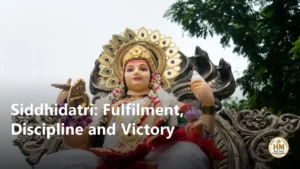
Siddhidatri is the ninth Navadurga form, associated in tradition with the granting of siddhis or attainments. She asks whether power is being used for dharma or for vanity; this series compares her with Mahishasuramardini, the Goddess defeating Mahishasura.
The quiet completion of long discipline and an inner victory guided by accountability form the living heart of Siddhidatri. Drawn faithfully from the reviewed Telugu source tradition, this study keeps clear lines between sacred scripture, regional observance, and reflective contemplation so that the spirit of the ninth day remains both reverent and grounded.
Siddhidatri stands as the ninth Navadurga form, honored throughout tradition for granting siddhis, those deep spiritual attainments that crown patient focus. Beside her, the southern comparison in this journey recalls Mahishasuramardini overcoming the demon Mahishasura. Taken together, both visions challenge us with an inescapable question: is our hard-won strength used in service of dharma, or does it merely feed our vanity?
Read the complete Telugu edition of this article.
Where tradition meets the grace of Siddhidatri
Tradition turns to Siddhidatri on the ninth day as the Navadurga presence associated with conferring siddhis and spiritual attainments. Alongside her, the southern tradition introduces Mahishasuramardini, recalling the fierce moment when the Goddess conquered the demon Mahishasura. When held together, these sacred images ask whether growing strength is offered to dharma or claimed by self-interest. Approaching these sacred accounts with devotion should never replace consulting primary scripture or checking official temple bulletins. Where a specific rite belongs exclusively to a single lineage, keeping that boundary visible ensures that a treasured local custom is not mistaken for a binding universal command.
The symbols of Siddhidatri — stillness on a lotus
Seated peacefully upon her open lotus, her composed bearing reveals an inner fulfillment that remains completely balanced. Descriptions of siddhis in sacred literature belong to a classical spiritual vocabulary; they are never transactional shortcuts to worldly wealth, physical health, or social prestige. Every sacred emblem works quietly upon the mind during prayer, drawing distracted thoughts into inward reflection. Different shrines and family elders often explain the same visual details in diverse ways, and that living variety forms the genuine strength of the tradition.
The inner meaning of Siddhidatri and our daily choices
The culmination of spiritual practice and an inner victory guided by responsibility reveal their true worth only when our daily conduct changes. Genuine prayer shows its presence when an angry impulse is restrained, when an old promise is remembered and honored, or when a quiet space opens up for careful discernment in a difficult moment. The purpose of contemplation is never to collect impressive mystical sensations, but to emerge quietly as someone more truthful, patient, and dependable in family and communal life.
This spiritual discipline carries an unavoidable human side that extends beyond temple walls. Lighting a lamp, chanting a mantra, or laying flowers before a decorated image becomes complete only when it inspires warmth toward family, fair regard for working people, honest words in conversation, and practical support for someone facing hardship. These reflections offer an ethical contemplation of sacred themes, rather than guaranteed worldly rewards purchased through ritual performance.
Bringing the worship of Siddhidatri into the home
When Navami arrives, take time to look back over the discipline begun on the first day of the festival. Light a simple oil lamp, offer fresh flowers with genuine thankfulness, and dedicate whatever resolve you have gained to the humble service of others. Any complex mantra chanting or advanced tantric rites must remain under the personal care of an experienced teacher or qualified guide. Keep the home altar clean, choose offerings that match your health and household means, and avoid copying specialized initiation practices from unverified sources. Children can easily share in the reverence by listening to a story, offering a single blossom, or joining in a quiet moment of gratitude.
📖 Aligina Bathukamma: Rest and listening — Bathukamma 2026
The northern vision and its southern counterpart
Across the country, Mahishasuramardini receives deep reverence through diverse temple customs and distinct festival disguises. Placing her alongside Siddhidatri records a revered southern tradition for this comparative series while keeping Siddhidatri in her recognized place within the Navadurga sequence. The southern title is offered purely as an enriching comparison, not as a claim that every temple across the southern region follows the same ten-day alankara sequence.
Temple traditions across Andhra Pradesh and Telangana
Throughout Telangana and Andhra Pradesh, Dasara brings families together through elaborate temple alankaras, the nostalgic tradition of household bommala koluvu doll displays, community chanting, and dedicated charity. Exact schedules for the 2026 observances remain the responsibility of individual temple administrations. Visitors should always verify darshan hours, line arrangements, and ritual guidelines directly through local temple notices rather than depending on a general devotional overview as an operational circular.
What Siddhidatri asks of our busy everyday lives
Choose one tangible, steady action that expresses this sacred completion in daily life: keeping a calm personal habit, setting aside an undisturbed hour of study, sharing a simple meal without waste, handling a tense conversation with kindness, or using work tools with honesty. An ancient festival proves its enduring worth only when its clarity and gentleness remain visible after the decorations come down.
Looking deeper into Siddhidatri and the layers of worship
A thoughtful exploration of Siddhidatri invites patient reflection rather than hasty reading beneath a festival picture. Her sacred story, divine imagery, and community rites belong to different historical layers of our heritage. One can bow before her form with deep reverence while asking which detail springs from primary scripture, which comes from regional temple practice, and which represents an ethical reflection for modern living. Recognizing those boundaries makes personal faith clearer and leaves room for every family to cherish their ancestral path.
The lessons of Siddhidatri unfold far beyond the domestic altar into our working hours and shared homes. A small moment of mindful attention, practical service, self-restraint during a dispute, or quiet courage in testing circumstances carries the spirit of worship into the world. Lamps and ritual flames must always be handled safely, offerings should respect the household’s health and financial means, and promises of miraculous material gain must be firmly set aside. The true blessing of any festival is reflected in how honorably we act once the oil lamp has gone out.
Calendar dates and temple timetables naturally change with every passing year. Devotees should always confirm local panchanga calculations and official administrative announcements before setting out on travel or passing along an event schedule. The evergreen message of the Goddess remains a steady guide, but a calendar line set down for 2026 must never be taken as a binding rule for future seasons.
Sources and further reading
The living tradition combines the Devi Mahatmya and related Puranic narratives with regional temple memory and family practice. Read the year-specific calendar alongside the local panchanga, and identify a temple custom by its actual source. The complete Devi Navaratri guide keeps the ten parts together.
| Focus | Story, symbol, worship, and lived application |
| Source levels | Scriptural narrative, regional custom, and editorial reflection |
| Practical outcome | One small dharmic action carried beyond the festival |
Frequently asked questions about Siddhidatri
What is the main theme of Siddhidatri?
The completion of practice and victory guided by responsibility is the main theme explained through the story and symbols of the form.
How can I worship Siddhidatri at home?
On Navami, review the discipline begun on the first day. Offer a lamp, flowers, and gratitude, then dedicate the result of your effort to service. A teacher or qualified practitioner should guide any advanced mantra or tantric practice. A simple, safe observance is sufficient for a household devotee.
📖 Atla Bathukamma: Affection and family bonds — Bathukamma 2026
Is the southern comparison universal?
No. Mahishasuramardini is honoured in many temples with different festival forms. The pairing here records a southern tradition for this series while preserving Siddhidatri’s place in the widely known Navadurga sequence. It should be checked against the specific temple or family tradition.
Are the promised results guaranteed?
Claims about blessings belong to devotional faith. They are not medical, legal, financial, or scientific guarantees.
Where can I verify the 2026 dates?
Check a reliable local panchanga and official temple notices. The calendar details for 2026 should not be copied into future years without recalculation.
For the wider English series, visit the English devotion and temple category or continue with the Vijayadashami and Rajarajeshwari chapter.