
How can one attain permanent freedom from the suffering of Samsara? According to Sage Vasistha, one must learn to perceive this worldly existence as an illusory drama. While Yoga offers a valid discipline, Self-Enquiry is far simpler and swifter. Yoga Vasistha declares that through Self-Enquiry alone, all worldly sorrows dissolve completely.
Have you ever felt that life wraps around you like an unyielding serpent, slowly suffocating your inner peace? Attachments bind like tight cords, while unfulfilled desires burn within like an endless fire. In this pivotal discourse, Sage Vasistha addresses that exact existential weight, offering Sri Rama a compassionate pathway to genuine inner release.
After acknowledging Sri Rama’s remarkable discernment and questioning spirit, the great sage directly unpacks the nature of worldly entanglement and how to overcome it. This timeless teaching fundamentally transforms the lens through which one perceives the entire universe.
📚 Yoga Vasistha — full guide & all episodes
Sage Vasistha Praises Sri Rama’s Pure Heart
Sage Vasistha looked upon Sri Rama with profound warmth and affection.
“O Ramachandra, your mind is adorned with noble virtues. You possess the subtle intellect capable of grasping subtle truths instantly, and you ask the right questions at the opportune moment.”
Recognizing Rama’s genuine compassion for all living beings, the sage initiated this profound philosophical inquiry for the welfare of the world.
“Keep your mind serene, entirely free from the agitations of passion and the heaviness of inertia. Prepare your heart to receive the supreme knowledge.”
Honoring the cosmic wish of Lord Brahma, Vasistha made Rama the focal point to inaugurate this universal inquiry before the entire royal assembly.
Sage Vasistha: “Since your childhood, your heart has remained pure and endowed with discrimination. Can the night sky be radiant without the moon? Can water lilies bloom without its gentle light? You alone are truly worthy of receiving this supreme teaching.”
What is the Supreme State?
Sage Vasistha defined the core objective of their shared contemplation.
“The supreme essence and final goal of our inquiry is the attainment of the ultimate state—Paramapada.”
Upon reaching that transcendent state, all external fascinations, false attachments, and deceptive illusions naturally dissolve into stillness.
“O Raghava, the mind that generates this Samsara is no ordinary force. Only through the sovereign remedy of true knowledge do all mental distortions spontaneously dissolve.”
👉 Previous Episode: Who is the Jiva? The Secret of Consciousness Trapped in Illusion | Yoga Vasistha S3 EP-49
Two Paths to Overcome Samsara
Sage Vasistha outlined the two distinct approaches to crossing the ocean of worldly existence.
The first path is Yoga—the systematic mastery of breath control and meditative focus. The second path is Self-Enquiry—the continuous, steady contemplation of one’s true nature.
RECOMMENDED PRODUCT
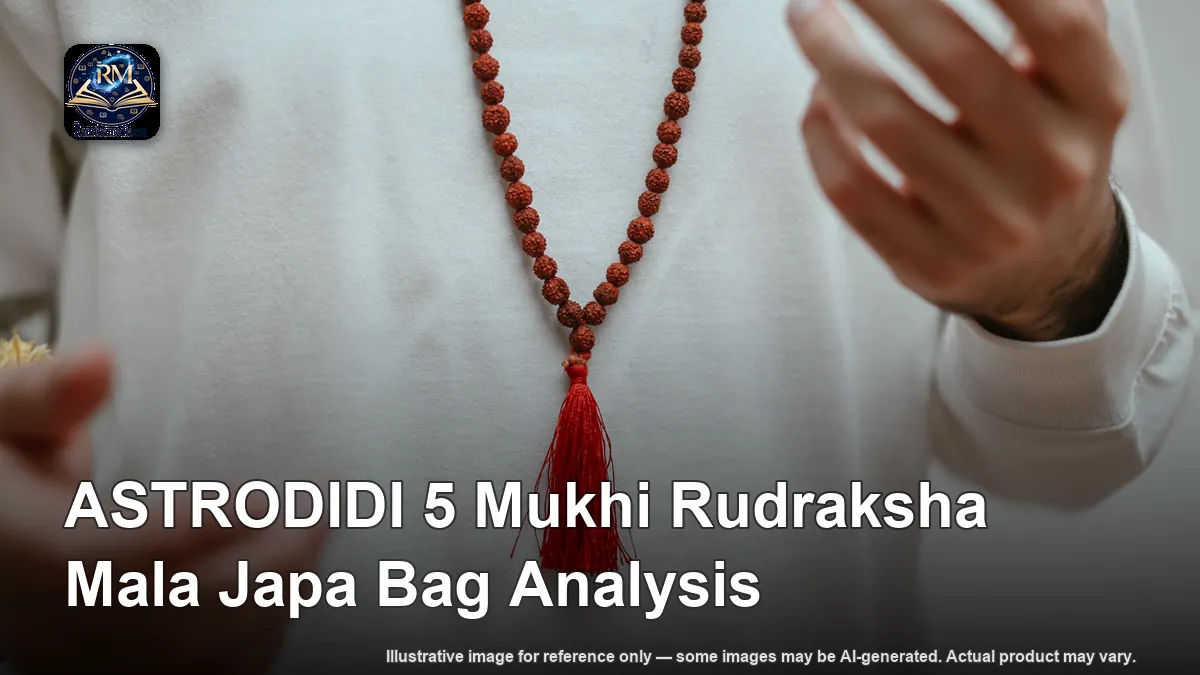
ASTRODIDI 5 Mukhi Rudraksha Mala Japa Bag Analysis : How can this product help you?
This review examines the ASTRODIDI using verified buyer feedback and the manufacturer’s listed specifications. Establishing a focused daily meditation or mantra chanting… The ASTRODIDI 5 Mukhi Rudraksha Mala addresses these daily devotional requirements by combining a traditional count of 108 natural five-faced seeds with an included Gomukhi… The ASTRODIDI 5 Mukhi Rudraksha Mala is a traditional 108-bead prayer rosary crafted with natural five-faced seeds and paired with a fabric Gomukhi japa bag. Designed for…
Read more about this productBuy on Amazon
As an Amazon Associate, RamthaMedia earns from qualifying purchases.
Between these two methods, the sage emphasized that the path of inquiry is far more accessible and gentle for human life.
When earnest seekers gather in noble company to investigate this supreme truth, profound clarity and lasting well-being naturally follow.
“Through the power of Self-Enquiry alone, every trace of sorrow is eradicated without a doubt.”
Those who practice this profound inquiry must never be underestimated; they possess the power to redeem countless souls from the bondage of ignorance.
Shedding the Snake’s Old Skin
Sage Vasistha turned his gaze toward the entire gathering in the royal hall.
“O noble seekers, awaken the power of clear discrimination within yourselves.”
Just as a serpent effortlessly casts off its worn-out skin, every earnest individual must seek the genuine remedy for the deep-seated ailments of the mind.
Those who anchor themselves in Self-Enquiry cultivate the true wealth of direct self-realization.
With a steady heart free from feverish anxiety, one must train the intellect to view this fleeting world like a grand illusion.
“If you fail to cultivate the right vision here and now, you will inevitably drift into an unending succession of worldly grief.”
📖 Read More: Latent Impressions Afterlife Journey and the Mystery of Funeral Offerings | Yoga Vasistha S3 EP-30
Samsara as a Venomous Serpent
The sage laid bare the perilous nature of obsessive fascination with the material world.
Every living being must nurture the deep inner question: “Is this transient worldly life truly devoid of ultimate substance?”
Without this essential questioning, the world strikes like a venomous serpent, poisoning those blinded by delusion.
It torments like a garment woven of thorns, binds like an unbreakable rope, and wounds like a sharpened blade. It consumes like a raging fire and swallows spiritual sight like a pitch-black night.
Just as a pebble cast into a deep well slowly sinks into the dark depths below, unexamined delusion stirs latent faults in the intellect, dragging the restless mind into an abyss of despair.
Attachment to the Objective World as the Root of Sorrow
“Craving for the visible, objective world forms the very core of Samsara.”
There is no sorrow known to creation that spares a person enslaved by worldly attachment.
This inner affliction arises from gazing at mortal bodies made of flesh and blood, falling into the deceptive possessiveness of thinking, “These people belong to me; they are mine.”
The torment born of spiritual ignorance knows no limits, cutting as deeply as jagged, unseen daggers.
The deluded individual stumbles against jagged rocks, falls from steep mountain cliffs, and endures ceaseless agony with a weary body and sleepless mind.
Do Not Waste the Precious Human Birth
“Dear ones, let us remember the unrelenting mechanics of this worldly wheel.”
To squander this rare and precious human birth without adopting the proper remedies—especially when supreme wisdom is within reach—is a grave tragedy.
“Cast aside the sluggishness of negligence and resolve to make diligent self-effort.”
Through the rigorous study of the sacred Shastras and steadfast inquiry, the highest welfare reveals itself.
What is True Scripture?
Sage Vasistha posed the essential question to the court and offered its profound answer.
Awakened sages of the past recognized that the fleeting world and transient sensory pleasures can never be the true goal, fulfillment, or summit of human life.
They discerned that an immutable truth underlies this visible reality, and through rigorous striving, they realized that reality directly.
Out of unconditional love for humanity, they codified their direct realizations into systematic pathways of spiritual inquiry. These sacred teachings are what we call the Shastras.
“Having attained the golden opportunity of human birth, take shelter in these scriptures and engage in supreme contemplation. Discern clearly between what is real and what is false, what is eternal and what is transient.”
The Sovereign Remedy to Conquer Delusion
Sage Vasistha reminded the gathering that many pure-hearted beings live upon this earth in utter freedom, unperturbed and unattached, just like Hari, Hara, and Brahma.
Among human beings, one finds both those deeply entangled in blinding delusion and those who embody supreme liberation.
The same truth applies across all realms—among celestial beings, demons, and the denizens of the netherworlds alike.
“Therefore, O Ramachandra, no matter how formidable delusion may appear, it can be entirely eradicated. The dawn of spiritual wisdom is the sole remedy. Through the power of knowledge alone, the Self reveals its own radiance.”
Renouncing Delusion, Passion, and Idle Curiosity
“O seekers, examine this inquiry with unwavering attention.”
Sharpen your intellect through persistent contemplation.
Cast out the deep-seated delusion, feverish passion, and idle curiosities that shroud the heart.
When these impurities are cleared, the boundless sky of the true Self expands within the heart, allowing every worldly activity to feel like playful recreation rather than a burden of suffering.
Pure, unconditioned Consciousness shines forth in spotless brilliance, bestowing unbroken inner peace.
The state of universal equanimity becomes an enduring realization, flooding the inner being with supreme bliss.
The Universe as a Cosmic Theater
Sage Vasistha concluded his teaching with a luminous analogy.
“O scion of the Raghu dynasty, to the wise, this entire universe is nothing more than a grand cosmic theater.”
The physical body resembles a chariot, and the senses are the spirited horses harnessed to it.
All accumulated actions form the unfolding journey directed by the charioteer—the mind—as part of this vast divine play.
Wise souls who comprehend the inner meaning of this cosmic drama perceive its mechanics from within, walking steadily toward their supreme destination with unshakable peace.
Sage Vasistha: “This is the true purpose of our contemplation, and this is the right vision for our journey through the world.”
RECOMMENDED BOOK

The Maya Simulation: Quantum Physics and the Science of Consciousness by A. Ravinder
Is the world around us real? Or is it just a Maya Simulation?
A guide that bridges the ancient wisdom of the Yoga Vasistha with quantum physics and modern consciousness science — for readers ready to question the nature of reality and calm the mind with practical tools like the Zero Voice Technique. It explores mind, maya and consciousness in plain language, and offers a practical path for the seeker on the spiritual journey. Available in print and ebook instant-read versions.
Buy on AmazonBuy on Ramthamedia
As an Amazon Associate, RamthaMedia earns from qualifying purchases.
Two Paths to Conquer Samsara — Sage Vasistha’s Teaching
| Path | Nature of Practice | Spiritual Fruit |
|---|---|---|
| Yoga | Practices like breath control (Pranayama) and concentration (Dharana) | Peace through mastery and control of the mind |
| Self-Enquiry (Atma Vichara) | Constant self-investigation and quest for ultimate truth | Gentle, accessible path that dissolves all sorrow |
Spiritual Significance
Sage Vasistha’s teaching in this chapter invites seekers to fundamentally transform their perception of worldly existence rather than offering mere abstract theory.
Comparing Samsara to a serpent, a tight rope, and a blazing fire uncovers a profound truth: worldly objects and relationships are not intrinsically harmful, but our obsessive attachment and possessiveness toward them cause intense suffering.
While both Yoga and Self-Enquiry are valid spiritual paths, Vasistha highlights that Self-Enquiry—the practice of questioning one’s own assumptions and identity—is universally accessible and gentle for everyday life.
Viewing the world as a cosmic stage does not mean abdicating daily responsibilities; rather, it represents the emotional maturity to participate in life’s scenes with lightness, poise, and inner freedom.
Are you carrying the heavy burden of a strained relationship or an anxious thought today? Pause for a moment and ask yourself if you can view it as a passing scene in a grand play. When seen from that quiet vantage point, the mind naturally returns to ease.
Chapter Summary
Praising Sri Rama’s pure intellect, Sage Vasistha initiates the discourse on Self-Knowledge. He presents two paths to conquer Samsara—Yoga and Self-Enquiry—emphasizing that inquiry is the gentler and swifter path. Comparing worldly entanglement to a venomous snake, a binding rope, and consuming fire, the sage demonstrates that attachment to sensory appearances is the root of all grief. He urges humanity not to squander the precious human birth and to seek refuge in the Shastras. True knowledge alone dispels delusion. Vasistha concludes by presenting the universe as a cosmic theater where the wise witness the drama with undisturbed equanimity.
Scripture Notes
- Main Message: Attachment to the objective world is the root of sorrow; through Self-Enquiry, one dissolves this attachment and attains everlasting peace.
- Philosophical Teaching: According to Yoga Vasistha, the world operates like an illusory drama. Recognizing this truth and conquering delusion through knowledge is the highest fulfillment of human birth.
- Connection to the Next Chapter: Building upon this cosmic theater analogy, Sage Vasistha will explore the deeper metaphysical relationship between the individual soul and the universe in the next chapter.
“Samsara is a serpent; shedding its skin through wisdom is true liberation.”
“Craving for the visible world is the very essence of sorrow.”
“To the truly wise, this entire universe is merely a cosmic theater.”
Frequently Asked Questions
According to Yoga Vasistha, what are the two paths to conquer Samsara?
The two paths to conquer Samsara are Yoga and Self-Enquiry (Atma Vichara). Yoga relies on practices like breath control and mental concentration, whereas Self-Enquiry involves questioning one’s true nature. Sage Vasistha highlights Self-Enquiry as the simpler and more direct approach for seekers.
📖 Is Desire Bondage and Contentment Freedom? | Yoga Vasistha S2 EP-20
What is Self-Enquiry (Atma Vichara)?
Self-Enquiry is the steady, introspective investigation into one’s true nature and relationship with the universe. Sage Vasistha describes it as the most effective path to eradicate suffering and dissolve worldly delusion.
Why is Samsara compared to a venomous serpent?
Samsara is compared to a venomous serpent because worldly delusion strikes and suffocates unsuspecting minds. It binds seekers with attachment, burns them with insatiable desires, and wounds their peace like sharp blades.
How does Sage Vasistha define true scripture (Shastra)?
Sage Vasistha defines scriptures as the systematized records of truth left behind by enlightened masters. Motivated by universal compassion, these sages documented their direct realizations to guide future seekers toward spiritual freedom.
What is the sovereign remedy to conquer delusion (Moha)?
Spiritual knowledge (Jnana) is the sovereign remedy to conquer delusion. Sage Vasistha asserts that when the light of wisdom dawns, the pure radiance of the Self reveals itself naturally.
Why is the world compared to a stage play or theater?
The world is compared to a cosmic theater to illustrate that life’s events are passing scenes. The body is the chariot, the senses are the horses, and the mind is the charioteer; realizing this allows the wise to act with freedom and tranquility.
What is attachment to the objective world, and why does it cause grief?
Attachment to the objective world is the obsessive possessiveness toward transient physical forms. Sage Vasistha teaches that this craving is the root of Samsara, inevitably leading to suffering as long as false ownership persists.
Conclusion
A serene truth resonates throughout Sage Vasistha’s discourse: the world feels heavy not because of its inherent nature, but because of the possessive attachments we project upon it. When one releases that mental grip through gentle Self-Enquiry, life transforms into a light, joyful play. How does one begin this transformative inquiry in daily life, and what deeper wisdom will Vasistha unfold next for Sri Rama?
👉 Click this link to read the next episode: Why Does a True Viveki Remain Calm in Every Crisis? | Yoga Vasistha S2 EP-17


