
An inquiring seeker must evaluate the teacher’s competence beforehand and question solely out of a sincere thirst for Truth, rather than attempting to prove superiority or demean others.
📚 Yoga Vasistha — full guide & all episodes
Every seeker walking the spiritual path and every ordinary person in search of wisdom encounters a fundamental dilemma: Whom should we ask when doubts arise? How should we ask? What qualifications must the one who answers possess? And to realize the ultimate Truth, what kind of bond must exist between master and disciple?
In this edition of the Yoga Vasistha series presented by Ramtha Media, we examine the crucial dynamic of spiritual inquiry: the dialogue between question and answer. Here is the profound teaching given by Sage Vasistha to Sri Rama regarding the art of questioning and the sacred role of Guru and disciple in the inquiry into the Self.
Whom Should You Question When Seeking a Guru? Whom Should You Avoid?
When buying a new item, we consult experts in the market. Similarly, to discover the truth of life, which Guru should we seek refuge in? Whom should we ask? Vasistha provided clear guidance on this matter.
- Never question someone about the Self who is not a knower of Truth—one who has not realized ultimate reality.
- Questioning about the Self with someone who has not experienced the reality of the Self directly, or who has not received instruction from an authentic Guru, yields no benefit whatsoever.
- Likewise, when you clearly recognize, “This person is a great philosopher and knows far more about the Self than I do,” it is improper to remain silent and avoid dialogue with them.
- Those who refuse to listen attentively to such a wise person, rejecting the Truth through frivolous and dogmatic arguments, are merely wasting time.
What Are the Essential Qualities of an Inquiring Disciple?
Inquiry is not merely asking someone the moment a doubt crosses the mind; the seeker must possess discipline, preparation, and proper conduct.
- Assess First: Before posing a question, thoroughly assess the depth of knowledge and wisdom of the person being questioned.
- Inquire Only After Determining Competence: Ask only after determining for yourself, “This person is knowledgeable on this subject and truly understands it.”
- Frame Suitable Questions: Discern what form of constructive questioning will draw forth their genuine perspective, and inquire accordingly.
- Wisdom Must Be the Only Aim: Inquire solely out of a sincere longing for knowledge of the Self, never to demean the other person or to prove, “You are a fool and know nothing.”
- Step Aside When Knowledge Is Lacking: If you realize that the person does not know the subject, do not argue; seek another knower who can provide authentic insight into the Self, thereby using your time wisely.
- Avoid Egotism: Never forget the subtle truth that our own ego and attachment drive us to find fault in others.
- Avoid Foolishness: One who questions an ignorant person, adopts misconceptions about the inquiry into the Self from flawed answers, and subsequently rejects authentic wisdom is merely a fool. How could such a person ever attain supreme knowledge?
RECOMMENDED PRODUCT
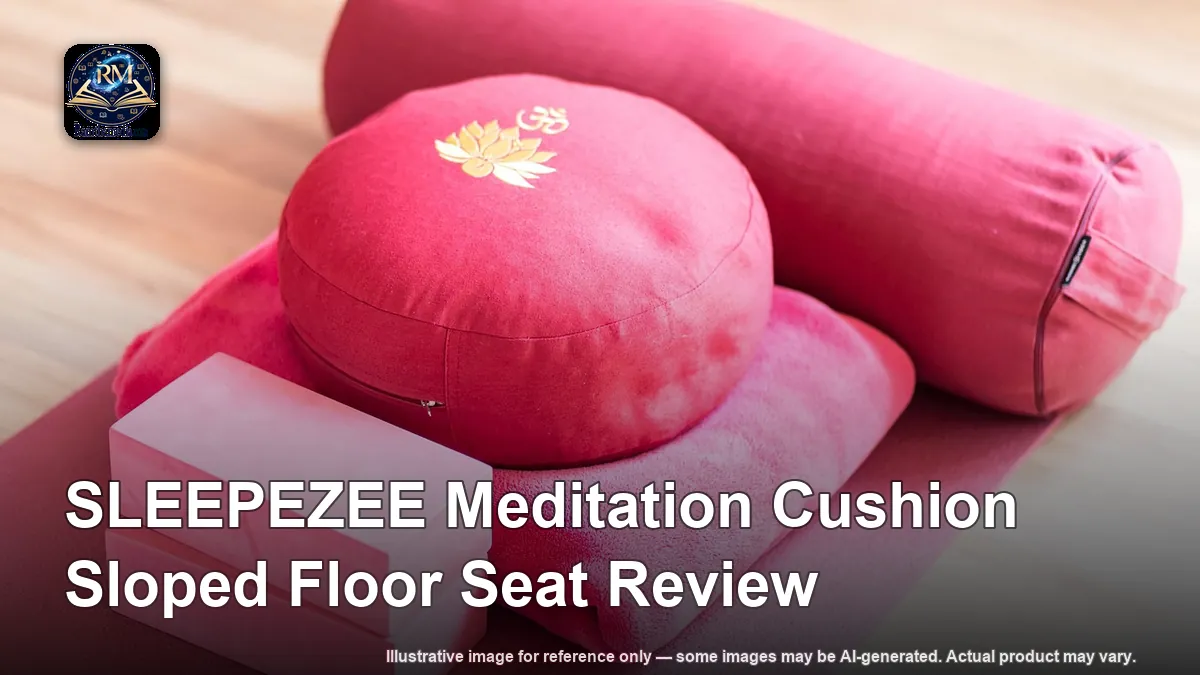
SLEEPEZEE Meditation Cushion Sloped Floor Seat Review : How can this product help you?
This review examines the SLEEPEZEE using verified buyer feedback and the manufacturer’s listed specifications. Sitting flat on a hard floor during extended mindfulness or… The SLEEPEZEE floor meditation seat directly addresses posture breakdown by using high-density polyurethane foam that maintains its elevation rather than flattening out. Its… The SLEEPEZEE Meditation Cushion provides firm polyurethane foam elevation designed to align the pelvis and ease knee pressure during cross-legged floor sitting. Measuring…
Read more about this productBuy on Amazon
As an Amazon Associate, RamthaMedia earns from qualifying purchases.
What Are the Qualifications of the One Who Answers (The Guru)?
A true Guru does not blurt out an answer the moment a disciple asks. A master must carefully evaluate several factors before speaking.
- Understand the Seeker’s Background: The Guru must reflect, “What is the background of this inquirer? What are the flaws and tendencies of their mind?”
- Discern the Motive: Discern the underlying intent: “With what motive and seeking what outcome is this person questioning me?”
- Choose the Right Means of Explanation: Determine which words and analogies will help the student become calm, tranquil, and receptive to Truth.
- Evaluate Receptive Capacity: Assess the seeker’s capacity for attention, patience, and whether they possess firm, unshakeable discernment. Can they assimilate and embrace a profound, higher Truth? Only after this assessment should the Guru offer a suitable answer.
- Do Not Blow a Conch Before the Deaf: It is best to say nothing to a crude, unfit person. Offering profound instruction without examining the inquirer’s capability is like blowing a conch before the deaf; it produces no result other than confusing them further.
Vasistha and Sri Rama: The Ideal Guru-Disciple Bond
Having outlined these principles, Vasistha addressed Sri Rama in the royal assembly:
“O Ramachandra, you are endowed with supreme virtues. Your dispassion has arisen not from a passing circumstance, but from pure, sattvic inquiry. You cherish noble qualities, and with such purity you question me. As for me, I have been designated by Lord Brahma himself to impart wisdom, seeking only the welfare of the world as the fruit of my teaching. When an earnest student endowed with virtue meets a selfless teacher, this union of Guru and disciple brings immense sweetness and fulfillment.”
Why Is Faith in the Guru Essential?
Why must a disciple trust the words of a Guru on the spiritual path? Vasistha explained the essential logic behind wholehearted faith in the teacher:
“O Raghava, you are adept in discerning the subtle meaning of words. Hold in your heart deep respect, faith, and the conviction that what I am about to speak is philosophy rooted in living experience.
For years, day and night, we have sought the Truth. We purified our minds through rigorous tapas and meditation before examining the sacred scriptures. We deliberated extensively alongside great sages over a vast span of time, arriving at our final conclusions only then.
Therefore, placing trust in our words is entirely just and reasonable. Only with such trust can this teaching yield its highest fruit.
The Analogy of the Physician: Just as a patient cannot find relief under a physician in whom they have no trust, one cannot assimilate spiritual wisdom without faith in the Guru.”
Clean Cloth Takes Dye Effortlessly
Vasistha praised Sri Rama’s mental readiness and maturity:
“Rama, you possess a magnificent intellect. You have attained unprompted dispassion without being forced by external grief. Through self-inquiry alone, you have clearly observed the condition of living beings. You view this entire existence—with its cycles of birth, aging, death, and sorrow—in its total reality. Having a disciple like you brings immense joy.
Just as clean cloth takes on dye effortlessly while soiled fabric resists it, this teaching will easily penetrate your being and become firmly rooted, pure, and steadfast.
From what you articulated in yesterday’s assembly, all of us sages assembled here unanimously recognize that your intellect possesses extraordinary focus and competence for inquiring into the supreme Truth. Just as sunlight effortlessly penetrates clear, pure water, may the profound essence I unfold enter your heart naturally and beautifully.
Receive everything I say with deep earnestness and diligence. Listen, inquire, and once you have investigated it thoroughly within yourself, act as you see fit.”
How to Ask Questions: Beware of the Monkey Mind
Vasistha laid down clear guidelines regarding the nature of inquiry during the discourse:
RECOMMENDED BOOK

The Maya Simulation: Quantum Physics and the Science of Consciousness by A. Ravinder
Is the world around us real? Or is it just a Maya Simulation?
A guide that bridges the ancient wisdom of the Yoga Vasistha with quantum physics and modern consciousness science — for readers ready to question the nature of reality and calm the mind with practical tools like the Zero Voice Technique. It explores mind, maya and consciousness in plain language, and offers a practical path for the seeker on the spiritual journey. Available in print and ebook instant-read versions.
Buy on AmazonBuy on Ramthamedia
As an Amazon Associate, RamthaMedia earns from qualifying purchases.
“Rama, whenever doubts arise, you must certainly question. However, let those questions stem solely from the desire to dissolve uncertainty and attain Self-knowledge. Do not indulge in futile questioning.
The restless mind behaves like a monkey, wandering aimlessly through the dense jungle of worldly existence. That mind must first be purified. Otherwise, our worldly perspectives take charge, dragging the mind down into trivialities.
When that happens, your questions risk becoming shallow. Restrain your mind with conscious effort and listen intently to the supreme Truth taught by the Guru. Maintain a noble aspiration, and question only to realize the true nature of the Self.”
Sage Vasistha’s Practical Message: The Power of Satsanga
In his concluding words to the royal court and all humanity, Vasistha declared:
“You are all preparing to listen to this inquiry into the Self. Driven by ignorance and lack of discernment, life in this world continuously binds itself to worthless and harmful pursuits. First, reduce such unwholesome attachments.
Those who truly seek self-realization must seek out genuine sages and wise teachers. Recognize them and engage with them in the inquiry into Truth. Then, you will clearly discern for yourself what is real and what is unreal.
Cultivate this practice continuously. For those who take refuge in the constant company of the wise (satsanga), discernment dawns effortlessly. The nectar of the sweet fruit born on that tree of discernment is what is known as liberation (moksha).”
Frequently Asked Questions About the Guru and Self-Inquiry
Whom should one never question about the Self?
Sage Vasistha states that one should never question anyone about the Self who has not realized the Truth directly or who has not received authentic guidance from a qualified master.
What qualities must an inquiring seeker possess?
An inquiring seeker must first evaluate the teacher’s wisdom and ask questions solely out of a sincere thirst for knowledge, never to demean the teacher or display intellectual pride.
What should a Guru evaluate before answering a student?
A Guru must assess the seeker’s background, motives, and receptive capacity, selecting suitable words and analogies only when the student is genuinely ready to assimilate the Truth.
What does the phrase “blowing a conch before the deaf” mean?
This analogy illustrates that imparting profound spiritual teachings to an unprepared, unrefined mind yields no result and only causes further confusion.
Why did Vasistha emphasize having faith in the Guru?
Just as a patient cannot be cured by a physician they do not trust, a seeker cannot assimilate spiritual knowledge without wholehearted trust in the Guru’s experiential realization.
How did Vasistha praise Sri Rama’s readiness as a disciple?
Vasistha compared Sri Rama’s pure, dispassionate mind to a clean white cloth that absorbs dye effortlessly, noting that his spontaneous self-inquiry makes him the ideal recipient of supreme wisdom.
What warning did Vasistha give regarding the mind during questioning?
📖 Why Does the Mind Lack Peace? Sri Rama’s Final Question in the Royal Court | Yoga Vasistha S1 EP-17
Vasistha warned that the restless mind is like a wandering monkey; seekers must consciously rein it in so their questions do not devolve into trivial worldly distractions.
What final message did Vasistha give to humanity?
Vasistha urged seekers to abandon futile pursuits and seek refuge in the company of the wise (satsanga), as discernment born of holy company effortlessly yields the fruit of liberation.
👉 Click this link to read the next episode: Is Samsara a Venomous Serpent? The Path to True Freedom | Yoga Vasistha S2 EP-16
👉 Click this link to read the next episode: Is Samsara a Venomous Serpent? The Path to True Freedom | Yoga Vasistha S2 EP-16
👉 Previous Episode: The Wheel of Samsara and Dispassion: Why the World Needs Self-Knowledge | Yoga Vasistha S2 EP-14


