
Sushupti refers to the profound state of dreamless deep sleep where all thoughts, emotions, and individual identities dissolve into pure existence. In this sacred realm, human consciousness leaves behind worldly burdens, merges into cosmic stillness, and rejuvenates through the unceasing presence of the eternal witness consciousness.
Every night, human beings partake in an extraordinary miracle that modern society frequently takes for granted. The moment our heads touch the pillow and our eyes close, we surrender our conscious control and slip into an infinite, boundless realm. Sleep is far more than a biological necessity or a biological battery-recharging mechanism. In Indian philosophical traditions, particularly within the Mandukya Upanishad and Advaita Vedanta, the state of deep dreamless sleep, known as Sushupti, is regarded as a direct gateway into the underlying mystery of our true existence.
Throughout our waking hours, we carry the immense weight of our social identities, professional duties, personal memories, anxieties, and egos. Yet, as we transition into sleep, this entire architecture of personal identity vanishes completely. We enter a state where we do not know where we are or what we are doing in a conventional worldly sense, yet we remain entirely safe and held by universal intelligence. For centuries, spiritual seekers and ancient sages have observed that this daily nocturnal occurrence is not an empty blankness, but a sacred journey where the individual soul momentarily unburdens itself from worldly illusion.
In our fast-paced contemporary world, understanding what truly happens during sleep provides profound solace and mental clarity. When we realize that our primary awareness survives even when our daily persona is silenced, our perspective on life, stress, and mortality shifts entirely. Sushupti offers a profound reminder that beneath the turbulent surface of our everyday thoughts lies an unshakable, peaceful core of pure awareness waiting to replenish our mind, body, and spirit.
Read the complete Telugu edition of this article.
Sushupti and the Unconscious Secrets of Dream Creation
One of the most fascinating dimensions preceding Sushupti is the dream state, known in classical texts as Swapna. Even when our conscious intellect is completely inactive, our inner mind continues to generate breathtaking landscapes, intricate narratives, and emotional experiences with astonishing creativity. In our dreams, we encounter individuals we have never met in our waking lives and visit majestic places we have never seen. This spontaneous creativity operates without any deliberate effort from the waking persona, raising the profound question: who is creating this vivid reality when the waking ‘I’ is absent? This phenomenon provides undeniable evidence of the infinite intelligence dwelling within human consciousness.
During a dream, the world we inhabit feels entirely real, coherent, and undeniable. We experience genuine joy, fear, excitement, and sorrow within the dream landscape. It is only upon waking that our rational mind labels the entire episode as an illusion. Ancient philosophers, exploring the <a href=”https://ramthamedia.in/body-nature-yoga-vasistha-rama-teachings-telugu/”>teachings of the Yoga Vasistha</a>, suggest that our waking reality might operate on a similar principle. Just as consciousness weaves a dream during the night, it projects this tangible world during the day. Recognizing the eternal observer behind both the dream and waking states allows us to step into Sushupti with reverence, perceiving that we are fundamentally the witness rather than the transient experiences themselves.
RECOMMENDED BOOK
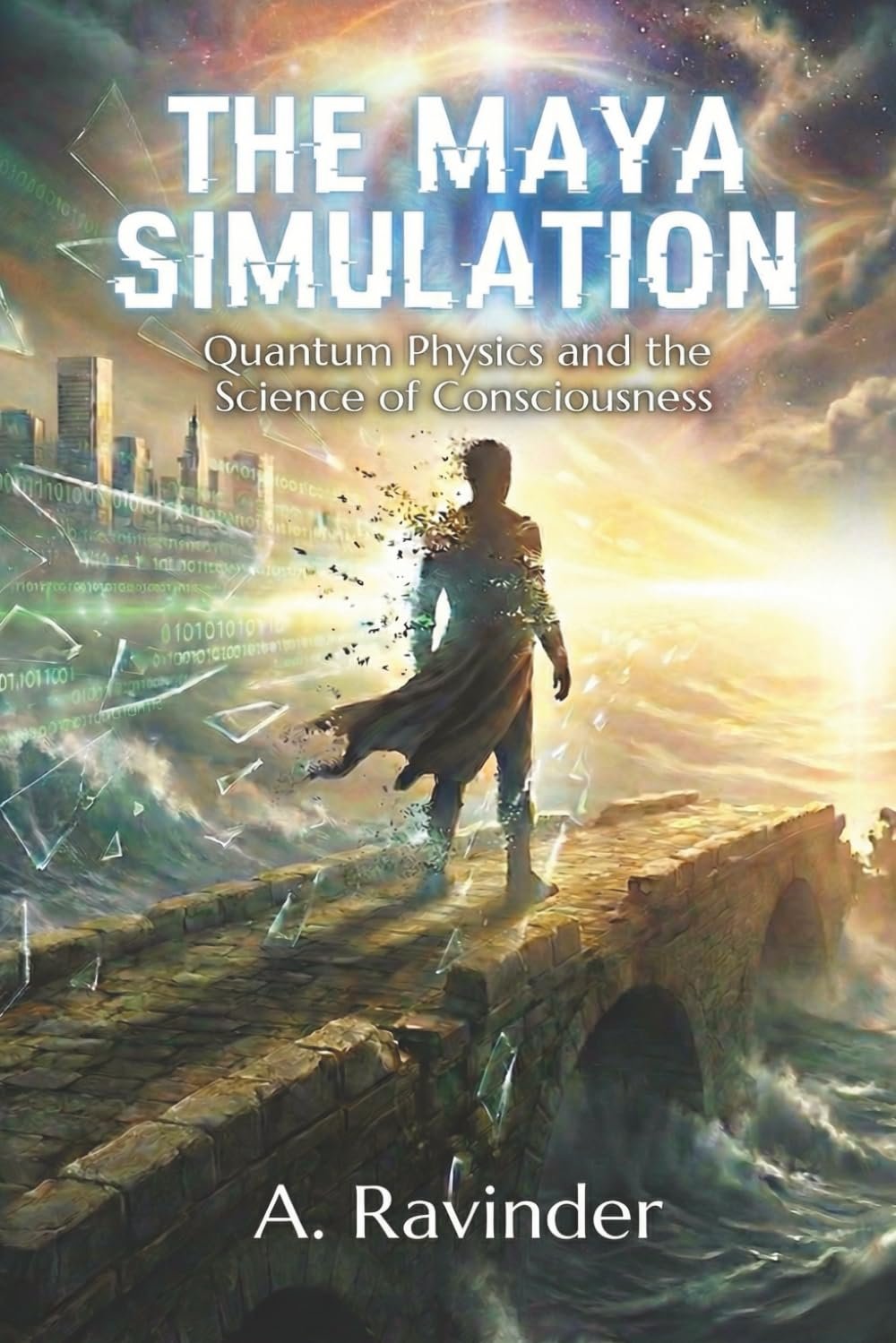
The Maya Simulation: Quantum Physics and the Science of Consciousness
by A. Ravinder
A guide that bridges the ancient wisdom of the Yoga Vasistha with quantum physics and modern consciousness science — for readers ready to question the nature of reality and calm the mind with practical tools like the Zero Voice Technique.
As an Amazon Associate, RamthaMedia can earn from qualifying purchases.
Sushupti as the Divine State of Complete Ego Dissolution
Beyond the dynamic imagery of dreams lies Sushupti, the profound realm of dreamless, undisturbed sleep. In Sushupti, every trace of thought, sensory perception, and emotional turbulence completely vanishes. There is no concept of time, spatial boundaries, physical form, or worldly relationships. Yet, upon waking in the morning, every individual joyfully declares, ‘I slept so peacefully.’ If there was absolutely no mental activity or sensory input in that state, who was present to perceive that overwhelming peace? Ancient Vedic masters identified this eternal presence as Sakshi Chaitanya, or the witness consciousness, which never sleeps and continuously illuminates our being.
In the tranquil depths of Sushupti, we come closest to our original, unblemished nature. In this state, social distinctions such as wealth, poverty, caste, religion, and enmity dissolve entirely. A king and a beggar experience the exact same boundless serenity in deep sleep because the ego, which creates division and conflict, has temporarily surrendered. This dissolution of individuality mirrors what spiritual traditions call temporary death or the void (Shunyata). Far from being a state of darkness, Sushupti is a return to primordial bliss, infusing the body and mind with cosmic vitality that sustains our entire daily existence.
Sushupti to Awakening: The Mysterious Restoration of Identity
The transition from Sushupti back into the waking state is an extraordinary ontological event that occurs every morning. The moment our eyes open, our personal name, obligations, accumulated memories, and social status are instantly reconstructed in perfect sequence. How our individual existence, which had completely vanished into formless consciousness during deep sleep, resurrects with such precise continuity remains a wondrous mystery. The same infinite cosmic intelligence that keeps our heart beating, orchestrates our breathing, and maintains our cellular life effortlessly reassembles our waking persona without our deliberate intervention.
However, upon re-entering the waking realm, we instantly reattach ourselves to our previous anxieties, fears, and rigid identifications. The foundational spiritual lesson imparted by Sushupti is that we were entirely content, peaceful, and whole even when these external identities were non-existent. Our daytime struggles, desires, and persistent worries are strictly temporary constructs. Internalizing this truth cultivates a profound inner detachment, allowing us to perform our worldly responsibilities with dedication while remaining free from the destructive pressure and anxiety of egoic attachment.
Sushupti Principles for Relieving Modern Stress and Anxiety
The ultimate realization derived from understanding Sushupti is that human identity extends far beyond the physical body and the restless stream of mental thoughts. We are the limitless, unchanging awareness that encompasses all three states of waking, dreaming, and deep sleep. When this spiritual understanding takes root, the primal fear of physical death dissolves, as death is recognized simply as a longer, more profound transition akin to deep sleep. Every night, we symbolically surrender our mortal identity and awaken anew each morning, proving that our intrinsic nature is eternal peace and untarnished joy.
Modern society faces an unprecedented epidemic of chronic insomnia and sleep disorders primarily because individuals carry their daytime anxieties, control mechanisms, and egoic burdens directly into bed. Sleep is inherently an act of total surrender. The more we learn to release our rigid mental grasp, the deeper and more restorative our rest becomes. By approaching sleep not merely as a biological chore, but as a sacred spiritual retreat into our authentic self, we cultivate holistic well-being, vibrant energy, and enduring tranquility in our everyday lives.
📖 Consciousness: The Unspoken Truth Behind the Mind and the CIA Gateway Document
Spiritual Meaning
The spiritual essence of Sushupti lies in the effortless dissolution of the false self. Throughout our waking life, the ego creates the illusion of separateness, convincing us that we are isolated individuals battling an external world. In deep dreamless sleep, this deceptive boundary collapses entirely, allowing the individual soul to rest in unconditioned unity with universal consciousness. This natural rhythm proves that peace is not an external achievement to be acquired, but our baseline ontological reality when the agitations of the mind are stilled.
According to the <a href=”https://www.britannica.com/topic/Mandukya”>philosophical framework of the Mandukya Upanishad</a>, consciousness operates through four distinct dimensions: waking (Jagrat), dreaming (Swapna), deep sleep (Sushupti), and the non-dual witness awareness known as the <a href=”https://en.wikipedia.org/wiki/Turiya”>transcendental state of Turiya</a>. Sushupti serves as the natural bridge between our worldly experiences and this transcendental truth. It provides direct experiential proof that consciousness exists independently of thoughts, senses, and physical matter.
By regularly observing the peaceful residue of Sushupti, a seeker learns the art of conscious surrender. The silence we experience in deep sleep is identical to the silence pursued through advanced meditation and yogic samadhi. Recognizing this sacred equivalence transforms ordinary sleep into an elevated spiritual practice, turning every night into an opportunity for spiritual purification and divine communion.
To integrate the wisdom of Sushupti into daily living, one should practice conscious release before retiring to bed. Spend a few minutes reviewing the day’s events, mentally forgiving all grievances, and consciously detaching from the belief that you are merely this body and mind. Upon waking, remain in silent contemplation for a minute before engaging with external devices, anchoring yourself in that pristine, unconditioned peace. Embracing sleep as a sacred surrender rather than a struggle for control heals modern insomnia and brings an unshakeable poise to everyday challenges.
Chapter Summary
This treatise explores the profound spiritual and psychological mysteries of sleep, focusing on the sacred state of Sushupti, or deep dreamless sleep. While the modern world often views sleep merely as a physiological recharge, ancient spiritual wisdom recognizes it as a profound journey of consciousness returning to its divine origin. The article examines the creative marvel of the dream state, the complete dissolution of the ego in dreamless sleep, and the wondrous morning reassembly of human identity by cosmic intelligence. In Sushupti, all worldly divisions of wealth, caste, and conflict vanish, revealing the eternal witness consciousness (Sakshi Chaitanya) that remains perpetually awake. By understanding that our true nature is boundless peace beyond temporary thoughts and bodily identities, we overcome the fear of death, alleviate modern insomnia, and live each day with renewed spiritual clarity, lightness, and deep inner freedom.
👉 CGK Microfiber Bed Sheet Set Review on Deep Pockets
Scripture Notes
- Main Message: The central message of the Vedic exploration of Sushupti is that human consciousness is inherently free, whole, and blissful, independent of external conditions and mental activity. Every night, the soul naturally returns to this unblemished state, demonstrating that our deepest reality is untouched by worldly sorrow, identity, or limitation.
- Philosophical Teaching: Vedantic philosophy establishes that the waking and dreaming states are transient projections of the mind, whereas the peace experienced in Sushupti points directly to the underlying <a href=”https://en.wikipedia.org/wiki/Sushupti”>traditional understanding of Sushupti</a> as a glimpse of Brahman. The witness consciousness that records the profound peace of deep sleep is the changeless Atman, proving that awareness persists even when the ego is entirely absent.
Frequently Asked Questions
Why is sleep sometimes described as a temporary death?
Sleep is often compared to a temporary death because our individual ego, social identity, memories, and personal worries completely dissolve, just as they do when physical life ends. In both states, the conscious ‘I’ departs, leaving behind all worldly attachments.
What is the meaning of Sushupti in Indian philosophy?
Sushupti is the Sanskrit term for deep, dreamless sleep. It represents a state of pure unconditioned existence where all thoughts, mental images, and dualistic perceptions disappear, allowing consciousness to rest peacefully in its original source.
Who observes the profound peace experienced in deep sleep?
The peace of deep sleep is observed by Sakshi Chaitanya, or the eternal witness consciousness. This unattached aspect of our being never sleeps and continuously illuminates our existence, enabling us to recall upon waking that we slept peacefully.
What state does our consciousness reach during deep sleep?
During deep sleep, our desires, fears, and egoic identifications become silent. Consciousness sheds its limitations and temporarily merges into cosmic awareness, which is why we wake up feeling deeply renewed, vitalized, and joyful.
What is the most important lesson sleep teaches us about life?
Sleep teaches us that we are not merely our physical bodies or intellectual thoughts, but infinite awareness. It proves that we can experience supreme contentment and peace even without our external titles, possessions, and worldly identities.
📖 Saamethalu — The Timeless Telugu Proverbs and Their Deep Meaning
What is the primary cause of insomnia in modern times?
The primary cause of modern insomnia is the habit of carrying daytime anxieties, rigid expectations, and ego-driven control into bed. Because sleep is an act of total surrender, true rest can only be achieved when we learn to let go of our mental grasp.