

Milarepa was guided to spiritual liberation by his master Marpa the Translator, who tested his resolve before imparting Mahamudra and the Six Yogas of Naropa. After using destructive sorcery to avenge his family, Milarepa endured severe trials, purified his negative karma, mastered Tummo inner heat, and attained complete enlightenment in a single lifetime.
High amidst the snow-crowned peaks of the Himalayas, where silence and sacred mysteries envelop the vast Tibetan plateau, unfolded one of history’s most extraordinary spiritual journeys. This is the chronicle of Milarepa, a legendary figure celebrated as one of Tibet’s greatest yogis and poets. Long before he was revered as an enlightened master who attained full Buddhahood in a single lifetime, Milarepa was known as a feared sorcerer. Driven by a burning desire to avenge the cruel injustices inflicted upon his family, he summoned dark occult forces and devastating hailstorms to destroy his enemies.
Yet, his life stands as a monumental testament to the profound dualities of human existence: suffering and power, vengeance and redemption, and the journey from absolute darkness into supreme illumination. Milarepa became the first Tibetan to achieve complete awakening in one lifetime, proving that no soul is permanently condemned by past misdeeds. His narrative is not merely an ancient historical biography; it is an enduring spiritual map that explores how deep remorse can ignite the light of supreme wisdom.
For contemporary seekers, the story of Milarepa offers profound solace and inspiration. It addresses the universal human dilemmas of guilt, suffering, and the search for authentic inner transformation. His teachings demonstrate that true spirituality does not require escaping to an ideal world, but rather confronting one’s inner shadows, conquering the ego, and recognizing that all external phenomena are reflections of the mind.
Read the complete Telugu edition of this article.
Milarepa and His Tragic Childhood of Betrayal
Milarepa was born into a prosperous and aristocratic Tibetan family under the name Mila Thopaga, which means ‘delightful to hear.’ During his early childhood, he lived in abundance, security, and social prestige. However, this idyllic existence was abruptly shattered when his father fell fatally ill. On his deathbed, the father entrusted his entire estate and wealth to his brother and sister-in-law, extracting a solemn promise that they would manage the property and care for Milarepa, his mother Myang-tsa Kargyen, and his younger sister until the boy came of age.
Tragically, greed corrupted the uncle and aunt. The moment the father passed away, they seized the entire ancestral inheritance, leaving the grieving widow and her children destitute. Rather than protecting the family, they forced Milarepa, his mother, and his sister into hard domestic servitude, subjecting them to relentless cruelty, starvation, and public humiliation. They were reduced to wearing rags and begging for basic scraps of food, while the uncle flaunted their rightful wealth before the entire village.
This relentless oppression fostered a profound and agonizing resentment in the heart of Milarepa’s mother. Unable to bear the shame and humiliation any longer, she urged her son to seek vengeance against their tormentors. She threatened to end her own life if he failed to retaliate and restore their dignity. Compelled by his mother’s desperation and his own wounded spirit, the young Milarepa departed his village to seek masters of the dark occult arts.
Milarepa and the Path of Destructive Sorcery
Milarepa traveled to distant regions to master the dark magical arts of the ancient Bon and esoteric sorcery traditions. Demonstrating intense discipline and razor-sharp focus, he quickly mastered destructive spells capable of manipulating the forces of nature, summoning catastrophic storms, floods, and destructive hailstorms. Armed with these lethal powers, Milarepa returned in secret to unleash an awful catastrophe upon his oppressive relatives.
During a grand wedding celebration held at his uncle’s house, while relatives and guests gathered in merriment, Milarepa unleashed a devastating spell. A monstrous hailstorm struck the house, causing the heavy timber and stone structure to collapse completely, claiming the lives of thirty-five people. While his uncle and aunt survived the calamity, the family’s social standing and lineage were utterly ruined, and his mother celebrated the destruction with bitter triumph.
Yet, the fulfillment of his vengeance brought Milarepa no inner peace. Instead, he was immediately crushed by a suffocating wave of guilt, terror, and profound remorse. The horrific realization of the immense negative karma he had accumulated weighed heavily upon his conscience. He understood that vengeance was a bottomless abyss leading to endless cycles of suffering. Recognizing that only authentic spiritual liberation could cleanse his soul, Milarepa renounced sorcery and embarked on a desperate quest for an enlightened master.
RECOMMENDED BOOK
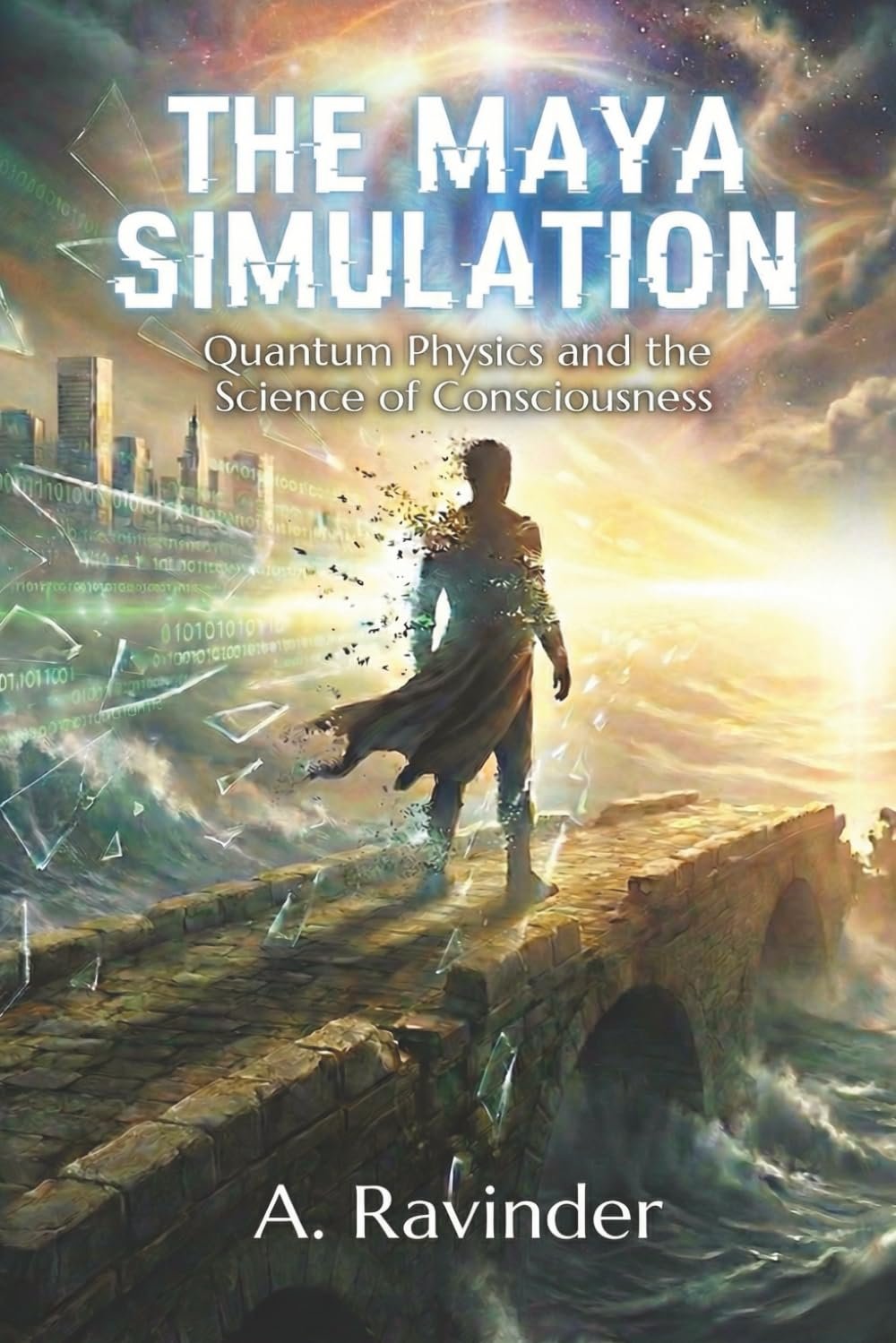
The Maya Simulation: Quantum Physics and the Science of Consciousness
by A. Ravinder
A guide that bridges the ancient wisdom of the Yoga Vasistha with quantum physics and modern consciousness science — for readers ready to question the nature of reality and calm the mind with practical tools like the Zero Voice Technique.
As an Amazon Associate, RamthaMedia can earn from qualifying purchases.
Milarepa and the Severe Trials Under Master Marpa
Desperate for spiritual purification, Milarepa sought out the legendary Marpa the Translator, an enlightened master renowned for his fierce temperament and unconventional methods of instruction. Marpa, who had traveled multiple times to India to receive esoteric teachings from the great master Naropa, immediately recognized Milarepa’s heavy burden of negative karma and his immense spiritual potential. Before imparting any sacred teachings, Marpa subjected Milarepa to severe physical and psychological ordeals.
Marpa ordered Milarepa to single-handedly construct massive stone towers upon rugged mountain slopes. Each time Milarepa completed a tower with grueling physical effort, carrying heavy boulders until his back was covered in open sores, Marpa would inspect the work, express severe dissatisfaction, and command him to tear it down and return every single stone to its original place. This grueling process was repeated multiple times across various architectural designs, pushing Milarepa to the brink of utter physical collapse and despair.
These seemingly harsh and illogical trials were specifically designed by Marpa as profound spiritual medicine to shatter Milarepa’s ego and exhaust his catastrophic negative karma. Despite the excruciating pain, humiliation, and continuous scoldings, Milarepa never lost faith in his guru. Recognizing that his disciple’s devotion was unwavering and his past misdeeds had been purified through voluntary suffering, Marpa finally embraced Milarepa with deep compassion and accepted him as his foremost heart-son, initiating him into the highest teachings of Mahamudra and the Six Yogas of Naropa.
Milarepa and the Secret Practice of Tummo Inner Fire
Among the advanced esoteric practices Milarepa received, the most pivotal was Tummo, or the cultivation of psychic inner heat, which forms the cornerstone of the Six Yogas of Naropa. Through rigorous breath control, visualization, and the subtle manipulation of vital energies (prana) within the central channel, the yogi ignites an intense spiritual fire at the navel center. This internal warmth purifies the subtle body and enables the practitioner to generate extraordinary physical heat, rendering external clothing unnecessary even in sub-zero Himalayan conditions.
Milarepa retreated into remote, snowbound mountain caves to engage in solitary and uninterrupted meditation for decades. Living in complete isolation, he sustained his physical body solely on wild nettles, which eventually caused his skin to take on a greenish hue and his physical form to become emaciated. While his physical frame appeared frail, his spiritual consciousness blossomed into immense power and unshakeable bliss.
The heat generated by Tummo dissolved both physical cold and the subtle mental obscurations of desire, anger, and ignorance. His mastery over the physical elements and energetic channels became so profound that he could meditate comfortably amidst ferocious blizzards wearing only a thin white cotton cloth. Local traditions across Tibet and Nepal recount that his spiritual energy was so dense that he left permanent handprints and footprints pressed into the solid rock walls of his meditation caves, which remain visible to this day.
Milarepa and the Illusory Nature of Mind and Demons
During his prolonged solitary retreats in desolate mountain caves, Milarepa encountered terrifying demonic visions and malevolent apparitions attempting to disrupt his meditation. At first, he tried to dispel them by reciting sacred mantras, preaching Buddhist philosophy, and displaying wrathful spiritual power. However, the monstrous figures only multiplied, threatening to overwhelm his consciousness.
Recognizing the futility of resistance, Milarepa experienced a profound flash of insight into the ultimate nature of reality. He surrendered all fear and attachment, opening his heart completely to the apparitions, saying: ‘If you have come to teach me, you are welcome; if you need my flesh, take it freely. I will reside with you.’ The instant he embraced them without fear, realizing that they had no independent existence outside his own mind, all the terrifying demons dissolved into clear light.
This pivotal breakthrough confirmed the foundational Buddhist truth of Shunyata, or emptiness: all outer forms, terrors, and perceptions are merely transient reflections of one’s own mind. By overcoming the duality between self and other, fear and peace, Milarepa achieved unshakable non-dual realization, understanding that when the mind rests in its pristine, uncreated nature, no external force can disturb its primordial peace.
📖 What Does Leeladevi’s Journey from Brahman to a Mosquito Reveal? | Yoga Vasistha S3 EP-18
Milarepa and His Inspiring Spontaneous Songs of Realization
Following his enlightenment, Milarepa wandered across the mountains of Tibet as an itinerant yogi, communicating profound spiritual wisdom through spontaneous, poetic songs known as Dohas. These songs, later compiled into celebrated texts such as ‘The Hundred Thousand Songs of Milarepa,’ translated the deepest philosophical insights of Tantric Buddhism into clear, accessible, and evocative language for common villagers, nomads, and high scholars alike.
In his Dohas, Milarepa expressed profound gratitude to his guru Marpa, declaring that without the harsh mirror of the guru’s guidance, one can never see past the blinding illusions of the ego. He sang of the sublime joy found in solitary cave meditation, the sweetness of living on wild nettles, and the freedom of possessing nothing worldly. His songs depicted the cycle of worldly existence (Samsara) as an ephemeral dream, reminding listeners that just as one recognizes the unreality of a dream upon waking, one realizes the illusory nature of worldly attachments upon spiritual awakening.
Milarepa emphasized that spiritual liberation is not a grim, agonizing chore, but a joyful celebration of the awakened heart. He taught that enlightenment is accessible to all individuals who possess sincere determination, genuine remorse for past errors, and unconditional devotion to the path. His living legacy dismantled the rigid belief that enlightenment was reserved exclusively for scholars and monks, proving that even a repentant sorcerer could attain the highest pinnacle of Buddhahood.
Spiritual Meaning of Milarepa and His Path to Liberation
The spiritual journey of Milarepa provides an irreplaceable blueprint for the transmutation of destructive karma into enlightened awareness. In esoteric philosophy, energy itself is neutral; the same intense willpower and focused concentration that Milarepa initially utilized for malevolent sorcery was subsequently redirected toward rigorous meditation and ultimate liberation. His life demonstrates that no individual is fundamentally stained by past actions when sincere repentance and radical self-honesty are applied to the spiritual path.
The practice of Tummo, or the inner fire, holds deep metaphysical significance beyond the simple generation of physical warmth. It symbolizes the burning away of karmic propensities, dualistic thoughts, and subconscious ignorance within the subtle energetic channels of the human body. By awakening this dormant inner fire, the yogi clears the mental blockages that obscure the natural, radiant clarity of pure consciousness, aligning the microcosm of the physical body with the universal life force.
Furthermore, Milarepa’s confrontation with inner demons unveils the profound doctrine of non-duality and emptiness. The terrifying projections that haunted his cave were not external adversaries to be destroyed, but unresolved psychological impressions of fear, anger, and guilt arising from his own mind. When he ceased resisting and recognized their empty nature, the dualistic illusion collapsed, illustrating that true liberation is found not in running from darkness, but in recognizing that darkness has no independent reality in the light of pure awareness.
Milarepa’s life offers an empowering mirror for navigating the emotional storms of modern existence. In a world frequently characterized by grievance, resentment, and anxiety, his transformation reminds us that holding onto grudges is like ingesting poison while expecting another to suffer. True power does not lie in dominating external circumstances, but in cultivating internal mastery through self-discipline, sincere forgiveness, and mindful awareness. When we encounter modern ‘demons’ such as fear, stress, and self-doubt, meeting them with acceptance rather than reactivity allows our inner clarity to shine through unhindered.
👉 Home Temple Pooja Stand with Door, LED Light and Storage
Chapter Summary
Milarepa’s life is a monumental journey of transformation from a vengeful sorcerer into Tibet’s most celebrated enlightened yogi. After enduring severe childhood betrayal at the hands of greedy relatives, Milarepa mastered black magic and destroyed thirty-five people in a destructive hailstorm. Overwhelmed by remorse, he sought spiritual redemption under the rigorous master Marpa the Translator, who purified his negative karma through exhausting physical ordeals, including building and dismantling massive stone towers. Once purified, Milarepa was initiated into Mahamudra and the Six Yogas of Naropa. Retreating into freezing Himalayan caves, he sustained himself on nettles, mastered Tummo inner fire meditation, and dissolved demonic apparitions by recognizing all phenomena as projections of the mind. Expressing supreme wisdom through spontaneous spiritual songs (Dohas), Milarepa proved that sincere repentance, guru devotion, and relentless discipline can transform the deepest darkness into supreme enlightenment in a single lifetime.
Scripture Notes
- Main Message: The central message of Milarepa’s life is that past mistakes, no matter how severe, do not permanently define a soul’s spiritual destiny. Through genuine remorse, complete surrender to an authentic guru, and unwavering perseverance in meditation, any seeker can purify accumulated negative karma and realize their innate Buddha-nature.
- Philosophical Teaching: Rooted in the Kagyu lineage of Tibetan Vajrayana Buddhism, Milarepa’s teachings synthesize the direct experiential realization of Mahamudra with the transformative psycho-physical technologies of the Six Yogas of Naropa. His philosophy emphasizes Shunyata (emptiness)—the realization that all external phenomena and internal mental states lack inherent, independent existence and are inseparable from luminous awareness.
Frequently Asked Questions
Why did Milarepa learn black magic and sorcery?
Milarepa learned dark sorcery to seek vengeance against his uncle and aunt, who had illegally usurped his father’s wealth, stolen the family inheritance, and forced Milarepa, his mother, and his sister into brutal servitude and public humiliation.
Who was Milarepa’s spiritual guru, and what did he teach him?
Milarepa’s spiritual guru was Marpa the Translator. After testing Milarepa’s endurance and purifying his heavy negative karma through demanding trials, Marpa initiated him into the supreme teachings of Mahamudra and the Six Yogas of Naropa.
📖 Did the Universe Arise from Brahman? The Secret of Dualistic Scriptures | Yoga Vasistha S3 EP-46
Why did Marpa make Milarepa build and demolish stone towers?
Marpa commanded Milarepa to build and repeatedly tear down heavy stone towers to exhaust his severe negative karma from killing thirty-five people with sorcery. These physical trials purified his past sins, broke his ego, and prepared his mind for esoteric initiations.
What is the yogic practice of Tummo?
Tummo is an advanced esoteric yogic practice that generates intense psychic inner heat within the body’s subtle energetic channels. This practice allowed Milarepa to meditate comfortably in freezing Himalayan caves while wearing only a thin cotton garment.
What did Milarepa eat during his solitary cave meditation?
During decades of solitary meditation in remote Himalayan caves, Milarepa sustained himself entirely on wild nettle soup. This extreme diet caused his body to become emaciated and gave his skin a distinctive greenish tint.
What are Milarepa’s spiritual songs or Dohas?
Dohas are spontaneous songs of spiritual realization composed by Milarepa. Expressed in lyrical, everyday language, they convey profound insights regarding meditation, devotion to the guru, the nature of the mind, and the path to enlightenment.