
Savitri stands as Sri Aurobindo’s monumental spiritual epic that reinterprets an ancient Vedic legend into a comprehensive blueprint for human evolution. Through twenty-four thousand lines of mantric poetry, the epic demonstrates how mortal consciousness can transcend ignorance and death to establish a divine life upon earth.
Sri Aurobindo’s Savitri: A Legend and a Symbol is not merely a literary masterpiece; it is a profound spiritual revelation that charts the future evolution of human consciousness. Rooted in the ancient tale from the Markandeya Purana, this epic transforms the traditional story of marital devotion into a cosmic drama of divine grace descending to liberate the human soul from the grip of mortality and ignorance.
Composed over three and a half decades during Sri Aurobindo’s intense yogic sadhana in Pondicherry, the epic embodies the core principles of Integral Yoga. It articulates the transition of consciousness from inert matter to life, from life to mind, and ultimately from mind to the luminous realm of the Supermind. Every canto functions as an experiential record of higher spiritual realms, offering seekers an illuminated pathway toward inner transformation.
In our contemporary world, where humanity grapples with existential despair, technological alienation, and spiritual discord, Savitri provides a vision of supreme hope. It reassures us that human limitation is not the final chapter of terrestrial existence, but rather a transitional stage preparing for the manifestation of a divine humanity on earth.
Read the complete Telugu edition of this article.
Savitri and the Divine Journey from Legend to Symbol
Savitri: A Legend and a Symbol represents an unparalleled confluence of poetic grandeur, metaphysical depth, and realized yogic experience. While the narrative draws its foundational framework from the celebrated story of Savitri and Satyavan found in the Mahabharata and Markandeya Purana, Sri Aurobindo infuses this traditional account with cosmic significance. The poem ceases to be an ordinary narrative and expands into a living spiritual journey that reveals how human consciousness evolves toward its divine destiny.
To read Savitri is to encounter a living stream of spiritual power transmitted through the cadence of language. Sri Aurobindo did not write this epic merely for aesthetic delight, but as a vehicle for mantric poetry that directly touches and awakens the deeper recesses of the reader’s being. Working on this monumental text during the final decades of his life, he embedded his own advanced realizations within its verses, turning the text into an indispensable guide for spiritual seekers, philosophers, and visionaries alike.
The central journey of Savitri portrays the soul’s ascent from darkness to light, from ignorance to self-knowledge, and from mortality to immortality. In the grand architectural vision of the epic, the human individual is recognized not as a helpless mortal bound by fate, but as a living instrument destined to collaborate with the supreme divine will to transform life on earth.
Savitri and the Life Journey of Sri Aurobindo
Sri Aurobindo (1872–1950) occupies a towering position in modern Indian history and global spirituality. His life unfolded as an extraordinary journey of multiple transformations—evolving from a brilliant scholar and fiery revolutionary leader into a master yogi and seer-philosopher whose teachings opened a new horizon in spiritual philosophy. His outer life mirrored the profound inner transitions that eventually gave birth to Savitri.
Born in Calcutta on August 15, 1872, Sri Aurobindo was sent to England at an early age, where he received a thorough Western education until the age of twenty-one. He achieved remarkable mastery over Greek, Latin, French, German, Italian, and Spanish, while immersing himself in classical literature, history, and European thought. Yet, despite being immersed in Western culture, an enduring affinity for Indian heritage and the liberation of his motherland ignited within his spirit.
Upon returning to India, he served in the Baroda State service, during which he mastered Sanskrit and Bengali while undertaking an exhaustive study of the Upanishads and the Bhagavad Gita. As political unrest mounted, he stepped into the forefront of the Indian freedom movement following the 1905 Partition of Bengal. Partnering with Lokmanya Bal Gangadhar Tilak, he edited the renowned journal Bande Mataram and became one of the foremost leaders to demand complete and unconditional independence from British colonial rule. His revolutionary activities led to his arrest in the 1908 Alipore Bomb Case, resulting in a year of solitary confinement.
The time spent in the Alipore jail proved to be the decisive turning point of his life. In his solitary cell, Sri Aurobindo experienced profound spiritual realizations, perceiving the divine presence of Sri Krishna in all beings, guards, and prison walls, while also receiving inner spiritual guidance from the subtle presence of Swami Vivekananda. These spiritual awakenings altered his life’s mission, leading him to retire completely from active politics and move to Pondicherry in 1910. There, dedicated entirely to spiritual realization, he formulated the philosophy and practice of Integral Yoga.
RECOMMENDED BOOK
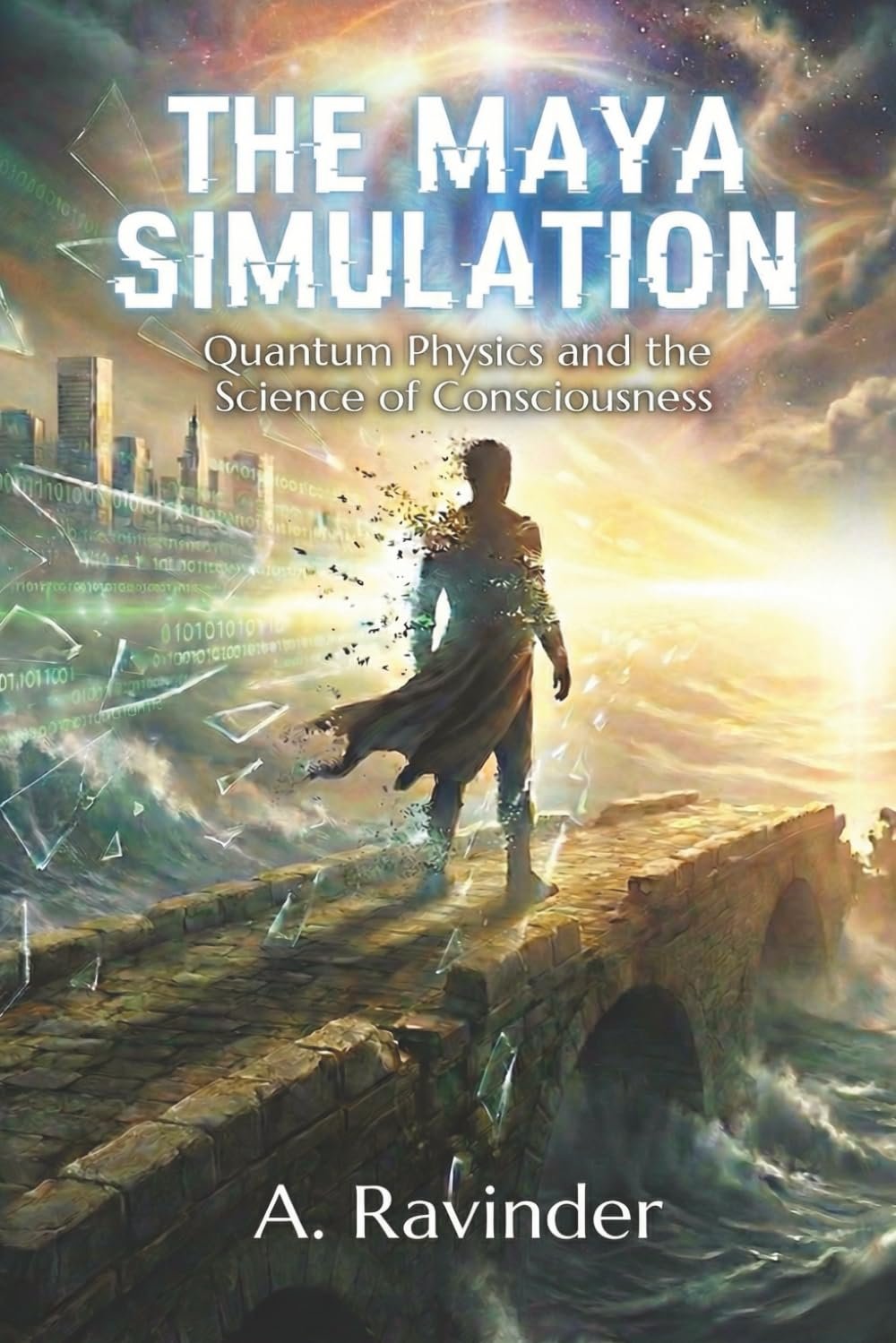
The Maya Simulation: Quantum Physics and the Science of Consciousness
by A. Ravinder
A guide that bridges the ancient wisdom of the Yoga Vasistha with quantum physics and modern consciousness science — for readers ready to question the nature of reality and calm the mind with practical tools like the Zero Voice Technique.
As an Amazon Associate, RamthaMedia can earn from qualifying purchases.
Savitri and the Revolutionary Path of Integral Yoga
The path of Integral Yoga, or Purna Yoga, formulated by Sri Aurobindo, represents a radical departure from traditional ascetic spirituality. Conventional yogic paths generally view liberation, or Moksha, as an exit from terrestrial existence into an unmanifest transcendent realm or peaceful Nirvana. In contrast, Integral Yoga establishes that the true purpose of spiritual realization is the divine transformation of earthly life itself.
Integral Yoga insists on the harmonization and spiritualization of every layer of human existence—physical, vital, mental, and psychic. It rejects the notion of world-denial, asserting instead that the Divine created the universe out of delight to manifest infinite consciousness in material form. To fulfill this evolutionary purpose, human beings must transcend ordinary mental boundaries and evolve into supramental beings who embody divine truth and power in physical embodiment.
At the core of this yogic philosophy lies the concept of the Supermind (Atimanasa), a supreme truth-consciousness that mediates between the unmanifest Divine and the manifested cosmos. While ordinary human intellect perceives reality through division and partiality, the Supermind possesses an integral vision of unity and truth. The descent of this supramental consciousness into earth-nature is the central engine of evolution depicted throughout Savitri.
Unlike past spiritual traditions where the final achievement was the upward ascent of the soul into transcendence, Sri Aurobindo emphasized that ascent is merely the preparatory half of the work. The higher spiritual light, peace, power, and bliss attained at the summit must deliberately descend into the mind, life-energies, and physical cells of the body. Through this descent, humanity will not merely escape the world, but establish the kingdom of the Divine upon the earth.
Savitri Epic — Structure, Symbolism, and Spiritual Vision
The epic of Savitri was Sri Aurobindo’s continuous spiritual sadhana spanning more than thirty-five years, from roughly 1916 until his passing in 1950. Comprising twelve distinct books and forty-nine comprehensive cantos across approximately twenty-four thousand lines, it stands alongside the world’s most expansive poetic epics, matching the monumental scale of the Mahabharata and Homer’s classical epics.
Every character within Savitri functions as a living symbol of cosmic principles. Satyavan represents the divine soul fallen into the clutches of earthly ignorance and mortality. Savitri represents the descending Divine Grace, the solar power of truth, love, and sovereign will born to liberate creation. Yama, the god of death, represents not merely physical demise, but the foundational principle of ignorance, inconscience, and cosmic resistance. King Aswapati, the human father of Savitri, represents the aspiring soul of humanity striving through concentrated tapasya to invoke divine intervention.
The central theme of the epic centers upon the conquest of death and the realization of immortality. Sri Aurobindo presents death not as an immutable natural law, but as a temporary limitation imposed by the inconscient base of matter. By entering the domain of death armed with the light of supramental truth, Savitri dissolves the darkness of limitation, demonstrating that humanity can realize conscious immortality and divine perfection within physical embodiment.
Savitri Yogic Dimensions — Inner Journeys and Transformation
The spiritual core of Savitri is revealed through the parallel inner journeys undertaken by King Aswapati and Savitri herself. Aswapati’s yogic exploration traverses the entire hierarchy of manifest planes—ascending from the material and vital realms through the subtle mental spheres, higher mind, illumined mind, intuitive mind, and overmind, until he stands before the Supreme Divine Mother. His arduous climb represents the ascent of human consciousness, petitioning the Divine to send down a conscious force to break the cycle of earthly suffering.
Following Satyavan’s tragic death, Savitri undertakes her own inward pilgrimage to uncover the secret source of her divine strength. She explores the hidden layers of her physical, vital, and mental being until she discovers her inmost psychic being—the immortal spark of the Divine residing in the heart. This realization endows her with the unshakeable power, clarity, and unconditional love necessary to confront the shadowy majesty of death.
Savitri’s confrontation with Yama represents the ultimate testing ground of the human soul. Confronted with the philosophical sophistry of death, which argues that matter is forever condemned to darkness and grief, Savitri refuses to abandon earthly existence for an otherworldly bliss. Her unyielding insistence on redeeming earthly life forces death to surrender, paving the way for the physical transformation of humanity and the emergence of a divine society.
📖 AI and Spiritual Consciousness: Can We Communicate with the Divine?
Savitri as Poetry, Philosophy, and Divine Mantric Power
Savitri represents a rare synthesis of supreme poetic craft, rigorous metaphysical thought, and authentic yogic realization. Written primarily in blank verse using iambic pentameter, the text exhibits extraordinary rhythmic precision. Sri Aurobindo crafted each phrase with meticulous care, selecting words whose inner resonance and sonic vibration awaken elevated states of consciousness in the contemplative reader.
Beyond its exquisite poetic texture, Savitri unfolds as a vast philosophical treatise on cosmology, spiritual evolution, karma, rebirth, and the divine play of existence. It presents creation not as an illusion to be discarded, but as an evolving manifestation of the Divine Will. The poem explains how matter contains within itself the hidden seed of Spirit, destined to blossom into conscious divinity through progressive stages of evolutionary awakening.
To engage with Savitri is to participate in an active spiritual discipline. Sri Aurobindo once described Savitri as his yoga, his meditation, and his prayer. When approached with reverent receptivity, its verses quiet the noisy surface intellect and awaken the hidden depths of the soul, providing spiritual seekers with a tangible experience of the luminous reality it describes.
Savitri as an Eternal Beacon of Future Evolution
In the expansive canvas of Sri Aurobindo’s spiritual philosophy, Savitri serves as the crown jewel that unites theory with practical yogic experience. It presents an optimistic and triumphant vision of humanity’s future, declaring that human weaknesses, sorrow, and mortality are transient phases in an unfolding cosmic progression. The epic issues an urgent call to every individual to discover their inner divinity and actively participate in the collective transformation of the world.
Savitri bridges ancient Indian spiritual wisdom with the modern evolutionary perspective, standing as a guiding light for future generations. It provides both the philosophical framework and the spiritual energy needed to realize the ancient Vedic aspiration of manifesting heaven upon this earthly soil. As an eternal fountain of inspiration, Savitri continues to illuminate humanity’s sacred journey toward divine consciousness.
👉 Home Temple Pooja Stand with Door, LED Light and Storage
Spiritual Meaning of Savitri
The esoteric core of Savitri reveals that human existence is not a meaningless accident or an inescapable prison of suffering, but an intentional stage in a magnificent divine evolution. The story demonstrates that matter and spirit are not irreconcilable opposites; rather, matter is the sleeping form of Spirit waiting to be awakened through conscious spiritual aspiration.
The conflict between Savitri and the Lord of Death allegorizes the fundamental struggle between the ascending divine light and the primordial resistance of cosmic ignorance. When the soul realizes its true identity through the discovery of the psychic being, it acquires the authority to dissolve limitations, overcome psychological death, and manifest divine peace, love, and truth directly into physical reality.
Sri Aurobindo’s vision in Savitri emphasizes that true spiritual victory is collective and terrestrial. The purpose of higher realization is not personal escapism into celestial realms, but the conscious descent of supramental consciousness to redeem, illumine, and immortalize the entire fabric of earthly existence.
Applying the wisdom of Savitri to daily life begins with cultivating an unwavering awareness of the psychic presence within the heart. In the midst of contemporary stress, anxieties, and conflicting societal demands, one can practice quiet interior reflection, refusing to succumb to feelings of helplessness or despair. By recognizing that every life challenge is an evolutionary opportunity to cultivate courage, truthfulness, and divine love, we actively participate in the noble work of personal and collective transformation.
Chapter Summary
Sri Aurobindo’s Savitri stands as one of the most comprehensive spiritual and philosophical epics ever written, translating the ancient legend of Savitri and Satyavan into a profound symbol of the evolution of consciousness. The epic encapsulates Sri Aurobindo’s life journey from political revolutionary to master of Integral Yoga, detailing how human nature can be transformed through the descent of the Supermind. Across its extensive cantos, the narrative traces Aswapati’s ascent through cosmic planes to invoke Divine Grace, Savitri’s discovery of the immortal psychic being within, and her ultimate victory over the principle of death and ignorance. Savitri delivers a powerful message of evolutionary optimism, assuring seekers that earthly life is destined to be transfigured into a radiant manifestation of divine truth, peace, and eternal delight.
Scripture Notes
- Main Message: The central message of Savitri is that the human soul possesses the divine potential to overcome ignorance, sorrow, and mortality through the power of Divine Grace and Integral Yoga. Earthly life is not an illusion to be abandoned, but the sacred field where the Divine intends to manifest fully in physical form.
- Philosophical Teaching: Sri Aurobindo’s philosophical teaching in Savitri synthesizes the highest insights of the Upanishads and the Gita with modern evolutionary thought. It establishes that evolution proceeds from Matter to Life, Life to Mind, and Mind to Supermind through a dual process of human ascent (Arohana) and divine descent (Avarohana), culminating in the complete transformation of physical existence.
📖 Jyotirlinga: The Twelve Sacred Pillars of Divine Light and Spiritual Liberation
Frequently Asked Questions
What is the primary spiritual significance of Sri Aurobindo’s Savitri?
Savitri is a spiritual epic that reinterprets an ancient legend to reveal the evolutionary path of human consciousness. It details how humanity can overcome ignorance and mortality through the descent of the Supermind, transforming mortal life into a divine existence on earth.
How does Savitri reflect the principles of Integral Yoga?
Savitri illustrates both the ascent of human aspiration represented by King Aswapati and the descent of Divine Grace represented by Savitri. This dual dynamic of ascending consciousness and descending divine light is the foundational methodology of Sri Aurobindo’s Integral Yoga.
What do the main characters in Savitri symbolize?
Satyavan symbolizes the divine soul plunged into earthly ignorance and mortality; Savitri represents the Divine Grace and Supramental Light descending to redeem creation; Yama represents ignorance and limitation; and King Aswapati represents the aspiring spiritual seeker.
Why is Savitri described as mantric poetry?
Sri Aurobindo composed Savitri from elevated planes of spiritual consciousness using iambic pentameter. The rhythm, word choices, and sonic resonance function like sacred mantras, designed to directly elevate and awaken the inner consciousness of the reader.
{“@context”: “https://schema.org”, “@graph”: [{“@type”: “BreadcrumbList”, “itemListElement”: [{“@type”: “ListItem”, “position”: 1, “name”: “Home”, “item”: “https://ramthamedia.in/”}, {“@type”: “ListItem”, “position”: 2, “name”: “Spirituality-English”, “item”: “https://ramthamedia.in/en/category/spirituality-english/”}, {“@type”: “ListItem”, “position”: 3, “name”: “Savitri: Sri Aurobindo’s Epic Vision of Divine Transformation”}]}, {“@type”: “FAQPage”, “mainEntity”: [{“@type”: “Question”, “name”: “What is the primary spiritual significance of Sri Aurobindo’s Savitri?”, “acceptedAnswer”: {“@type”: “Answer”, “text”: “Savitri is a spiritual epic that reinterprets an ancient legend to reveal the evolutionary path of human consciousness. It details how humanity can overcome ignorance and mortality through the descent of the Supermind, transforming mortal life into a divine existence on earth.”}}, {“@type”: “Question”, “name”: “How does Savitri reflect the principles of Integral Yoga?”, “acceptedAnswer”: {“@type”: “Answer”, “text”: “Savitri illustrates both the ascent of human aspiration represented by King Aswapati and the descent of Divine Grace represented by Savitri. This dual dynamic of ascending consciousness and descending divine light is the foundational methodology of Sri Aurobindo’s Integral Yoga.”}}, {“@type”: “Question”, “name”: “What do the main characters in Savitri symbolize?”, “acceptedAnswer”: {“@type”: “Answer”, “text”: “Satyavan symbolizes the divine soul plunged into earthly ignorance and mortality; Savitri represents the Divine Grace and Supramental Light descending to redeem creation; Yama represents ignorance and limitation; and King Aswapati represents the aspiring spiritual seeker.”}}, {“@type”: “Question”, “name”: “Why is Savitri described as mantric poetry?”, “acceptedAnswer”: {“@type”: “Answer”, “text”: “Sri Aurobindo composed Savitri from elevated planes of spiritual consciousness using iambic pentameter. The rhythm, word choices, and sonic resonance function like sacred mantras, designed to directly elevate and awaken the inner consciousness of the reader.”}}]}]}