
The Lyra Constellation is both a prominent astronomical landmark and a foundational center in esoteric cosmology for the origin of humanoid consciousness. Anchored by the brilliant star Vega and the Ring Nebula (M57), it bridges ancient Greek myths of Orpheus with spiritual traditions describing primordial migrations that seeded galactic civilizations and ancient humanity.
When we gaze up into the tranquil expanse of the clear night sky, countless stars, swirling galaxies, and luminous nebulae present an awe-inspiring tapestry of existence. Each stellar point carries an unfathomable secret, standing as a silent witness to cosmic transformations that span billions of years. Among these celestial wonders, the Lyra Constellation holds an exceptional place in both observational astrophysics and esoteric spiritual traditions. Though it appears as a modest, compact cluster of pearls in the northern sky, its significance stretches far beyond its visible boundaries.
Astronomically, Lyra houses some of the most studied and remarkable celestial objects known to science. From the piercing brilliance of Vega, which serves as a standard photometric candle in astronomy, to the ethereal smoke ring of the Messier 57 Ring Nebula, Lyra offers deep insights into stellar lifecycles and planetary formation. In classical mythology, Lyra is celebrated as the enchanted celestial harp of Orpheus, whose music could tame wild beasts, still rushing rivers, and soften the hearts of underworld deities.
Beyond empirical astronomy and ancient folklore lies an even more profound metaphysical perspective. Esoteric cosmologies regard the Lyra Constellation as the primordial cradle of intelligent humanoid life in our galaxy. According to these teachings, the earliest conscious beings evolved within this energetic haven before embarking on cosmic migrations that shaped the history of diverse stellar civilizations, eventually leaving an indelible mark upon Earth and the evolutionary lineage of humanity.
Read the complete Telugu edition of this article.
Lyra Constellation — The Ancient Mystery of the Cosmos
The night sky organizes its countless suns into recognizable stellar groupings known as constellations, offering humanity a navigational and philosophical map of the universe. Prominent during the northern hemisphere’s summer months, the Lyra Constellation appears as a compact, diamond-shaped geometry anchored by a brilliant beacon of light. Its name derives from the ancient Greek term for the lyre, a stringed musical instrument reminiscent of a classical harp, reflecting the poetic imagination with which ancient observers mapped the night sky.
To view the Lyra Constellation as merely a collection of random stars is to overlook its multifaceted importance. Modern astrophysicists study Lyra with rigorous scrutiny, exploring its unique stellar phenomena, high-velocity binaries, and cosmic gas clouds to decode the life cycles of stars and search for habitable exoplanetary systems. Concurrently, ancient myths and metaphysical doctrines imbue this constellation with deep spiritual resonance, depicting it as an active cradle where physical matter and universal consciousness first converged to express humanoid life.
Astronomical Wonders — Vega as the Heart of Lyra Constellation
At the epicenter of the Lyra Constellation shines Vega, cataloged as Alpha Lyrae, which radiates as the fifth-brightest star in the entire night sky and the second-brightest in the northern celestial sphere after Sirius. Located roughly 25 light-years from Earth, Vega is relatively close in astronomical terms. It is approximately 2.1 times the mass of our Sun and radiates with a luminous, blue-white hue due to an elevated surface temperature exceeding 9,600 degrees Celsius. Because of its rapid rotational velocity, Vega bulges prominently at its equator and is noticeably flattened at its poles.
Astronomers long utilized Vega as the baseline ‘standard star’ to calibrate the celestial photometric brightness scale, fixing its visual magnitude at zero. Furthermore, due to the astronomical phenomenon of axial precession—where Earth’s rotational axis wobbles through a 26,000-year cycle—Vega served as Earth’s North Pole Star around 12,000 BCE and will reclaim that northern pole position in approximately 12,000 years.
Infrared surveys and deep-space imaging have revealed a vast circumstellar disk of dust and debris orbiting Vega, highlighting ongoing planetary formation processes. This protoplanetary ring makes Vega a primary subject for scientists researching extra-solar planet formation and evaluating conditions necessary for life. As <a href=”https://science.nasa.gov/mission/hubble/”>NASA Hubble Space Telescope observations</a> continue to confirm, Vega remains a glowing, dynamic anchor that defines the astronomical identity of the Lyra Constellation.
Other Luminous Stars in the Lyra Constellation and Their Wonders
Beyond Vega, the Lyra Constellation features a remarkable assortment of diverse stellar systems that enrich its astronomical landscape. Foremost among them is Sheliak, also designated as Beta Lyrae. Sheliak is not a solitary star but an eclipsing binary system where two massive stars orbit in extreme proximity. Their gravitational interaction is so intense that material is actively drawn from the primary star into an accretion disk surrounding the secondary star, periodically dimming the system’s total luminosity and serving as the prototype for Beta Lyrae-type variable stars.
Another vital star is Sulafat, or Gamma Lyrae, a luminous blue-white giant situated hundreds of light-years farther into deep space than Vega. Sulafat provides astrophysicists with critical data regarding intermediate-mass stellar evolution as stars exhaust their core hydrogen and transition into expanded giant phases. Its steady light complements Sheliak to form the lower frame of the celestial lyre.
Perhaps the most captivating multiple star system within the Lyra Constellation is Epsilon Lyrae, famously known to stargazers as the ‘Double Double.’ While appearing as a single point of light to the unaided eye, binoculars resolve it into a wide pair of stars. High-magnification telescopes reveal that each of those two stars is itself a close binary, forming a complex four-star gravitational system. Epsilon Lyrae serves as a natural laboratory for studying multi-body gravitational mechanics and tests the resolving power of optical instruments worldwide.
RECOMMENDED BOOK
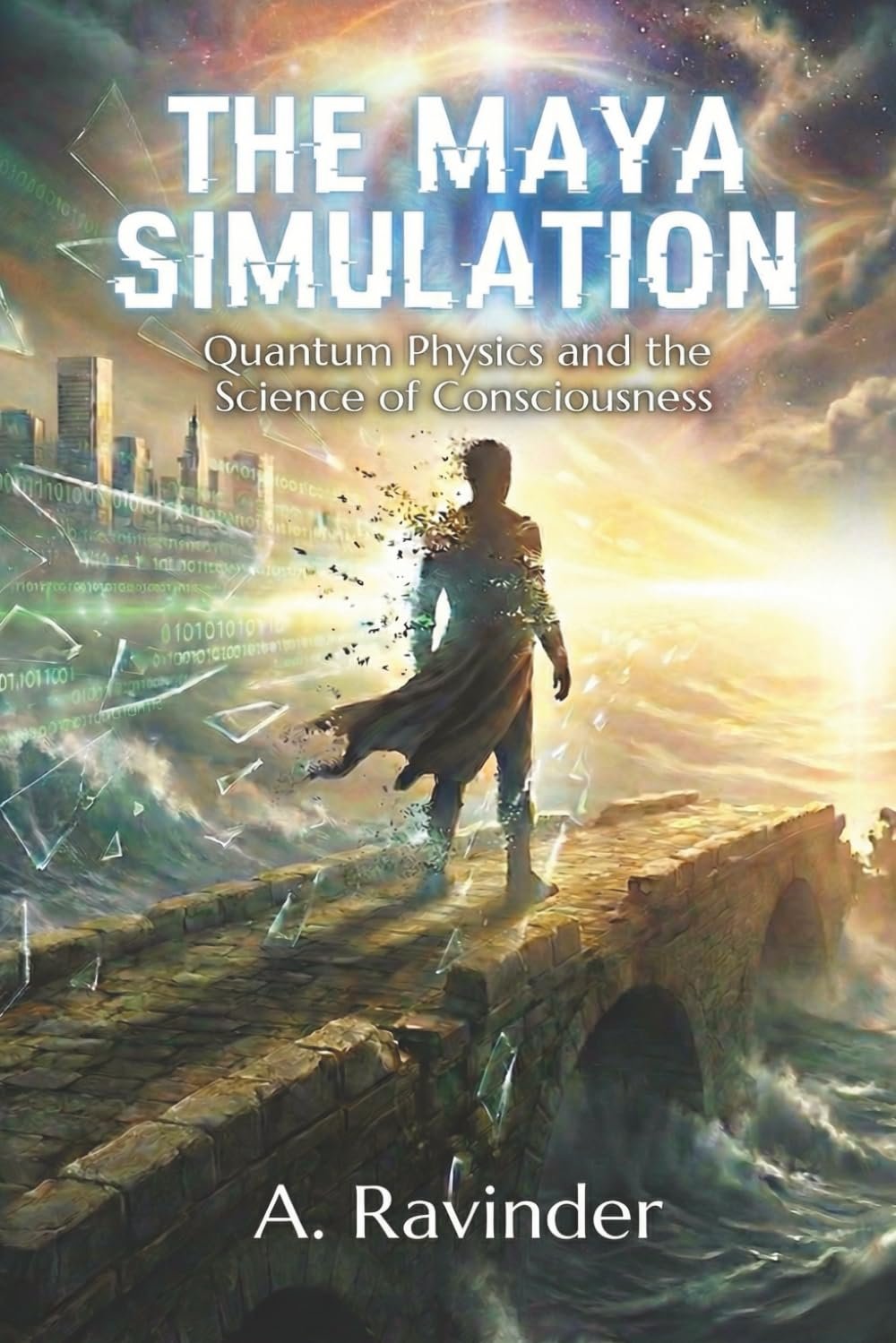
The Maya Simulation: Quantum Physics and the Science of Consciousness
by A. Ravinder
A guide that bridges the ancient wisdom of the Yoga Vasistha with quantum physics and modern consciousness science — for readers ready to question the nature of reality and calm the mind with practical tools like the Zero Voice Technique.
As an Amazon Associate, RamthaMedia can earn from qualifying purchases.
The Cosmic Jewel — Ring Nebula (M57) in Lyra Constellation
Deep within the boundaries of the Lyra Constellation lies one of the most famous deep-sky sights in astrophysics: the Ring Nebula, designated Messier 57 or M57. Situated approximately 2,300 light-years from Earth between the stars Sheliak and Sulafat, this glowing cosmic wonder resembles an ethereal smoke ring floating serenely in the deep vacuum of space. While moderate telescopes show a delicate oval of translucent light, long-exposure astrophotography unveils vibrant concentric rings of ionized gas.
The Ring Nebula represents a classic planetary nebula, an expanding shell of incandescent gas expelled by an intermediate-mass dying star. When the original red giant exhausted its nuclear fuel, its outer layers were gently driven off into space, leaving behind an intensely hot white dwarf core. The intense ultraviolet radiation streaming from this central white dwarf energizes and ionizes the surrounding gases, causing them to glow with distinct colors: deep red at the outer fringes from hydrogen and nitrogen, and vibrant blue-green in the interior from doubly ionized oxygen.
Studying the Ring Nebula provides astrophysicists with a preview of our own Sun’s fate, which is projected to undergo a similar transformation in five billion years. Far from being merely a cosmic graveyard, M57 demonstrates how dying stars disperse enriched elements—such as carbon, oxygen, and nitrogen—back into the interstellar medium. These enriched materials form the building blocks for future generations of stars, rocky planets, and organic life, turning the Ring Nebula into a symbol of continuous cosmic renewal within the Lyra Constellation.
Mythological Roots of Lyra Constellation — Orpheus and the Celestial Lyre
The cultural significance of the Lyra Constellation is rooted in Greek mythology through the poignant story of Orpheus, the legendary musician and poet. Born to Apollo, the god of music, and the muse Calliope, Orpheus received a golden lyre crafted by Hermes and perfected the art of music. His melodies were said to possess divine enchantment; wild beasts sat peacefully at his feet, fierce winds subsided, rushing rivers stood still, and ancient trees leaned close to absorb the harmony.
Orpheus fell deeply in love with the nymph Eurydice, and their devotion became a celebrated union of pure love. However, their happiness was abruptly shattered when Eurydice was bitten by a venomous viper and perished, descending into the dark realm of the Underworld. Consumed by inconsolable grief, Orpheus resolved to attempt what no mortal had dared: he descended into the realm of the dead, carrying only his musical instrument and relying entirely upon the power of sound.
As documented in the <a href=”https://www.britannica.com/place/Lyra-constellation”>Encyclopaedia Britannica entry on Lyra</a>, Orpheus used his divine music to soothe the ferryman Charon, lull the three-headed hound Cerberus to sleep, and soften the hearts of Hades and Persephone. Moved to tears, the rulers of the underworld granted Eurydice permission to return to the living world under one condition: Orpheus had to walk ahead and never glance back until both had fully emerged into the sunlight above.
Upon reaching the upper threshold, overcome by anxiety and longing, Orpheus turned to look at Eurydice before she had stepped into the sun. In that tragic moment, her spirit was drawn back into the depths of the underworld forever. Orpheus spent his remaining days playing mournful melodies across the wilderness, rejecting all worldly attachments. Following his death, the gods immortalized his golden lyre in the night sky as the Lyra Constellation, transforming his love and art into an eternal monument of celestial beauty.
Spiritual Perspective — Lyra Constellation as the Primordial Origin of Life
While mainstream science examines the physical composition of stars, esoteric traditions present the Lyra Constellation as the primordial cradle of galactic humanoid life. In esoteric cosmology, Lyra is understood as the primary point of inception where formless universal consciousness first condensed into humanoid archetypes. It is revered in starseed cosmologies as the original cosmic homeland.
According to these teachings, when the galaxy was in its developmental dawn billions of years ago, the region encompassing the Lyra Constellation served as an energetic focal point. A unique confluence of stable stellar matrices, primeval elemental balances, and concentrated light frequencies established the ideal matrix for life to germinate. This emergence is viewed not as a series of accidental chemical interactions, but as a deliberate expression of universal consciousness structuring itself into self-aware biological vessels.
Emergence of Lyran Beings — Primordial Waves and Consciousness in Lyra Constellation
The early humanoid beings that materialized within the Lyra Constellation were nurtured by intense, high-frequency cosmic vibrations. Because the local magnetic fields and radiation environments were finely calibrated, their biological and psychological evolution progressed rapidly. Alongside physiological stability, these beings developed expansive multidimensional awareness, viewing themselves as direct expressions of the cosmic whole.
These ancestral Lyrans possessed natural intuitive capabilities, communicating effortlessly through telepathy, interacting with physical matter via telekinesis, and comprehending multi-dimensional space. Their physical forms were tailored to channel and store refined life-force energy. Esoteric teachings describe their genetic structure as the foundational ‘Lyran Code’ or ‘Cosmic DNA,’ carrying spiritual blueprints that would later influence the evolution of other stellar civilizations across the galaxy.
Advanced Society, Technology, and Early Voyages in Lyra Constellation
As civilization matured within the Lyra Constellation, their societal systems diverged sharply from conflict-driven models. Guided by council elders who embodied high wisdom and collective consciousness, governance operated through telepathic consensus and spiritual harmony. Personal competition was replaced by cooperative endeavors aimed at knowledge expansion and universal service.
Their technology reflected their spiritual development, relying on crystalline matrices, harmonic resonance, and zero-point energy rather than destructive mechanical combustion. They mastered the manipulation of gravitational fields, established teleportation corridors, and built consciousness-responsive vessels. Driven by an innate curiosity to explore the wider galaxy and connect with other emerging life forms, the inhabitants of the Lyra Constellation initiated the earliest eras of interstellar exploration through dimensional portals and advanced propulsion systems.
📖 Maya Simulation: Is Our Physical Reality a Cosmic Computer Program?
Galactic Interactions and Starchild Encounters Beyond Lyra Constellation
As exploratory missions journeyed outward from the Lyra Constellation, they encountered diverse intelligent beings across surrounding star systems. Among these were the Vegans from within their own sector, the Sirians of Sirius A and B, the Pleiadians from the open cluster of the Seven Sisters, and early civilizations from the Orion constellation. Each culture possessed distinct philosophical perspectives, physical traits, and technological aptitudes.
The Sirians were recognized for their profound metaphysical mastery and connection to universal memory, while the Pleiadians cultivated refined artistic expression, emotional sensitivity, and healing sciences. The Vegans emphasized empirical logic, physical sciences, and technical innovation. Initial interactions among these stellar cultures fostered an era of peaceful cultural exchange, shared wisdom, and diplomatic collaboration, marking a golden dawn of galactic communion.
Intermingling of Civilizations — Humanoid Diversity from Lyra Constellation
The interactions between explorers from the Lyra Constellation and other stellar civilizations led to a rich diversification of humanoid lineages. Through collaborative genetic initiatives, energetic harmonization, and cultural integration, new lineages evolved that combined the spiritual foundation of Lyra with the distinct attributes of partner star systems.
Some lineages inherited the analytical precision of the Vegans, while others embodied the compassionate artistry of the Pleiadians or the spiritual guardianship of the Sirians. This hybridization produced humanoid variants capable of thriving in varied planetary environments—from aquatic worlds to arid landscapes and high-gravity spheres. This genetic and cultural synthesis laid the foundation for the broad distribution of humanoid civilizations across our galactic sector.
The Great Universal Expansion of Humanoids from Lyra Constellation
Equipped with advanced navigational systems and multi-dimensional craft, diverse humanoid lineages launched a major migration across the galactic spiral. This expansion was not driven by territorial conquest, but by a shared impulse to seed life, explore uncharted worlds, and establish sustainable planetary settlements.
Settlers surveyed countless planets, adapting their architecture, energy grids, and agricultural practices to local conditions. They applied advanced ecological principles to support emerging planetary biospheres without depleting natural resources. Wherever they established communities, they maintained a sacred reverence for universal balance, linking distant worlds in an interconnected network of wisdom and mutual aid.
Spreading Culture, High Wisdom, and Spirituality from Lyra Constellation
The humanoid lineages originating from the Lyra Constellation acted as cultural and spiritual benefactors across newly developing worlds. They introduced foundational disciplines including celestial navigation, sacred geometry, energy manipulation, and advanced mathematics, dramatically accelerating the evolution of early planetary cultures.
Simultaneously, they shared universal spiritual principles regarding unity consciousness, the immortality of the soul, and alignment with cosmic law. They demonstrated techniques for activating the <a href=”https://ramthamedia.in/pineal-gland-secrets-spiritual-growth-telugu/”>pineal gland secrets for spiritual growth</a>, taught holistic energy healing, and practiced contemplative sciences. These educational efforts helped nascent civilizations build balanced societies that united scientific innovation with spiritual awareness.
The Great Galactic Conflicts and Wars of Lyra Constellation
Despite extensive eras of peace, ideological divisions eventually surfaced between distinct stellar factions. As populations grew and philosophical viewpoints diverged, tensions emerged between groups prioritizing spiritual integration and those advocating technological dominion, control, and material expansion. These disagreements deepened between certain Lyran councils and external factions, drawing in surrounding star systems.
The resulting dispute escalated into widespread armed conflicts known in esoteric lore as the Galactic Wars. Advanced energetic weaponry, planetary bombardment systems, and psionic interference inflicted severe devastation across several core worlds. Numerous planets within the Lyra sector suffered environmental collapse, leaving previously thriving civilizations shattered and compelling billions of survivors to seek refuge in remote parts of the galaxy.
The Great Post-War Migrations from Lyra Constellation
The devastation of their homeworlds forced a massive diaspora of Lyran survivors and associated humanoid populations. Large fleets of transport vessels and generation ships dispersed across deep space, seeking secluded star systems away from active conflict zones.
These displaced populations established new roots in the Pleiades, the Sirius star system, Andromeda, and the Orion border zones. They preserved their sacred archives, scientific knowledge, and spiritual traditions, adapting to their new environments while working to heal the collective trauma of war. Over generations, this forced migration dispersed the Lyran cultural and genetic heritage across the galaxy, eventually reaching the outer spiral arm of the Milky Way where our solar system resides.
👉 premium AI smartphones – Mastering Battery Life on Today
Ancestral Arrival on Earth — The Enduring Legacy of Lyra Constellation
According to esoteric and starseed traditions, one branch of the ancient diaspora from the Lyra Constellation reached Earth in antiquity. Upon arriving, these advanced beings encountered early hominid populations living in primitive conditions. Taking on the roles of teachers, architects, and spiritual mentors, they provided guidance that aided early human development.
They shared essential skills in agriculture, stone masonry, metallurgy, astronomy, and healing arts, aiding the sudden cultural emergence of early human civilizations in regions like Mesopotamia, the Nile Valley, and the Indus Valley. Some traditions suggest their influence extended to genetic enhancements that helped bridge the transition toward modern Homo sapiens, embedding an intuitive spark within human consciousness.
In world mythologies, these stellar visitors were remembered as sky gods, solar deities, and culture-bringers. The memory of this ancient connection persists within human collective consciousness, expressed through our enduring fascination with the stars, our study of the <a href=”https://ramthamedia.in/astral-body-journey-dr-newton-sukshmashareera-yanam-telugu/”>astral body journey and higher consciousness</a>, and our ongoing <a href=”https://ramthamedia.in/global-frequency-shift-starseeds-activation-news/”>global frequency shift and starseeds activation</a>. The legacy of the Lyra Constellation serves as an enduring reminder of our deep connection to the broader cosmos.
Spiritual Meaning
The metaphysical exploration of the Lyra Constellation reveals that human existence is neither an isolated accident of biology nor a purposeless wanderer on a lonely planet. Viewed through the lens of ancient spiritual science, humanity participates in a vast, interconnected galactic tapestry. The archetypal journey of Lyra—from primeval unity to diversification, conflict, displacement, and eventual reconstruction—mirrors the inner evolution of the individual soul as it journeys through the material plane.
The mythological tale of Orpheus and his celestial harp embodies the transformative power of divine sound, sacred harmony, and unconditional devotion. His journey into the underworld illustrates that while the physical senses often falter when looking backward into attachment, spiritual consciousness must maintain steady focus on the light of higher awareness to achieve genuine liberation.
Furthermore, the legacy of the Lyran diaspora teaches that adversity and upheaval often act as catalysts for spiritual expansion. When external structures crumble, the essential light of consciousness adapts, disperses, and takes root in new soils, fostering greater resilience and deeper wisdom throughout the cosmos.
Reflecting on the cosmic heritage of Lyra invites us to cultivate unity, creative expression, and conscious stewardship in our daily lives. Just as the ancient stellar ancestors are said to have shared knowledge to uplift emerging societies, we can use our modern skills, empathy, and intellectual abilities to support our communities. By prioritizing cooperation over competition and honoring the inherent dignity of all living beings, we align our everyday actions with the universal harmony symbolized by the celestial lyre.
Chapter Summary
This comprehensive study examines the Lyra Constellation across astronomical, mythological, and esoteric dimensions. Astronomically, Lyra is home to Vega—one of the brightest and most thoroughly studied stars in the sky—alongside the intricate quadruple star system Epsilon Lyrae and the vibrant Ring Nebula (M57), which illustrates the natural cycle of stellar birth, death, and elemental recycling. In Greek mythology, Lyra commemorates the enchanted instrument of Orpheus, celebrating the profound power of music, devotion, and the tragic consequences of doubt. In esoteric traditions, Lyra is recognized as the primeval galactic birthplace of humanoid consciousness, where advanced beings developed high vibrational technologies, telepathic communication, and deep spiritual awareness. Following devastating interstellar conflicts, widespread migrations dispersed Lyran lineages across the galaxy, eventually contributing to early cultural developments and the ancestral heritage of humanity on Earth.
📖 AI and Spiritual Consciousness: Can We Communicate with the Divine?
Scripture Notes
- Main Message: The universe is a conscious, interconnected living organism where cosmic structures, stellar phenomena, and sentient life evolve together according to universal harmony, purposeful creation, and spiritual development.
- Philosophical Teaching: True evolution harmonizes scientific ingenuity with spiritual awareness. When technological power outpaces moral and spiritual maturity, conflict and disruption inevitably follow; genuine advancement requires anchoring knowledge in compassion, cooperative unity, and reverence for all life.
Frequently Asked Questions
What makes the star Vega in the Lyra Constellation unique?
Vega is the fifth-brightest star in the night sky and is located roughly 25 light-years from Earth. It serves as a photometric calibration standard for astronomers, rotates rapidly causing equatorial bulging, features a prominent circumstellar dust disk indicative of planet formation, and periodically serves as Earth’s North Pole Star due to axial precession.
What is the Ring Nebula (M57) located in Lyra?
The Ring Nebula is a planetary nebula located about 2,300 light-years away in the Lyra Constellation. It was formed when a dying red giant star expelled its outer layers of ionized gas, leaving behind an intensely hot white dwarf that illuminates the expanding glowing ring.
How is the Lyra Constellation connected to the myth of Orpheus?
In Greek mythology, Lyra represents the divine golden harp of Orpheus, gifted by Apollo. Its music had the power to charm all of nature and soften the underworld gods during his quest to rescue Eurydice. After his passing, the gods placed his lyre into the heavens as a constellation.
What is the spiritual significance of the Lyra Constellation?
Esoteric cosmologies identify Lyra as the primeval origin and galactic cradle of humanoid life. It is believed that early Lyran civilizations developed multidimensional consciousness, high-frequency energy sciences, and genetic blueprints that later dispersed across multiple star systems and influenced early human history.
What were the galactic conflicts associated with Lyra?
Esoteric history describes philosophical rifts between groups prioritizing spiritual integration and factions pursuing technological dominance. These disagreements escalated into galactic conflicts, causing widespread planetary disruption and initiating major diasporas of Lyran refugees throughout the galaxy.
{“@context”: “https://schema.org”, “@graph”: [{“@type”: “BreadcrumbList”, “itemListElement”: [{“@type”: “ListItem”, “position”: 1, “name”: “Home”, “item”: “https://ramthamedia.in/”}, {“@type”: “ListItem”, “position”: 2, “name”: “Spirituality-English”, “item”: “https://ramthamedia.in/en/category/spirituality-english/”}, {“@type”: “ListItem”, “position”: 3, “name”: “Lyra Constellation: The Ancient Cosmic Secret and the Origin of Life”}]}, {“@type”: “FAQPage”, “mainEntity”: [{“@type”: “Question”, “name”: “What makes the star Vega in the Lyra Constellation unique?”, “acceptedAnswer”: {“@type”: “Answer”, “text”: “Vega is the fifth-brightest star in the night sky and is located roughly 25 light-years from Earth. It serves as a photometric calibration standard for astronomers, rotates rapidly causing equatorial bulging, features a prominent circumstellar dust disk indicative of planet formation, and periodically serves as Earth’s North Pole Star due to axial precession.”}}, {“@type”: “Question”, “name”: “What is the Ring Nebula (M57) located in Lyra?”, “acceptedAnswer”: {“@type”: “Answer”, “text”: “The Ring Nebula is a planetary nebula located about 2,300 light-years away in the Lyra Constellation. It was formed when a dying red giant star expelled its outer layers of ionized gas, leaving behind an intensely hot white dwarf that illuminates the expanding glowing ring.”}}, {“@type”: “Question”, “name”: “How is the Lyra Constellation connected to the myth of Orpheus?”, “acceptedAnswer”: {“@type”: “Answer”, “text”: “In Greek mythology, Lyra represents the divine golden harp of Orpheus, gifted by Apollo. Its music had the power to charm all of nature and soften the underworld gods during his quest to rescue Eurydice. After his passing, the gods placed his lyre into the heavens as a constellation.”}}, {“@type”: “Question”, “name”: “What is the spiritual significance of the Lyra Constellation?”, “acceptedAnswer”: {“@type”: “Answer”, “text”: “Esoteric cosmologies identify Lyra as the primeval origin and galactic cradle of humanoid life. It is believed that early Lyran civilizations developed multidimensional consciousness, high-frequency energy sciences, and genetic blueprints that later dispersed across multiple star systems and influenced early human history.”}}, {“@type”: “Question”, “name”: “What were the galactic conflicts associated with Lyra?”, “acceptedAnswer”: {“@type”: “Answer”, “text”: “Esoteric history describes philosophical rifts between groups prioritizing spiritual integration and factions pursuing technological dominance. These disagreements escalated into galactic conflicts, causing widespread planetary disruption and initiating major diasporas of Lyran refugees throughout the galaxy.”}}]}]}