

Satyam is the ultimate, non-dual reality that permeates our existence rather than an external object to be found. According to Bodhisattva Atisha, realizing Satyam requires transcending the mind’s illusions, distinguishing relative everyday truth from ultimate reality, and awakening to the unconditioned awareness beyond birth and death through meditation and self-inquiry.
The human journey has always been accompanied by fundamental inquiries about existence. Across centuries, seekers have continually asked: Who am I? What is the true purpose of life? What eternal reality sustains this vast cosmos? In response to these profound yearnings, enlightened masters, philosophers, and spiritual guides have illuminated the nature of reality from diverse perspectives. Among these revered luminaries, Bodhisattva Atisha Dipankara Srijnana holds an exalted place for his direct and transformative wisdom on the nature of truth.
Bodhisattva Atisha was an eleventh-century master whose teachings revitalized spiritual practice across India and Tibet. Rather than presenting truth as an abstract philosophical theory, Atisha elucidated truth as a direct, living experience that dissolves human suffering. His insights unravel the intricate mechanisms of the human mind, expose the transient nature of worldly phenomena, and guide practitioners toward unconditional inner freedom.
In our contemporary era, where the relentless chase for external gratification often leads to anxiety and existential disconnect, Atisha’s exposition of truth provides a grounded sanctuary. By exploring the core dimensions of his message, we learn how to distinguish between fleeting perceptions and unchanging awareness, thereby rediscovering clarity, compassion, and authentic peace in daily life.
Read the complete Telugu edition of this article.
Understanding Satyam — The Living Reality Within and Around Us
Bodhisattva Atisha presents Satyam not as an elusive, distant concept located in a remote heaven, but as an immediate reality that envelops our entire existence. To illustrate this profound truth, he offers the vivid metaphor of a fish swimming in the ocean. The fish is completely surrounded by water, supported by it, and sustained by it at every moment; yet, the fish remains entirely unaware of the ocean’s presence. In the very same manner, human beings are thoroughly immersed in Satyam, yet fail to recognize it because of their conditioned perception.
This classic analogy carries deep contemplative significance. For sensory knowledge to occur, there must typically be a perceptible distance between the observer and the observed object. When an object stands separate from the witness, the intellect can observe, measure, and analyze it. However, because Satyam is the very foundation and essence of our own being, no separation exists between the seeker and the truth. Satyam is not an external object of perception; it is the ground of consciousness itself.
This understanding of Satyam aligns seamlessly with the supreme spiritual realization of divinity. Truth and the Divine are non-different; God is not an entity standing far away, watching us from afar. In truth, to state that God is merely near us is still an incomplete expression, for you yourself are that divine reality. Satyam and the Divine reside within you, extend around you, and constitute the totality of existence. This profound insight echoes the non-dual revelation of ‘Aham Brahmasmi’ (I am the Absolute). Atisha affirms this as the primary principle: ‘Satyam alone is’—signifying that ultimate truth is the sole source and essence of all creation.
The Mind’s Illusion — How Mental Projections Obscure Satyam
If Satyam is our very nature and surrounds us constantly, what prevents us from perceiving it? Bodhisattva Atisha clearly identifies the mind as the primary obstacle obscuring the vision of the Divine. The mind acts like a veil of illusion, drawing our attention outward and captivating our awareness with the transient charms of the physical world. Lost in this external fascination, humanity forgets the underlying truth of existence.
The mind continuously generates dreams, fantasies, ambitions, expectations, and attachments. In a striking statement, Atisha remarks that ‘all that is non-existent is merely the mind.’ This means that the mind is not an enduring, solid entity, but an ever-fluctuating stream of passing thoughts. Because people identify completely with these shifting mental currents, they remain blind to the unconditioned truth. Thus, the restless mind stands as the greatest barrier to realizing Satyam.
RECOMMENDED BOOK
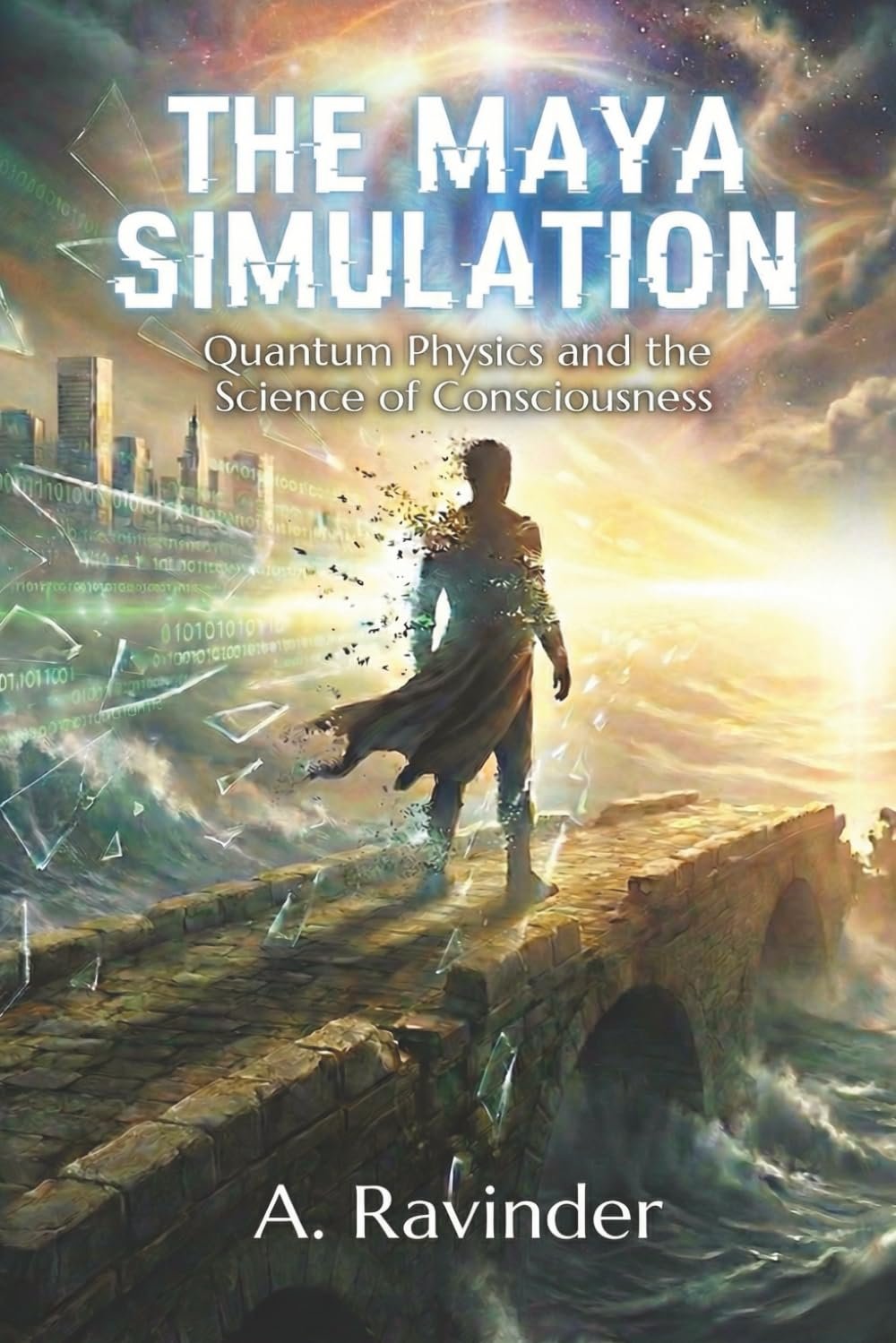
The Maya Simulation: Quantum Physics and the Science of Consciousness
by A. Ravinder
A guide that bridges the ancient wisdom of the Yoga Vasistha with quantum physics and modern consciousness science — for readers ready to question the nature of reality and calm the mind with practical tools like the Zero Voice Technique.
As an Amazon Associate, RamthaMedia can earn from qualifying purchases.
Bodhicitta and Satyam — Emptying the Mind to Awaken Truth
When the conditioned mind becomes a wall obstructing the light of Satyam, how can an earnest seeker overcome it? In response, Bodhisattva Atisha introduces the profound practice of Bodhicitta, often translated as the awakening of enlightened Buddha consciousness. In this context, cultivating Bodhicitta involves completely emptying the mind of all conceptual clutter, entering a tranquil state devoid of compulsive thought patterns.
Atisha taught that the core essence of all authentic spiritual traditions converges upon this thought-free awareness. Attaining this silent space is the royal gateway to divine communion. By releasing the mind from its habitual identification with thoughts, one breaks free from the web of illusion and beholds the radiant Satyam within. Such an awakening cannot be gained through intellectual debate; it is realized solely through dedicated meditation and deep self-inquiry.
The Fourth Truth — Realizing the Dreamlike Nature of Satyam
Among the core tenets of his instruction, Bodhisattva Atisha emphasizes a transformative fourth principle: ‘Regard everything that arises as a dream.’ This instruction directs the practitioner to view all sensory appearances, emotional experiences, mental images, and even spiritual phenomena as insubstantial and dreamlike. As long as one functions as an individual entity perceiving external objects, the entire drama remains within the realm of a dream.
When you steadily maintain the awareness that all perceived phenomena are like a dream, a startling realization naturally dawns: if the entire objective scene is merely a dream, then the separate individual observing the scene must also be a dream rather than an ultimate reality. Through sustained inquiry, one begins to recognize the dreamlike nature of waking life, just as a lucid dreamer becomes aware of dreaming during sleep. When you abide in unbroken awareness of the dream while it unfolds, you awaken from life’s greatest illusion into the unclouded light of pure wisdom, transcending the duality of the seer and the seen.
Transcendent Prajna — Experiencing Birthless and Deathless Satyam
Upon awakening from the dualistic dream, the seeker abides in the state of transcendent awareness, known as Bhavatita Prajna. In this exalted state, all distinctions between the observer and the observed completely dissolve. The practitioner stands far beyond egoic identification and dualistic grasping, observing the pure nature of awareness itself with profound clarity.
Investigating the nature of consciousness from this vantage point reveals a timeless realization: you were never born, and you can never die. This is the unconditioned awareness of the true Self, untouched by the cycles of birth and physical dissolution. Atisha urges practitioners to reject the subtle final traps of the intellect and remain steadfastly anchored in this pure Prajna, resting in the eternal, boundless reality of Satyam.
Two Dimensions of Satyam — Relative Truth and Ultimate Truth
To provide a complete framework for spiritual understanding, Bodhisattva Atisha elucidates the <a href=”https://plato.stanford.edu/entries/twotruths-india/”>doctrine of the two truths</a>: Saapeksha Satyam (Relative Truth) and Paramartha Satyam (Ultimate Truth). Mastering both dimensions is vital for navigating worldly life without losing sight of spiritual liberation.
Relative Truth encompasses the pragmatic, everyday reality experienced through the physical senses and interpreted by the intellect. It includes our daily duties, social relationships, emotional responses, fears, and worldly interactions. Relative truth is inherently impermanent and subjective, fluctuating according to individual perspectives, conditioning, and transient circumstances.
The characteristics of relative truth include sensory reactivity, subjective interpretation, and susceptibility to illusion. For example, encountering a loved one may evoke joy, while an unpleasant object may trigger aversion. While relative truth governs conventional existence, living solely within its boundaries means remaining entangled in Maya.
In contrast, Paramartha Satyam is the immutable, transcendent reality that remains untouched by time, change, or mental speculation. It is the unconditioned truth present within every living being, accessible through deep meditation and inner stillness. Paramartha Satyam is marked by supreme purity, freedom from delusion, and complete transcendence of the ego. Realizing this ultimate truth bestows lasting fulfillment, liberating the spirit from existential fear.
Core Pillars of Satyam — Impermanence, Morality, and Dharma
Bodhisattva Atisha described Satyam as an innate illumination that shines brightly within the core of human consciousness. Unlike external light sources, this spiritual truth is self-luminous and self-evident. When an individual realizes this inner reality, their spiritual wisdom radiates naturally, transforming their entire life.
Atisha grounded his spiritual methodology in fundamental virtues: recognizing impermanence (Anityatva), maintaining ethical discipline (Shila), upholding righteous living (<a href=”https://ramthamedia.in/shiva-parvati/”>balance of inner spiritual awareness</a>), and practicing steady contemplation (Dhyana). By honoring these principles, seekers purify the mind, creating the necessary inner conditions for Satyam to reveal itself.
The Threefold Path to Satyam — Atmasraya, Devatasraya, and Gurusraya
In the spiritual system taught by Bodhisattva Atisha, the search for Satyam is structured upon a sacred threefold foundation: Atmasraya, Devatasraya, and Gurusraya. These three disciplines work harmoniously to guide the aspirant through the complexities of inner transformation.
Atmasraya represents reliance on rigorous self-investigation, recognizing that truth is not found externally but discovered through introspection. Devatasraya signifies surrendering to divine grace and cultivating unity with the cosmic presence, mirroring the <a href=”https://ramthamedia.in/sai-baba/”>paths of devotion and self-surrender</a>. Gurusraya entails following the guidance of an enlightened master who has traversed the path and can illuminate the way, ensuring that the seeker overcomes spiritual obstacles and attains realization.
📖 Is Time Merely an Illusion? The Ultimate Essence of Leela’s Story | Yoga Vasistha S3 EP-33
Liberation Through Satyam — Transcending Emotional and Mental Bonds
According to Bodhisattva Atisha, direct realization of Satyam leads inevitably to spiritual liberation (Moksha). When the truth is known, the individual is freed not only from external dependencies but also from internal bondages such as egoism, craving, anxiety, and resentment.
By dispelling the false identifications of the mind, the practitioner discovers Atmananda—the uncaused joy of the true Self—alongside profound inner silence and complete spiritual autonomy. Transcending dualistic clinging purifies the heart, allowing unconditioned peace to reign supreme.
Meditation and Mental Mastery — Walking the Path of Satyam
Walking the path of Satyam demands steady mental discipline and deep contemplative immersion. Bodhisattva Atisha placed immense emphasis on meditation, ethical precepts, and daily spiritual routines as essential vehicles for self-realization.
Meditation quietens the turbulent waves of thought, opening the door to the <a href=”https://ramthamedia.in/sivaratri/”>meditative silence of supreme consciousness</a>. Ethical discipline and mindful routines provide the steady framework necessary to protect spiritual progress, enabling the aspirant to abide continuously in the presence of truth.
The Profound Significance of Satyam in Spiritual Practice
In Atisha’s teaching, realizing Satyam is nothing less than discovering one’s authentic essence. It is not merely an intellectual understanding of the external cosmos, but an intimate awakening to the unconditioned ground of being.
To realize this truth, one must have the courage to relinquish transient mental opinions, subjective illusions, and emotional grasping. Paramartha Satyam is closer to us than our very breath; when recognized, the veil of illusion falls away, leaving only pure consciousness and boundless wisdom.
The Final Message of Satyam — Attaining Lasting Peace and Joy
The timeless message of Bodhisattva Atisha serves as an enduring beacon of light for all humanity. By turning awareness inward and investigating the nature of the mind, every individual can transcend temporal suffering and realize their supreme identity.
Though the path of self-inquiry and mental purification requires dedication and steadfast practice, its fruit is beyond measure: authentic freedom, unshakable peace, and eternal spiritual joy.
Spiritual Meaning
The teachings of Bodhisattva Atisha on Satyam convey the profound truth of non-duality (Advaita), bridging classical Buddhist insight with universal spiritual wisdom. By comparing human consciousness to a fish immersed in the boundless ocean, Atisha illustrates that the Divine is not a remote goal to be achieved, but the very substratum of existence in which we live, move, and have our being. The spiritual journey is therefore not an outward voyage across space, but an inward awakening to the reality that has always been present.
Atisha’s analysis of the mind as the primary creator of Maya provides seekers with a precise diagnostic tool for spiritual liberation. The mind constructs an intricate web of desires, concepts, and fears, leading the individual to mistake temporary phenomena for permanent reality. By recognizing that all mental modifications and external events are like passing dreams, the practitioner dismantles the false sense of a separate ego-identity, allowing the light of pure Prajna to shine forth unobstructed.
The distinction between relative truth and ultimate truth serves as a practical compass for holistic living. Rather than advocating complete withdrawal from the world, Atisha teaches seekers to honor relative responsibilities with compassion and integrity while anchoring their core awareness in ultimate reality. This integrated realization harmonizes ethical daily conduct with transcendent wisdom, guiding the soul toward uninterrupted peace.
To apply Atisha’s teachings in daily life, begin by observing the fluctuations of your mind without immediate reaction or judgment. When faced with stressful situations, remind yourself of the dreamlike, impermanent nature of external events and emotional storms. Dedicate time each morning to silent meditation, cultivating Bodhicitta by resting in the space between thoughts. By maintaining ethical integrity and recognizing the non-dual truth within all beings, you can transform ordinary daily challenges into stepping stones for profound spiritual awakening.
👉 Home Temple Pooja Stand with Door, LED Light and Storage
Chapter Summary
This comprehensive study examines the teachings of Bodhisattva Atisha on the nature of Satyam (Truth). Atisha reveals that Satyam is the omnipresent reality surrounding and sustaining all life, illustrated through the metaphor of a fish immersed in the ocean. The conditioned mind, with its perpetual stream of desires and illusions, acts as the primary obstacle obscuring this truth. By cultivating Bodhicitta—emptying the mind of conceptual chatter—and adopting the fourth principle of regarding all occurrences as a dream, the practitioner transcends the duality of the seer and the seen, awakening to birthless and deathless transcendent Prajna. Atisha elaborates on the two levels of truth: Saapeksha Satyam (relative, sensory, impermanent truth) and Paramartha Satyam (ultimate, unconditioned, eternal truth). Through the threefold path of Atmasraya (self-inquiry), Devatasraya (divine surrender), and Gurusraya (master’s guidance), combined with regular meditation and ethical discipline, seekers dissolve all mental bonds and realize lasting peace, freedom, and Atmananda.
Scripture Notes
- Main Message: The central message of Bodhisattva Atisha’s discourse is that Satyam is not an external attainment but the innate, non-dual reality of our own consciousness. By systematically deconstructing the illusions of the mind, acknowledging the dreamlike nature of worldly phenomena, and cultivating an empty, tranquil awareness through Bodhicitta, human beings can transcend the cycle of existential suffering and abide in eternal, unconditioned truth.
- Philosophical Teaching: Philosophically, Atisha synthesizes Madhyamaka insight with deep yogic practice, as documented in <a href=”https://www.britannica.com/biography/Atisa”>historical accounts of Bodhisattva Atisha</a>. His exposition of the two truths demonstrates that while relative phenomena operate within conventional cause and effect, their ultimate nature is empty of independent existence (Sunyata). When dualistic clinging to the observer and the observed is dissolved through Bhavatita Prajna, the true Self is realized as unborn, unchanging, and immortal, uniting the pinnacle of Buddhist philosophy with non-dual metaphysical truth.
📖 AI and Spiritual Consciousness: Can We Communicate with the Divine?
Frequently Asked Questions
What is the primary metaphor Atisha uses to describe Satyam?
Bodhisattva Atisha uses the metaphor of a fish in the ocean. Just as a fish is completely surrounded and sustained by the ocean yet remains unaware of it due to the absence of distance, human beings are entirely immersed in Satyam but fail to perceive it because it is their very nature.
How does the mind prevent us from realizing Satyam?
The mind acts as an illusory veil (Maya) by generating continuous streams of thoughts, desires, projections, and attachments toward the material world. It creates a false sense of separate identity and distracts awareness away from the unchanging, eternal reality within.
What is the difference between relative truth and ultimate truth in Atisha’s teaching?
Relative truth (Saapeksha Satyam) refers to our daily sensory experiences, thoughts, and worldly interactions, which are temporary, subjective, and changing. Ultimate truth (Paramartha Satyam) is the unconditioned, eternal, and unchanging reality realized through deep meditation and self-inquiry.
What is Bodhicitta in the context of realizing Satyam?
In this context, Bodhicitta refers to awakening the pure, enlightened consciousness by emptying the mind of all conceptual thoughts. This silent, thought-free state serves as the grand gateway to experiencing the Divine and realizing ultimate truth.
What are the three pillars of Atisha’s path to Satyam?
The three pillars are Atmasraya (reliance on inner self-inquiry and self-examination), Devatasraya (faith in and surrender to divine spiritual grace), and Gurusraya (receptive adherence to the wisdom and guidance of an enlightened spiritual master).
{“@context”: “https://schema.org”, “@graph”: [{“@type”: “BreadcrumbList”, “itemListElement”: [{“@type”: “ListItem”, “position”: 1, “name”: “Home”, “item”: “https://ramthamedia.in/”}, {“@type”: “ListItem”, “position”: 2, “name”: “Spirituality-English”, “item”: “https://ramthamedia.in/en/category/spirituality-english/”}, {“@type”: “ListItem”, “position”: 3, “name”: “Satyam in Atisha’s Teachings: What Is Ultimate Truth?”}]}, {“@type”: “FAQPage”, “mainEntity”: [{“@type”: “Question”, “name”: “What is the primary metaphor Atisha uses to describe Satyam?”, “acceptedAnswer”: {“@type”: “Answer”, “text”: “Bodhisattva Atisha uses the metaphor of a fish in the ocean. Just as a fish is completely surrounded and sustained by the ocean yet remains unaware of it due to the absence of distance, human beings are entirely immersed in Satyam but fail to perceive it because it is their very nature.”}}, {“@type”: “Question”, “name”: “How does the mind prevent us from realizing Satyam?”, “acceptedAnswer”: {“@type”: “Answer”, “text”: “The mind acts as an illusory veil (Maya) by generating continuous streams of thoughts, desires, projections, and attachments toward the material world. It creates a false sense of separate identity and distracts awareness away from the unchanging, eternal reality within.”}}, {“@type”: “Question”, “name”: “What is the difference between relative truth and ultimate truth in Atisha’s teaching?”, “acceptedAnswer”: {“@type”: “Answer”, “text”: “Relative truth (Saapeksha Satyam) refers to our daily sensory experiences, thoughts, and worldly interactions, which are temporary, subjective, and changing. Ultimate truth (Paramartha Satyam) is the unconditioned, eternal, and unchanging reality realized through deep meditation and self-inquiry.”}}, {“@type”: “Question”, “name”: “What is Bodhicitta in the context of realizing Satyam?”, “acceptedAnswer”: {“@type”: “Answer”, “text”: “In this context, Bodhicitta refers to awakening the pure, enlightened consciousness by emptying the mind of all conceptual thoughts. This silent, thought-free state serves as the grand gateway to experiencing the Divine and realizing ultimate truth.”}}, {“@type”: “Question”, “name”: “What are the three pillars of Atisha’s path to Satyam?”, “acceptedAnswer”: {“@type”: “Answer”, “text”: “The three pillars are Atmasraya (reliance on inner self-inquiry and self-examination), Devatasraya (faith in and surrender to divine spiritual grace), and Gurusraya (receptive adherence to the wisdom and guidance of an enlightened spiritual master).”}}]}]}