
What is the significance of Sesha Vahanam and the early procession services in Tirumala Brahmotsavams? During the Tirumala Navaratri Brahmotsavams, the Pedda Sesha and Chinna Sesha Vahana services represent continuous devotional servitude and dedicated service to the Divine. Temple tradition establishes that the subsequent Hamsa, Simha, and Mutyapu Pandiri Vahana processions stand as sacred symbols reminding devotees of the spiritual virtues of discerning wisdom, courage, and peaceful composure.
For a seeker in everyday life yearning for mental stability and profound inner tranquility, the sacred vehicle processions of Tirumala offer an elevating spiritual experience. Commencing with total surrender at the lotus feet of the Divine, these grand celebrations begin with the glorious darshan of the Sesha Vahanam, which awakens an attitude of selfless, dedicated servitude within the human soul.
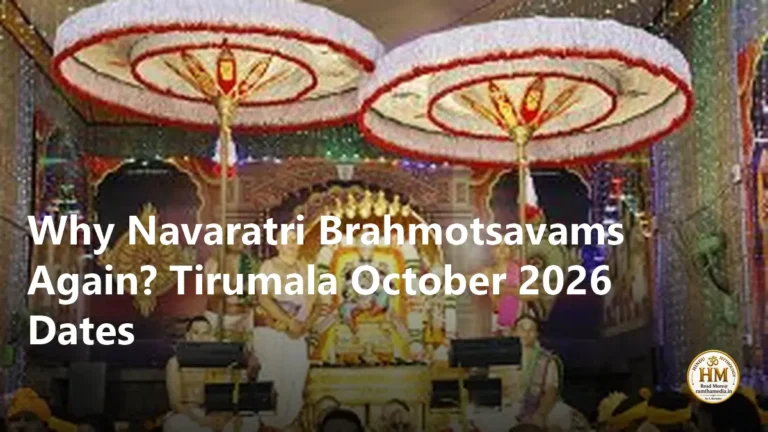
During the Sri Venkateswara Navaratri Brahmotsavams scheduled from October 12 to October 20, 2026, the first three days from October 12 through October 14 feature the ceremonial processions of Pedda Sesha, Chinna Sesha, Hamsa, Simha, and Mutyapu Pandiri Vahanams strictly according to Agama traditions. Devotional faith affirms that the deep spiritual symbolism embodied in these five introductory carriers provides enduring moral and philosophical guidance for our daily life journey.
Read the complete Telugu edition of this article.
Pedda Sesha Vahanam — The Seven Hoods of Selfless Servitude
The Pedda Sesha Vahanam procession held on the first night of the Brahmotsavams holds exceptional spiritual significance in the temple calendar. Puranic scriptures celebrate Adi Sesha, the primordial serpent king, as the ultimate embodiment of service who constantly serves Sriman Narayana as His bed, seat, footwear, and parasol. Devotees firmly hold the faith that the seven expansive hoods of Adi Sesha, who abides in unbroken proximity to the Lord, provide benevolent shelter and illustrate the path of unalloyed devotional surrender to all living beings.
Traditional scholars and temple preceptors explain that the seven majestic hoods of Adi Sesha represent the sacred Seven Hills of Tirumala. This divine form serves as a vivid reminder of the Lord being borne by the sacred peaks of Seshadri, Neeladri, Garudadri, Anjanadri, Vrishabhadri, Vrishadri, and Venkatadri. The spiritual carrier imparts the profound lesson that offering one’s entire being and energy in dedicated service to the Supreme Lord is the highest calling of the individual soul.
According to the official Tirumala Tirupati Devasthanams release dated September 27, 2026, the grand Pedda Sesha Vahanam procession commences at 7:00 PM IST on the night of October 12. Lord Sri Malayappa Swami, flanked by His consorts Sridevi and Bhudevi, is adorned in the regal form of Vaikunthanatha as He moves along the luminous Four Mada Streets of the hill shrine. Devotees believe that gazing upon the Lord’s enchanting divine form relieves the mind of accumulated worldly anxieties and material burdens.
The unyielding dedication demonstrated by Adi Sesha in serving the Almighty stands as an exemplary practical ideal for every spiritual aspirant. Through this sacred procession, pilgrims absorb the timeless message of leading a humble life devoid of ostentation, anchored firmly in divine remembrance. Ancient tradition extols that those who take refuge in the Lord with pure and selfless devotion attain inner serenity, moral fortitude, and all-round auspiciousness.
Centuries-old Tirumala temple tradition affirms that witnessing the Lord gliding gracefully upon the serpent carrier fosters spiritual elevation and inner cleansing. Moving amid the resonant chants of Govinda Nama raised by thousands of assembled devotees around the sacred temple precinct, this ceremonial circumambulation generates powerful waves of shared devotion. In the face of challenging trials in worldly life, seekers believe that total self-surrender remains the sole genuine sanctuary.
Chinna Sesha Vahanam — The Five Hoods and Philosophical Distinction
The Chinna Sesha Vahanam procession, celebrated on the morning of the second day of the Brahmotsavams, bestows a distinct and sublime darshan upon the gathering of pilgrims. While the evening Pedda Sesha carrier is distinguished by seven expansive hoods, the morning Chinna Sesha carrier features five radiant hoods, marking the primary structural and symbolic difference. Spiritual teachers explain that these five hoods represent the five primordial elements of nature and the five human sensory organs.
In traditional devotional lore, the Chinna Sesha Vahanam is revered either as the manifestation of the divine serpent Vasuki or as a compact, meditative form of Adi Sesha. Hidden within this sacred morning service is the profound philosophical reminder to redirect the five restless senses away from fleeting worldly distractions and steer them toward contemplation of the Supreme. The darshan teaches that true spiritual composure and lasting peace can only be realized through mindful sense restraint and inner discipline.
As per official schedule announcements, the Chinna Sesha Vahanam procession proceeds along the Four Mada Streets beginning at 8:00 AM IST on the morning of October 13, 2026. In the crisp, serene atmosphere of early dawn, Lord Malayappa Swami appears alone in serene majesty upon the five-hooded serpent, offering an intimate and contemplative blessing to the congregation. The procession unfolds with immense veneration accompanied by Vedic chanting and traditional temple instruments.
The five hoods of Chinna Sesha remind the seeker to dedicate the five vital life-breaths within the mortal body to divine purpose, echoing the core tenets of the Bhagavad Gita. The inner import of this darshan lies in cultivating freedom from obsessive attachments through selfless, duty-bound action. Pilgrims waiting earnestly for the Lord’s compassionate glance believe that this early morning viewing instills an enduring sense of internal quietude and emotional clarity.
RECOMMENDED BOOK
The Maya Simulation: Quantum Physics and the Science of Consciousness by A. Ravinder
Is the world around us real? Or is it just a Maya Simulation?
A guide that bridges the ancient wisdom of the Yoga Vasistha with quantum physics and modern consciousness science — for readers ready to question the nature of reality and calm the mind with practical tools like the Zero Voice Technique. It explores mind, maya and consciousness in plain language, and offers a practical path for the seeker on the spiritual journey. Available in print and ebook instant-read versions.
Buy on AmazonBuy on Ramthamedia
As an Amazon Associate, RamthaMedia earns from qualifying purchases.
Together, the complementary processions of Pedda Sesha and Chinna Sesha delineate the two foundational pillars of spiritual life: dedicated service and sensory mastery. While the seven hoods on the inaugural night impart an uplifting feeling of all-encompassing divine protection, the five hoods on the following morning outline the disciplined path of inner practice. In Tirumala tradition, this consecutive progression is cherished as a masterfully designed spiritual journey that systematically nurtures the devotee’s higher awareness.
Understanding the Sesha-Seshi Relationship as Devotional Servitude
In the philosophy of the Vishishtadvaita tradition, the relationship between the ‘Sesha’ and the ‘Seshi’ forms the paramount metaphysical foundation. Traditional doctrine explicitly elucidates that the Supreme Lord Sriman Narayana is the absolute Sovereign and foundational Support of all existence, known as the Seshi, while every sentient and insentient entity exists essentially to serve His divine will as the Sesha. Dedicating one’s entire existence solely for the divine satisfaction of the Lord constitutes the core principle of Dasya Bhakti, or loving servitude.
By beholding the Sesha Vahanam, the spiritual seeker systematically dissolves the deep-rooted ego and the false presumption of independent agency. True cultivation of Seshitva involves dispelling the ignorant illusion of being the autonomous doer and recognizing that the entire cosmos operates under the benevolent cosmic order of the Divine. Devotional conviction affirms that this humble posture of total surrender lightens the crushing weight of mundane anxieties and infuses the inner self with undisturbed tranquility.
Exalted preceptors such as Sri Ramanujacharya demonstrated that this path of loving servitude is the most direct and accessible royal highway to spiritual liberation. Devotees believe that the transcendental bliss experienced in rendering selfless service to the Divine far surpasses any temporary sensory gratification of the material sphere. The Pedda Sesha procession at 7:00 PM on October 12 and the Chinna Sesha procession at 8:00 AM on October 13 vividly manifest this continuous ideal of devotional offering.
In contemporary life, viewing oneself mentally as an earnest instrument of the Divine while dutifully fulfilling domestic and professional obligations fosters profound emotional maturity. Performing daily tasks as dedicated offerings to the Supreme mitigates selfish grasping over the fruits of action. Philosophical treatises emphasize that the Sesha-Seshi bond must not remain confined within shrine rooms but should blossom outward as compassionate, altruistic service to fellow human beings in society.
The spiritual allegory of Sesha seva reveals that human embodiment attains its true fulfillment only when body and mind are harmonized with the supreme purpose of the Divine. Through the uplifting darshan of Lord Malayappa Swami gliding gracefully upon the serpent mount in the holy realm of Tirumala, pilgrims receive enduring inspiration to transcend egocentric desires and embrace an attitude of humble, perennial servitude as their guiding life philosophy.
Past Festival Records Documenting the Saraswati Alankaram on Hamsa Vahanam
The Hamsa Vahanam procession held on the second night of the Brahmotsavams illuminates the glorious aspect of the Divine as the supreme Bestower of wisdom and spiritual knowledge. A review of historical records from the Tirumala Tirupati Devasthanams reveals that during the Navaratri Brahmotsavams on October 16, 2023, as well as during the Salakatla Brahmotsavams on September 16, 2026, Lord Sri Malayappa Swami was ceremonially adorned in the divine guise of Goddess Saraswati, holding a sacred veena as He processed upon the celestial swan mount.
The profound theological synthesis of the Supreme Being manifesting in the attire of Saraswati Devi, the goddess of learning, holds immense philosophical depth. Temple tradition explains that this singular form reflects the Ultimate Truth as the fountainhead of all higher knowledge, intellectual clarity, and fine arts. Official reports from previous festivals offer clear documentation of this consistent, sublime decorative tradition continuing through the sacred heritage of Tirumala.
During the 2026 Navaratri Brahmotsavams, the Hamsa Vahanam service is scheduled to be performed between 7:00 PM and 9:00 PM IST on the evening of October 13, 2026. Devotees believe that beholding the Lord holding the veena and radiating celestial effulgence dispels the darkness of spiritual ignorance and mental confusion clouding the human heart. The magnificent procession moves around the Mada Streets accompanied by traditional cultural troupes from multiple states and reverberating Vedic recitations.
These distinctive ceremonial adornments documented across the festival archives bring the all-pervasive nature of the Supreme Reality directly before the eyes of the devotees. Through such divine representations, seekers recognize that all streams of wisdom, creative energy, and artistic grace originate from and resolve into the singular Divine Source. Past documentation serves as authentic historical evidence of how deeply integrated these ritual traditions are in the living culture of the holy hill.
Gazing upon the Lord adorned as Saraswati, pilgrims pray earnestly for the blessing of discerning intellect, noble conduct, educational acumen, and spiritual enlightenment. The sacred procession imparts the timeless truth that when the inner light of wisdom is kindled, righteousness and enduring peace flourish naturally in personal and social life. The verified records of past festivals stand as living archives that reliably communicate the majesty of the Hamsa Vahana service to future generations of seekers.
The Milk and Water Discernment — A Traditional Metaphor, Not a Biological Claim
The ancient imagery of the royal swan possessing the wondrous capability to separate milk from water and consume only the pure essence is widely celebrated across traditional Indian literature. However, it is essential to recognize that this is not a scientifically verified physical fact of modern biology; rather, it is a sublime figurative metaphor designed by ancient seers to teach the art of spiritual discernment. The ancients crafted this poetic illustration to symbolize the human intellect’s ability to discriminate truth from falsehood and virtue from vice.
The sacred Upanishads confer the elevated title of ‘Paramahamsa’ upon realized sages who have attained deep experiential knowledge of the Ultimate Self. The metaphorical swan stands as a revered emblem for the enlightened seeker who skillfully extracts the pure essence of spiritual truth while discarding the illusory, transient entanglements of worldly existence. Through this classical allegory of milk and water, ancient lineage masters provided practical philosophical orientation for righteous daily conduct and spiritual enquiry.
Even when surrounded by worldly temptations and fleeting sensory distractions, this sacred symbol reminds the seeker to steadfastly choose the enduring path of righteousness. Devotees participating in the Hamsa Vahanam darshan aspire to awaken such inner discrimination, moral purity, and contemplative clarity within their own consciousness. This timeless metaphor offered by heritage literature is regarded as an invaluable meditative tool for personal character development and mental purification.
Rather than viewing this motif through the narrow lens of biological science, seekers should appreciate its practical value as a moral compass for embracing virtues and letting go of negative tendencies in everyday life. In the complex situations encountered in society, this discerning intellect proves crucial for making balanced, ethical choices. Understanding that the primary purpose of the metaphor is the cultivation of wisdom prevents unnecessary literalist misinterpretations.
Traditional scholars clarify that the true glory of the Hamsa Vahanam lies in paving the path for inner intellectual transformation. The sacred service demonstrates the profound philosophical secret that an individual endowed with discernment can remain untainted amid worldly life, just as a pristine lotus leaf remains untouched by water droplets. This elevated spiritual perspective continues to inspire devotees to walk unwaveringly along the noble path of truth and righteous living.
Why Simha Vahanam Stands as a Symbol of Protective Courage
The Simha Vahanam procession, celebrated on the morning of the third day of the Brahmotsavams, is an awe-inspiring event that bestows fearless protection and unshakeable inner courage upon the assembly of devotees. In traditional belief, the lion, as the undisputed sovereign of the animal kingdom, embodies supreme valor, invincible strength, and transcendent divine authority. Beholding the Lord atop the lion carrier brings to vivid realization the fierce protective nature assumed by Sriman Narayana to subdue unrighteousness and shield the devoted.
According to the official TTD press release covering the Salakatla Brahmotsavams on September 17, 2026, Lord Sri Malayappa Swami mounted the Simha Vahanam adorned in the majestic form of Yoga Narasimha to bless the gathered multitude. Temple authorities noted that this divine guise is assumed to eradicate all deep-seated fears from the hearts of pilgrims and infuse them with unyielding self-confidence in their righteous endeavors. Devotees believe that this darshan fosters determination and adherence to moral duty.
During the Navaratri Brahmotsavams, the Simha Vahanam service will be celebrated with immense pomp from 8:00 AM to 10:00 AM IST on the morning of October 14, 2026. Countless devotees gather along the Four Mada Streets to witness the awe-inspiring form of the Lord seated upon the regal golden lion. Proceeding amidst the dignified march of temple elephants, the sound of festive horns, and enthusiastic devotional choruses, the procession electrifies the atmosphere of Tirumala with spiritual fervor.
Devotees maintain a profound faith that this divine service provides tremendous inspiration to confront worldly challenges and emotional anxieties with calm resilience. The lion mount serves as a forceful reminder to cast away lethargy and cowardice, urging seekers to march forward boldly in the performance of their legitimate duties. The darshan instills the comforting assurance in the hearts of pilgrims that so long as one is anchored in righteousness, divine protection remains ever-present and invincible.
RECOMMENDED PRODUCT
Home Temple Pooja Stand with Door, LED Light and Storage : How can this product help you?
Apartment households seeking a dedicated indoor pooja corner often face limited floor space. The practical challenge is keeping multiple deity idols and everyday accessories… This unit solves compact spatial constraints by offering tabletop and wall-mounting options. It includes swinging doors to conceal idols, built-in lighting for the central… This indoor home temple mandir provides a compact worship space featuring protective doors, integrated warm LED lighting, and an enclosed base storage compartment. Sized at…
As an Amazon Associate, RamthaMedia earns from qualifying purchases.
The enduring spiritual conviction passed down through generations affirms that witnessing the Simha Vahanam awakens moral strength and inner vitality within the human mind. The darshan demonstrates that true devotion is not merely passive gentleness, but includes the fierce moral courage to combat inner vices and negative tendencies. This sacred procession awakens the dormant spiritual resolve of seekers and guides them decisively along the path of righteous duty.
Annual Variations in the Decoration of Mutyapu Pandiri Vahanam
The Mutyapu Pandiri Vahanam procession, celebrated on the night of the third day, provides an exquisitely soothing and delightful spiritual experience to visiting pilgrims. In traditional Indian symbolism, pure white pearls are associated with the coolness of the Moon, representing tranquility, pure sattvic poise, and mental calm. Devotees believe that beholding the Lord beneath the luminous canopy of glowing pearls alleviates spiritual fatigue, physical weariness, and mundane mental turmoil.
Looking into historical records, the official TTD news bulletin for the Salakatla Brahmotsavams on September 20, 2023, recorded that Lord Sri Malayappa Swami, accompanied by Sridevi and Bhudevi, appeared before the devotees adorned in the captivating Kaliyamardhana alankaram under the pearl canopy. Such subtle decorative variations observed across different festival years highlight the rich, multifaceted heritage of Tirumala’s living liturgical tradition.
However, it is important to note that simply because the Lord appeared in the Kaliyamardhana form on a past occasion, one cannot assume that the identical decoration will be replicated in every subsequent Brahmotsavam. Decorative choices are determined dynamically for each occasion by the chief temple priests in strict accordance with Agama prescriptions and festival traditions. Therefore, pilgrims observing the procession on the night of October 14, 2026, will witness the specific decoration directly during the grand circumambulation along the Mada Streets.
On the evening of October 14, 2026, the Mutyapu Pandiri Vahanam procession will glide along the Four Mada Streets from 7:00 PM to 9:00 PM IST during the Navaratri Brahmotsavams. Beholding Lord Srinivasa enshrined under the cooling pearl canopy is believed to bring peaceful harmony, spiritual auspiciousness, and joy to the lives of devotees. Illuminated by decorative electric arches during the cool night hours, this majestic procession captivates the hearts of pilgrims from all walks of life.
Devotional lore explains that through the pearl canopy service, the cooling, compassionate grace of the Supreme Lord tenderly touches the inner souls of seekers. Pilgrims eagerly seek this darshan to find relief from the scorching anxieties of mundane life. The artistic variations in decorations adopted across the years reflect the infinite play of divine grace while underscoring the enduring liturgical grandeur of the Tirumala temple.
Essential Insights When Comparing the Five Sacred Vahanas
The first five vehicle processions conducted during the opening three days of the Brahmotsavams outline a systematic and progressive trajectory of inner spiritual evolution. The journey commences with Pedda Sesha Vahanam fostering loving servitude, followed by Chinna Sesha Vahanam reinforcing disciplined sensory restraint. Subsequently, Hamsa Vahanam awakens discerning wisdom, Simha Vahanam instills righteous courage, and Mutyapu Pandiri Vahanam bestows soothing, sattvic peace.
It is of paramount importance for devotees to look beyond mere external grandeur and ceremonial decorations to assimilate the profound inner philosophy encoded within each sacred carrier. Traditional scholars explain that every vahana operates as a practical school of spiritual values, systematically nurturing human consciousness toward higher realization. Beholding these five sequential vehicles is believed to smoothen and illuminate the complete spiritual pathway for an earnest practitioner.
In the upcoming festival schedule from October 12 through October 14, 2026, morning processions commence at 8:00 AM and evening processions begin at 7:00 PM IST, with the initial festival night of October 12 commencing at 7:00 PM with the Pedda Sesha Vahanam. Keeping these definitive timings in mind enables pilgrims to plan their darshan smoothly and participate in the celebrations with serene, focused minds.
Developing a clear understanding of the symbolic differences among the carriers enriches and deepens the darshan experience for visiting pilgrims. These five divine forms collectively demonstrate that the complete reality of the Lord is a harmonious union of loving service, intellectual discernment, protective valor, and benevolent coolness. Traditional devotional teachings prepare the pilgrim’s mind to fully experience the elevating presence of the Divine during the festival.
As they move gracefully along the historic Mada Streets of Tirumala, these sacred vehicle processions provide the practical resilience required for worldly duties and the contemplative vision essential for spiritual progress. Meditating upon the unique virtues symbolized by each vahana fulfills and purifies the devotional sentiment in the seeker’s heart. Approaching the darshan with this comprehensive understanding leaves an unforgettable, transformative imprint upon the human soul.
Symbolic Comparison of the First Five Vahanas of Brahmotsavams
| Vahana Name | Darshan Timing (October 2026) | Primary Symbol / Spiritual Concept | Past Festival Documentation / Tradition |
|---|---|---|---|
| Pedda Sesha Vahanam | October 12, 19:00 IST | Seven hoods, Seven Hills, complete devotional servitude (Dasya Bhakti) | Vaikunthanatha form, flanked by Sridevi and Bhudevi (2026 Salakatla) |
| Chinna Sesha Vahanam | October 13, 08:00 IST | Five hoods, mastery over five senses, Vasuki symbolism | Solemn solo procession of Lord Sri Malayappa Swami |
| Hamsa Vahanam | October 13, 19:00 IST | Discrimination of truth (metaphor), embodiment of wisdom | Saraswati Alankaram, carrying veena (2023 and 2026 official reports) |
| Simha Vahanam | October 14, 08:00 IST | Valor, divine protection, resolute dedication to duty | Yoga Narasimha Alankaram (2026 Salakatla official report) |
| Mutyapu Pandiri Vahanam | October 14, 19:00 IST | Lunar pearl symbolism, cooling compassion, mental peace | Kaliyamardhana Alankaram (2023 Salakatla documented example) |
The Message of the Sacred Shrine
The sacred vehicle services of Tirumala stand as profound metaphors for the inner journey of human consciousness. While the opening Sesha Vahanam inculcates the noble humility of selfless servitude, the Hamsa nurtures intellectual discernment, the Simha instills fearless self-confidence, and the Mutyapu Pandiri bestows serene mental poise. Purifying and elevating the inner consciousness through outer contemplative darshan represents the ultimate spiritual message of these sacred processions.
Devotees beholding the vehicle processions along the Mada Streets should not stop at appreciating external decorative splendor; they should consciously resolve to integrate the core virtues symbolized by the carriers—selfless service, wisdom, sense restraint, and moral courage—into their daily personal and professional conduct.
Chapter Summary
During the Tirumala Navaratri Brahmotsavams from October 12 to 14, 2026, the sequential processions of Pedda Sesha, Chinna Sesha, Hamsa, Simha, and Mutyapu Pandiri Vahanams represent devotional servitude, sensory discipline, discerning wisdom, protective courage, and inner tranquility. Past festival archives highlight diverse traditional adornments including Saraswati and Yoga Narasimha. Experiencing these sacred processions strengthens the devotee’s faith in divine protection while providing practical resilience for everyday living.
Scripture Notes
- Main Message: Relinquishing self-centered ego in loving surrender to the Divine and conducting one’s life with righteous discernment constitutes the central message of the Sesha and subsequent vahana services.
- Philosophical Teaching: Traditional philosophy establishes through the Sesha-Seshi relationship that the individual soul finds genuine peace in selfless divine servitude, while wisdom and righteous courage empower seekers to transcend mundane attachments.
- Connection to the Next Chapter: In our forthcoming article, we shall explore the spiritual significance and ceremonial splendor of the Kalpavriksha and Sarvabhupala Vahanams on October 15, followed by the enchanting Mohini Avatara procession on October 16.
Rendering selfless service to the Divine is the supreme duty and highest fulfillment of the soul.
The discerning intellect that separates righteousness from falsehood is the true wealth of spiritual wisdom.
Frequently Asked Questions
What is the primary difference between Pedda Sesha Vahanam and Chinna Sesha Vahanam?
Pedda Sesha Vahanam features seven hoods symbolizing the Seven Hills of Tirumala and Adi Sesha’s complete devotional servitude. In contrast, Chinna Sesha Vahanam features five hoods representing sensory mastery and spiritual discipline. Together, both processions teach the complementary ideals of selfless service and self-control.
What does the milk and water discrimination metaphor on Hamsa Vahanam signify?
The classical reference to a swan separating milk from water is a traditional literary metaphor rather than a biological claim. It signifies the seeker’s refined intellectual discernment, illustrating the capacity to separate virtue from vice and extract spiritual truth from transient worldly illusions.
What spiritual message does the Simha Vahanam convey to devotees?
The Simha Vahanam symbolizes divine protection, the subduing of unrighteousness, and inner moral fortitude. Devotional belief affirms that this darshan inspires seekers to face life’s anxieties and hardships with courage, dedication to duty, and unyielding faith in divine grace.
What is the inner philosophical significance of Mutyapu Pandiri Vahanam?
Pearls are traditionally associated with the cooling attributes of the Moon and symbolize serene mental peace and pure sattvic qualities. The inner meaning of Mutyapu Pandiri Vahanam is to offer relief from mundane stresses under the soothing canopy of divine compassion and grace.
How was Lord Malayappa Swami adorned on Hamsa Vahanam in past festivals?
According to official TTD releases from the 2023 and 2026 festivals, Lord Sri Malayappa Swami was adorned in the divine form of Goddess Saraswati, holding a sacred veena on Hamsa Vahanam. This documented practice reflects the reverence of the Lord as the fountainhead of wisdom.
What are the timings for these first five vahana processions in the October 2026 Navaratri Brahmotsavams?
According to official releases, Pedda Sesha commences at 19:00 IST on October 12; Chinna Sesha at 08:00 IST and Hamsa at 19:00 IST on October 13; Simha at 08:00 IST and Mutyapu Pandiri at 19:00 IST on October 14, 2026.
Conclusion
The first five vahana processions celebrated during the opening three days of the Tirumala Brahmotsavams nurture the virtues of devotion, wisdom, and emotional detachment in the hearts of pilgrims. The selfless servitude of Sesha, the intellectual discernment of Hamsa, the protective valor of Simha, and the soothing tranquility of the pearl canopy stand as timeless spiritual beacons guiding human life.
{“@context”: “https://schema.org”, “@graph”: [{“@type”: “BreadcrumbList”, “itemListElement”: [{“@type”: “ListItem”, “position”: 1, “name”: “Home”, “item”: “https://ramthamedia.in/”}, {“@type”: “ListItem”, “position”: 2, “name”: “🛕 Devotion, Temples & Festivals”, “item”: “https://ramthamedia.in/en/category/devotion-temples-english/”}, {“@type”: “ListItem”, “position”: 3, “name”: “What Makes Sesha Vahanam Special? Tirumala’s First Sevas”}]}, {“@type”: “FAQPage”, “mainEntity”: [{“@type”: “Question”, “name”: “What is the primary difference between Pedda Sesha Vahanam and Chinna Sesha Vahanam?”, “acceptedAnswer”: {“@type”: “Answer”, “text”: “Pedda Sesha Vahanam features seven hoods symbolizing the Seven Hills of Tirumala and Adi Sesha’s complete devotional servitude. In contrast, Chinna Sesha Vahanam features five hoods representing sensory mastery and spiritual discipline. Together, both processions teach the complementary ideals of selfless service and self-control.”}}, {“@type”: “Question”, “name”: “What does the milk and water discrimination metaphor on Hamsa Vahanam signify?”, “acceptedAnswer”: {“@type”: “Answer”, “text”: “The classical reference to a swan separating milk from water is a traditional literary metaphor rather than a biological claim. It signifies the seeker’s refined intellectual discernment, illustrating the capacity to separate virtue from vice and extract spiritual truth from transient worldly illusions.”}}, {“@type”: “Question”, “name”: “What spiritual message does the Simha Vahanam convey to devotees?”, “acceptedAnswer”: {“@type”: “Answer”, “text”: “The Simha Vahanam symbolizes divine protection, the subduing of unrighteousness, and inner moral fortitude. Devotional belief affirms that this darshan inspires seekers to face life’s anxieties and hardships with courage, dedication to duty, and unyielding faith in divine grace.”}}, {“@type”: “Question”, “name”: “What is the inner philosophical significance of Mutyapu Pandiri Vahanam?”, “acceptedAnswer”: {“@type”: “Answer”, “text”: “Pearls are traditionally associated with the cooling attributes of the Moon and symbolize serene mental peace and pure sattvic qualities. The inner meaning of Mutyapu Pandiri Vahanam is to offer relief from mundane stresses under the soothing canopy of divine compassion and grace.”}}, {“@type”: “Question”, “name”: “How was Lord Malayappa Swami adorned on Hamsa Vahanam in past festivals?”, “acceptedAnswer”: {“@type”: “Answer”, “text”: “According to official TTD releases from the 2023 and 2026 festivals, Lord Sri Malayappa Swami was adorned in the divine form of Goddess Saraswati, holding a sacred veena on Hamsa Vahanam. This documented practice reflects the reverence of the Lord as the fountainhead of wisdom.”}}, {“@type”: “Question”, “name”: “What are the timings for these first five vahana processions in the October 2026 Navaratri Brahmotsavams?”, “acceptedAnswer”: {“@type”: “Answer”, “text”: “According to official releases, Pedda Sesha commences at 19:00 IST on October 12; Chinna Sesha at 08:00 IST and Hamsa at 19:00 IST on October 13; Simha at 08:00 IST and Mutyapu Pandiri at 19:00 IST on October 14, 2026.”}}]}]}
External Source Links
- TTD Official Navaratri Brahmotsavams Schedule
- Pedda Sesha Vahanam Official Report
- Saraswati Alankaram on Hamsa Vahanam Report
- Simha Vahana Seva Official Report
- Mutyapu Pandiri Vahanam Official Release
Information checked: 28 September 2026. Cover background: TTD archive dated 2026-09-16; not a photograph of the forthcoming October 2026 festival. TTD News