
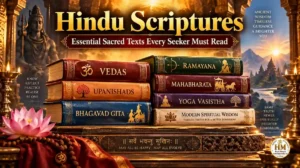
Hindu scriptures form the timeless spiritual foundation of Sanatana Dharma, guiding human consciousness toward self-realization and liberation. From the primordial wisdom of the four Vedas and principal Upanishads to monumental epics like the Ramayana and Mahabharata, and esoteric treasures like Yoga Vasistha, these sacred texts offer practical philosophy, spiritual science, and ethical clarity for every stage of life.
Why Every Hindu Should Read the Scriptures
Anyone born into the Hindu tradition owes it to themselves to read at least a few of its foundational texts in a lifetime. Among the countless treasures of Sanatana Dharma, one scripture shines above all: the Vasishtha Gita, also called the Yoga Vasistha. Composed during the age of the Ramayana, it captures the entire teaching that the sage Vasishtha gave to a young Rama when he returned from pilgrimage in a state of deep detachment from the world. Facing Vishwamitra, King Dasharatha, and the full royal court, Vasishtha answered every question a seeker could ever ask on behalf of humanity itself.
No one can promise that reading any particular scripture will transform a person. But one thing is close to certain: anyone who genuinely reads the Yoga Vasistha does change. The Vedas and Upanishads read like the deepest science ever written; the Puranas read like literature so vivid that a reader sometimes wonders how much of it is fact and how much is story. The Yoga Vasistha sits exactly between the two — philosophy carried inside unforgettable narrative. The only real qualification for reading it is honesty: a real longing for detachment (vairagya), and a sincere inquiry into the Self (Atma) and the Supreme (Paramatma). Readers who come to it while carrying an unresolved problem in life often find that the book does not leave that problem untouched.
Every major faith carries its own body of sacred literature — Christianity has the Old and New Testaments; Islam has the Quran, along with the Torah, Psalms and Gospel it recognizes as earlier revelation; Sikhism has the Guru Granth Sahib; Buddhism has the Tripitaka (Vinaya, Sutta and Abhidhamma) together with the Mahayana sutras — the Lotus Sutra, the Heart Sutra, the Diamond Sutra — and the Tibetan canons, the Kangyur and Tengyur; Jainism has its Agamas (Acharanga, Uttaradhyayana and others) along with works like the Tattvartha Sutra. Hinduism’s own body of scripture is wider than any of these traditions carries on its own. What follows organizes the essential Hindu texts into eighteen parts, in roughly historical order: (1) the four Vedas, (2) the Upanishads, (3) the eighteen Puranas, (4) the Ramayana, (5) the Yoga Vasistha, (6) the Mahabharata, (7) the Bhagavad Gita, (8) the Vedangas, (9) the Smritis, (10) the Agamas, (11) the six Darshanas, (12) the Mantra, Tantra and Yantra texts, (13) the Aranyakas, (14) the Sutra literature, (15) the works of Jyotisha (astrology), (16) the works of Adi Shankaracharya, (17) the works of Ramanujacharya, and (18) medieval and modern Hindu literature.
1. The Four Vedas
The Vedas are the most sacred texts in Hinduism and the foundational scripture for every Hindu who follows them. Their importance lies in what they are the source of: the basis of Sanatana Dharma itself, the guide for how society, custom, and value are built, and the wellspring of Indian culture, philosophy, science and art. Studying them is genuinely difficult — their language, their density, and the depth of their meaning demand real training to unlock. The Vedas speak of an infinite, transcendent power called Brahman, describing it as the source of everything that exists, and they describe the paths that lead to moksha, liberation.
The Vedas are divided into four parts — the Rig Veda, the Yajur Veda, the Sama Veda, and the Atharva Veda.
The Rig Veda — its Sanskrit name can be rendered as “the Veda of song” or “the Veda of hymns.” It is largely made of praise-hymns to the gods, mantras, and some of the oldest verses in the human record. It contains detailed worship procedures for the gods and instructions for conducting yajnas (fire sacrifices), with particular focus on hymns glorifying Agni (fire), Vayu (wind), Surya (the sun) and Indra.
The Yajur Veda — its name literally means “the Veda of sacrifice.” It supplies the mantras, procedures and rites needed to actually perform a yajna: the chants, the homa (fire-offering) actions, the sacrificial procedure itself, and the accompanying worship customs. Its emphasis falls on the rhythm, sound and correct execution of the mantras used in ritual.
The Sama Veda — its name can be understood as “the Veda of music.” It is built almost entirely around music, chant and raga. The mantras of the Sama Veda are published in musical form and are meant to be sung during worship and yajnas; the Veda’s focus is on the rules of music, the ragas, and rhythm itself.
The Atharva Veda — its name is also rendered as “the Veda of history” or “the Veda of healing.” It carries mantras, remedies and customs that serve everyday life, medicine and protective ritual. It covers medical procedures, protective rites, health-care practices and the wider texture of daily life, including material on wellbeing and matters of household and married life.
2. The Upanishads
The Upanishads offer the deepest available treatment of Atma (the individual self), Paramatma (the Supreme Self), Ishwara (God), Brahman, and moksha (liberation). Their philosophical message rests on four pillars: Atma — the individual soul, held to be an eternal and real truth, permanent and set apart from the transient physical world; Brahman — the all-pervading truth, the eternal and unmoving source of creation, without limit; Maya — the impermanence and illusion of the physical world, the philosophical confusion that arises from living immersed in finite things; and Moksha — eternal liberation, the recognition that the relationship between Atma and Brahman (or Paramatma) is, in the end, identity itself.
Among the many Upanishads, a handful stand out for the specific ground they cover:
Ishavasya Upanishad — on omnipresence. It speaks of creation, all-pervasiveness and divinity, teaching that the whole of creation exists within the true form of the divine. It is central to understanding one’s own place as part of that divine whole.
Katha Upanishad — on death and rebirth. It examines death and rebirth directly, and the relationship between them, laying out the eternal nature of the Atma. It attempts to explain the relationship between the individual soul (jivatma) and Brahman (the all-pervading truth).
Mundaka Upanishad — on the paths of knowledge. It describes two paths to knowledge — the path of karma (ritual action and worship) and the path of jnana (spiritual knowledge or practice) — and works to reveal the single truth underlying both, and the paths that lead to it.
Brihadaranyaka Upanishad — on the nature of Brahman. It describes the nature of Brahman, its eternity, and its constant presence within creation, alongside an analysis of the independence of the Atma, its wellbeing, and moksha.
Chandogya Upanishad — on the search for the Self. It pursues the search for the Atma, its origin and its truth, and helps make clear the importance of Brahmajnana (knowledge of Brahman) and the paths of life that lead to it.
Mandukya Upanishad — on the philosophical meaning of “Om.” This Upanishad is central to understanding how the syllable Om points toward the Atma, Brahman and creation itself. It also lays out the three states of the Self — waking, dream, and deep sleep — and examines the relationship between them.
3. The Eighteen Puranas (Ashtadasha Puranas)
The eighteen Puranas were composed by the sage Krishna Dvaipayana, better known as Vyasa Maharshi. They describe the creation and dissolution of the universe in relation to the gods. The principal eighteen are the Brahma, Padma, Vishnu, Shiva, Narada, Markandeya, Agni, Devi Bhagavatam, Bhavishya, Brahmavaivarta, Linga, Varaha, Skanda, Vamana, Kurma, Matsya, Garuda and Brahmanda Puranas. Together, the Ashtadasha Puranas form the eighteen great Puranas of Hindu tradition, covering devotion, dharma, creation, ancient history and matters of the future. Each Purana takes up its own distinct subject:
1. Matsya Purana — taught when Sri Maha Vishnu took the Matsya (fish) avatara. Its central material covers the histories of Karthikeya, Yayati and Savitri, and the greatness of the sacred sites of Varanasi and Prayaga. Verse count: 14,000.
2. Markandeya Purana — narrated by the sage Markandeya. It covers the glory of Shiva, Vishnu, Indra, Agni and Surya, and contains the Durga Saptashati. Verse count: 9,000.
3. Bhagavata Purana — taught by Veda Vyasa to his son, Shuka Maharshi. Its central material is Sri Krishna’s childhood pastimes and the history of his ten avataras. Verse count: 18,000.
4. Bhavishya Purana — taught by Surya Bhagavan to Manu. It covers the method of sun-worship, worship of Agni, the duties of the varnashrama system, and matters concerning the future. Verse count: 14,500.
5. Brahma Purana — taught by Brahma to Daksha Prajapati. It covers the histories of Krishna, Kashyapa and Markandeya, and matters of dharma. Verse count: 10,000.
6. Brahmanda Purana — told by Brahma to Marichi. It covers the histories of Radha-Krishna, Parashurama and Sri Ramachandra, along with hymns to Shiva and Vishnu. Verse count: 12,000.
7. Brahmavaivarta Purana — told by Savarni Manu to Narada. It covers the histories of Ganesha, Skanda, Rudra and Krishna, along with an account of the material world. Verse count: 18,000.
8. Varaha Purana — taught when Sri Maha Vishnu took the Varaha (boar) avatara. It covers the history of Sri Srinivasa, the glory of Venkatachala, and the procedures of Vishnu worship. Verse count: 24,000.
9. Vamana Purana — taught by Pulastya Prajapati to Narada Maharshi. It covers Shivalinga worship, the marriage of Shiva and Parvati, and the histories of Ganesha and Karthikeya. Verse count: 10,000.
10. Vayu Purana — told by Vayu Deva. It covers the glory of Shiva, timekeeping, geography and cosmology. Verse count: 24,000.
11. Vishnu Purana — taught by the sage Parashara to his disciple Maitreya. It covers the glory of Vishnu and the histories of Prahlada, Dhruva and Bharata. Verse count: 23,000.
12. Agni Purana — told by Agni Deva to Vasishtha. It covers the worship of Shiva, Ganesha and Durga, along with grammar, prosody and medicine. Verse count: 15,400.
13. Narada Purana — narrated by Narada to the mind-born sons of Brahma: Sanaka, Sananda, Sanatkumara and Sanatsujata. It covers Vedic hymns, vratas (vows), and descriptions of the sacred sites of Badari, Prayaga and Varanasi. Verse count: 25,000.
14. Skanda Purana — told by Skanda (Kartikeya). It covers Shiva’s history, Skanda’s glory, hymns to the Pradosha vow, and descriptions of sacred sites. Verse count: 81,000 — the largest Purana after Padma.
15. Linga Purana — carries Shiva’s own teachings and the glories of Shiva in his linga form. Its central material covers temple worship and vratas. Its verse count is not recorded.
16. Garuda Purana — taught by Sri Maha Vishnu to Garutmanta (Garuda). It covers the details of birth and death, and the soul’s journey through heaven and hell. Verse count: 19,000.
17. Kurma Purana — taught when Sri Maha Vishnu took the Kurma (tortoise) avatara. It covers the accounts of the Varaha and Narasimha avataras, and worship of Shiva in his linga form. Verse count: 17,000.
18. Padma Purana — the largest of the eighteen Puranas. Its central material covers the slaying of Madhu and Kaitabha, Brahma’s act of creation, the essence of the Gita’s teaching, and the glory of the Ganga. Verse count: 85,000.
Together, these Puranas lay out the foundations of Hindu dharma — its philosophy, its devotion, its sense of duty — while also carrying a vast store of Puranic narrative in their own right. Beyond these eighteen Maha Puranas, there also exist eighteen Upa Puranas (Sanatkumara, Daurvasa, Narasimha and others). Though of lesser standing than the eighteen great Puranas, they too cover the histories of the gods, methods of worship, paths of devotion, and rules of dharma.
RECOMMENDED PRODUCT
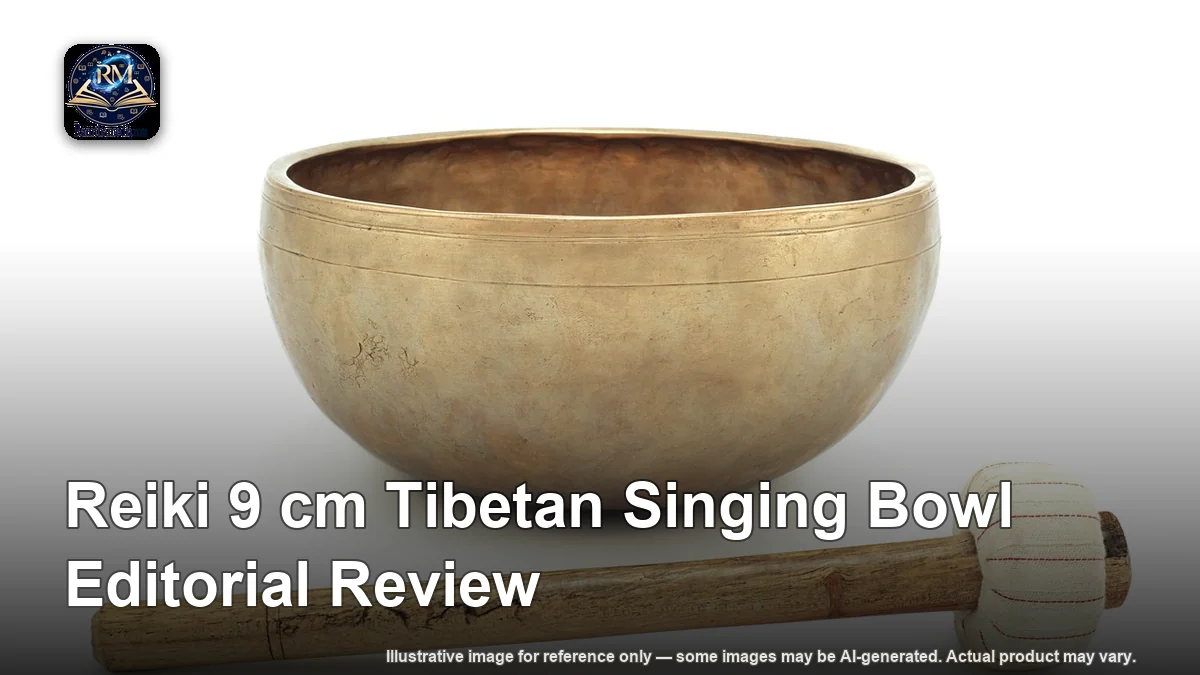
Reiki 9 cm Tibetan Singing Bowl Editorial Review : How can this product help you?
This review examines the Reiki using verified buyer feedback and the manufacturer’s listed specifications. Establishing a calm morning meditation ritual or dedicated prayer… The Reiki 9 cm Tibetan Singing Bowl meets this exact requirement by offering a dense 300 g cast metal alloy structure paired with a purpose-built wooden striker stick. Its… The Reiki 9 cm Tibetan Singing Bowl is a compact metal alloy meditation instrument engineered for personal sound therapy, mindfulness, and quiet prayer spaces. It produces a…
Read more about this productBuy on Amazon
As an Amazon Associate, RamthaMedia earns from qualifying purchases.
4. The Ramayana
The Ramayana and the Mahabharata are the two most celebrated epics of Indian culture. Where the Mahabharata explores dharma, karma and devotion through the lens of an entire dynasty’s conflict, the Ramayana tells the story of Rama and Sita. Composed by the sage Valmiki, it is one of the most influential works of literature India has ever produced, carrying values of dharma, duty, love and devotion through every verse. The story follows Rama, prince of Ayodhya, who leaves for a forest exile in obedience to his father’s word; when his wife Sita is abducted by the demon-king Ravana, Rama wages war on Lanka to win her back and prevails.
The principal characters carry values as much as they carry the plot: Rama, the embodiment of dharma and the ideal king; Sita, Rama’s wife and a symbol of purity; Lakshmana, Rama’s brother and his most devoted companion; Hanuman, Rama’s devotee, celebrated for his strength; and Ravana, the king of Lanka, standing for ego and adharma.
The Ramayana’s importance rests on several threads that run through the whole story: the triumph of dharma, which the epic insists always wins in the end; duty, embodied in Rama’s willingness to give up home and family to fulfil his father’s word; love, in the extraordinary bond between Rama and Sita; surrender, exemplified by Hanuman’s service to Rama; and truth, which the epic teaches always prevails. Its influence on Indian culture has been immense — the story has been translated into countless languages and has inspired films, plays and television serials without number, and it continues to shape how people think and live today. Its central lessons remain simple and durable: follow dharma; fulfil your duty; treat love, devotion and truth as the values that matter most in life; know that adharma is always eventually defeated; and understand that facing hardship is how victory is actually won.
5. The Yoga Vasistha
(Everything Sage Vasishtha taught Sri Rama, during the age of the Ramayana)
The Yoga Vasistha, or Vasishtha Gita, is among the most revered philosophical texts of the ancient Hindu tradition. It records everything the sage Vasishtha taught Rama, later given the shape of a formal scripture. Its subject is principally Advaita Vedanta and yogic philosophy, and it is also known as the Maha Ramayana. Composed of some 32,000 verses, it stands among the largest scriptures in the entire tradition.
The text is organized into major sections known as Prakaranas:
Vairagya Prakarana — describes how vairagya (detachment from worldly life) first arose in Rama.
Mumukshu Prakarana — describes the qualities and state of mind of a mumukshu, a person who genuinely seeks liberation.
Utpatti Prakarana — discusses how creation itself arose, the nature of the world, and its origin.
Sthiti Prakarana — covers the steadiness of the mind, knowledge of the Self, and sthitaprajnata — the state of unbroken wisdom.
Upashanti Prakarana — describes how the mind becomes peaceful and steady after enlightenment.
Nirvana Prakarana — teaches the attainment of complete liberation on the path of knowledge, and Self-realization itself.
The text’s central themes are worth naming directly. It teaches Advaita Vedanta — the non-dual doctrine that the individual soul and the Supreme Self are, in truth, one and the same. It gives sustained attention to mastery of the mind — the nature of the mind, its hold over a person, and how to release the grip of the perception built on it. It emphasizes jnana marga, the path of knowledge, describing how spiritual wisdom and inquiry lead to liberation. And it teaches through upakhyanas — the many stories and illustrative examples the text uses to work through its philosophical and spiritual themes.
6. The Mahabharata — A Great Epic
The Mahabharata is one of the true wonders of Indian culture — not merely a story but a way of life and a spiritual guide, and a source of pride for every Indian. Its significance runs along several lines. It is a foundation of Indian culture, having shaped custom, value and the wider way of life in India. It offers a deep understanding of life, teaching how to live, how to find contentment, and how to be a good human being. It teaches dharma and ethics, showing how to choose the right path and how to face hardship. It is, at the same time, a collection of stories rather than one single narrative — politics, love, family, religion, gods and demons all appear within it. And it teaches spirituality, showing a reader how to discover their own inner self.
7. The Bhagavad Gita — The Essence of All Teaching
The Bhagavad Gita is Sri Krishna’s philosophical teaching to Arjuna on how to live. It stands among the most important scriptures in Hinduism and forms part of the Mahabharata itself. The Sanskrit word “Bhagavad Gita” means “the song of God” or “the poetry of God.” Because it speaks to every era and every circumstance, it continues to function as a spiritual guide for life in any age.
Read as a sequence of stages, the Gita moves through experience, teaching, and resolution. It opens with Arjuna’s crisis: standing on the battlefield, faced with fighting his own relatives, teachers and friends, Arjuna is overwhelmed by doubt and mental anguish at the thought of war against the Kauravas.
Krishna’s teaching then unfolds through three paths. Karma Yoga — captured in Krishna’s own words, “karmanye vadhikaraste” — is the practice of acting without attachment to the outcome of the action; it is a discipline of how work and its results are to be handled. Bhakti Yoga describes wholehearted devotion, surrender and love toward God; Krishna speaks here of the liberation, peace and unwavering love that devotion brings. Jnana Yoga concerns philosophical knowledge and the ultimate nature of life — the paths that lead toward truth and toward the highest form of living.
From these teachings arises Arjuna’s resolve: his decision to fight, the importance of dharmayuddha (righteous war), and the resolve required to stand in that battle, grounded finally in self-belief — the recognition of one’s own inner order and one’s dharma.
The Gita’s most important teachings can be summarized simply: through karma yoga, one learns to carry out one’s actions truthfully, lovingly, and free from the errors of ego; through bhakti yoga, one advances spiritually through genuine love and service; and through jnana yoga, one comes to know truth itself and to understand the ultimate nature of life.
8. The Vedangas
The Vedangas are the four auxiliary sciences of Vedic study — Shiksha, Vyakarana (grammar), Nirukta (etymology), and Chandas/Pratyaya (prosody). They exist to make the Vedas readable, translatable and genuinely understandable; each division was designed to support correct comprehension and correct recitation of the Veda.
Shiksha is what makes correct understanding of the Vedas possible at all — without it, real comprehension is extremely difficult, since every letter and every tone in a Vedic mantra carries a specific meaning. It is also what makes the mantras usable: learning correct pronunciation through Shiksha is what allows Vedic mantras to be used effectively in yajnas and homas, and it strengthens a student’s grasp of the Sanskrit language itself. Its subject matter covers the sounds, tones (svaras — udatta, anudatta, svarita), syllabic timing (matras), classification and pronunciation of letters (varnas), compound word formation (samasas), and meter (chandas) of Vedic recitation. Its classical texts include the Pingala (on prosody in detail) and the Pratishakhyas (the Veda-specific texts that also cover Shiksha’s own subject matter).
Vyakarana (grammar) explains word formation, sentence structure and grammatical rule within the Vedas — the science needed to correctly understand words and sentences. Its core matter covers word forms and structure, the rules and principles tied to naming (samjna), and the rules of sentence construction.
Nirukta (etymology) analyses the words and sounds within the Vedas, helping to explain the meanings of Vedic verses. Its core matter covers the meaning of words and their roots, word explanation, and the clarification of sound and meaning.
Pratyaya/Chandas concerns the structure, metre and poetics of Vedic verse — the forms the verses take and how their structure is built. Its core matter covers metre and its finer forms (vrittam) and the poetics and construction of the verses themselves (gatha).
Together, these four Vedangas are what allow the Vedas to be correctly understood, correctly recited, and correctly interpreted — they are the essential organs behind a genuine grasp of the Veda.
9. The Smritis
The Smritis are treated as the principal legal and customary texts of Hindu dharma. They come after the Vedas, the Upanishads and the great epics (the Mahabharata and Ramayana), and their central role is to lay out social, legal and dharmic conduct — how society should function, how justice should operate, and how a religious life should be lived. In ancient Indian society, they served as a direct guide for individual life.
Manusmriti is among the most ancient legal texts of Hindu dharma, composed after the Vedic period, laying out social, legal and dharmic law; it covers the varna system, marriage, inheritance rights, and the structure of punishment.
Yajnavalkya Smriti can be read as a counterpart to the Manusmriti, offering its own treatment of legal, dharmic and social matters, including Vedic-era legal questions, social punishments, dharmic practice, and ethical conduct.
Harikrishna Smriti is counted among the national Smritis, with a particular focus on dharmic rules and legal matters — including rules of marriage, principles of dharma, and matters of justice.
There are also condensed compilations such as the Narada Smriti, believed to gather the teachings attributed to the sage Narada, though it is not always recognized as an independent, self-standing text. Compilations of this kind carry the legal and dharmic rules relevant to different social groups.
10. The Agamas
The Agamas are the scriptures that lay out temple worship, ritual procedure, and the worship of individual deities. Composed after the Vedas, they describe worship methods, ritual science and religious custom in detail — the worship procedures suited to different deities, the mantras appropriate to particular occasions, the conduct of rites, yagas and homas, and the distinctive culture surrounding the worship of each god. The Agamas fall into four principal streams:
Shaivagamas describe the worship methods of Shiva and Shaiva philosophy — Shiva puja, yagas, homas and mantras. Their principal texts include the Rudrayamalam (Shiva worship and temple procedure), the Shiva Sutram (on Shiva’s nature and Shaiva philosophy), and the Suvarnabhadram (Shiva worship and its context).
Shaktagamas describe the worship, mantras and customs associated with the goddess traditions, with particular attention to the worship of Durga, Lakshmi and Saraswati. Their principal texts include the Durga Mahatmyam (Durga’s worship methods and narratives), the Abhishtasadhana (worship methods for the Shakti deities), and the Kriyavivechana (the methods and rules of Shakti worship).
Vaishnavagamas describe the worship methods and customs associated with Vishnu — Vaishnava dharma, Vishnu worship and its rites. Their principal texts include the Vishnu Sahasranama (Vishnu’s thousand names), the Naradiyagamam (Vishnu worship methods and the principles Narada handed down), and the Govindasmritam (Vaishnava worship methods and rules).
Shaunagamas mainly describe worship methods, mantras and yagas, relating to the Shaunaga tradition. Their principal texts include the Shaunagasutram (Shaunaga dharma and worship methods) and the Samudrasuchika (the key subjects within the Shaunaga Agamas).
📖 Consciousness and Reality: Why Nothing We See Is Actually Real
11. The Six Darshanas
These are the texts of Hindu philosophy proper, organized into six principal Darshanas (schools):
Nyaya Darshana, founded by the sage Gautama, is the school of logic and reasoning — it rests on dharma, justice and ethics, and analyses the precise laws of creation and their probability. Its principal text is Gautama’s Nyaya Sutra.
Vaisheshika Darshana, founded by the sage Kanada, addresses the theory of atomism — the analysis of fundamental particles, magnitude, quality, form and permanence. Its standard text is Kanada’s Vaisheshika Sutra.
Sankhya Darshana, founded by the sage Kapila, offers a systematic account of the world and the process of living, explaining primordial knowledge (prakriti) and its qualities in an ordered way. Its standard text is Kapila’s Sankhya Sutra.
Yoga Darshana, composed by Patanjali, is best known as the Patanjala Yoga — a text centred on mental peace and disciplined practice, built on yogic method and the paths of sadhana. Its key text, the Yoga Sutra, is one of the most influential scientific works ever produced on yoga and yogic religion, organized into four padas (chapters) comprising 196 sutras in total. These sutras lay out, comprehensively, the methods, rules, meditation, concentration and spiritual practices of yoga, and the text still functions today as a guidebook for yoga practitioners. The four padas are: Samadhi Pada (the foundational sutras of yoga practice, yogic doctrine, and the state of samadhi), Sadhana Pada (the practice of the eight limbs of yoga — yama, niyama, asana, pranayama, pratyahara, dharana, dhyana and samadhi), Vibhuti Pada (the spiritual powers, or vibhutis, attainable through yogic practice), and Kaivalya Pada (the attainment of the Self, moksha or kaivalya, and the state beyond all maya). The Yoga Sutra is regarded as the foundation and the authoritative guide for modern yoga practice, and Patanjali’s sutras have been translated into many languages, with numerous commentaries available.
Purva Mimamsa, founded by the sage Jaimini, was developed to analyse the Vedic ritual procedures and customs; its focus centres on the karma-kanda (ritual portion) of the Veda. Its standard text is Jaimini’s Mimamsa Sutra.
Vedanta Darshana, attributed to Badarayana (Veda Vyasa), rests on the Upanishads, the final portion of the Vedas, and addresses truth, Brahman and the Self. Its standard text is Badarayana’s Brahma Sutra.
Each of these six Darshanas plays a distinct and important role in Indian philosophy, resting on its own customs and doctrines.
RECOMMENDED BOOK

The Maya Simulation: Quantum Physics and the Science of Consciousness by A. Ravinder
Is the world around us real? Or is it just a Maya Simulation?
A guide that bridges the ancient wisdom of the Yoga Vasistha with quantum physics and modern consciousness science — for readers ready to question the nature of reality and calm the mind with practical tools like the Zero Voice Technique. It explores mind, maya and consciousness in plain language, and offers a practical path for the seeker on the spiritual journey. Available in print and ebook instant-read versions.
Buy on AmazonBuy on Ramthamedia
As an Amazon Associate, RamthaMedia earns from qualifying purchases.
12. Mantra, Tantra and Yantra Texts
Mantra texts form an important part of Hindu scripture, dedicated specifically to mantras and tantric knowledge. They are central to the mantras, verses and rites used in worship procedures and yagas across dharmic tradition. Notable mantra texts include the Mahanarayana Upanishad (specifically devoted to mantras and their purpose, among the principal Upanishads, aiding spiritual knowledge; its core material covers mantras to Brahma, Shiva, Vishnu and other deities), the Sadananda Saraswati (offering key mantras and their associated methods, covering worship mantras and mantric procedures), the Durga Mahatmyam or Devi Bhagavatam (the worship methods and mantras of Durga, along with hymns), the Lakshmi Sahasranama (the thousand names of Lakshmi), the Shiva Suktam (Shiva’s hymns and worship mantras), the Naradiyagamam (the yagas and mantras handed down by Narada), the Surya Stotram (the mantras and hymns for worshipping Surya), the Vishnu Sahasranama (the thousand names of Vishnu), and the Gayatri Mantra (the meaning and application of the Gayatri Mantra and its power). Mantra texts are broadly characterized by mantras — verses and words meant for specific dharmic purposes; worship procedures — instructions for reciting mantras and conducting worship; and mantric methods — yagas, homas and mantra recitation. They serve as a central resource for devotion, worship and spiritual practice, helping to sustain a positive way of life and attain purity.
Tantra texts form a wide field of spiritual study in their own right, covering Shakti worship, mantras, yantras, mudras and mandalas in detail. Their categories include the Agamas themselves (describing worship methods for the deities of the Shaiva, Shakta and Vaishnava traditions), Tantra Saras (works written to make the essence of Tantra accessible), Yantra Shastra (the construction and use of yantras), Mantra Shastra (the pronunciation, meaning and effect of mantras), and the Kula discourse texts (works discussing the many aspects of tantric sadhana). Among the well-known Tantra texts are the Kamakhya Tantram (centred on Shakti worship, treating the goddess Kamakshi as the source of all power, and covering mantras, yantras and tantric practice in detail), the Makuteshwara Tantram (belonging to the Shaiva tantric tradition, describing Shiva’s many forms, mantras and yantras, and holding that Shiva resides within every living being), and the Yoga Tantram (describing Hatha Yoga and Raja Yoga in depth, teaching that yogic practice unifies body, mind and soul).
Yantra texts are a distinctive category within Hindu literature, describing yantras, mantras and worship procedures. Yantras are generally understood as symbols carrying the spiritual power of a deity, falling into categories such as nidhi yantras, vayu yantras and agni yantras. The Sri Chakra (the Shadakshara Yantra) is the foremost yantra used in Shakti worship, formed of five triangles with worship centred on the yogini deities and on Durga and Lakshmi. The Ganapati Yantra is central to Ganapati worship, particularly on Ganesh Chaturthi. The Durga Yantra represents Durga’s own truth and power, worshipped during Durga Puja with the Mahishasura Mardini armour and other adornments. The Surya Yantra draws in the sacred power of the sun, worshipped with Surya Namaskaram and special mantras. The Gayatri Yantra channels the power of the Gayatri Mantra through japa and worship. The Sri Rama Yantra represents Sri Rama’s own life-story, worshipped through the repetition of Rama’s name and offerings. And the Lakshmi Yantra, dedicated to the goddess Lakshmi, is the yantra worshipped throughout the well-known Shravana Friday Mahalakshmi Vratam observed by Hindu women during the month of Shravana (August), seeking Lakshmi’s blessing for prosperity and family wellbeing — the yantra’s petition being for wealth, prosperity, family peace, happiness and spiritual growth.
13. The Aranyakas
The Aranyakas are the texts that carry the meaning of the Vedas into deeper territory, describing meditation and yajna methods in particular. They are an important part of Hindu religious literature, treating the customs, philosophies, sacrifices and meditation methods embedded in the Vedas — material shaped by sages and scholars who typically lived in forest retreats (aranya). Their guidance was intended for those pursuing spiritual knowledge through meditation, fasting, and austerity in tranquil, secluded places.
Their importance rests on several points. They form the final portion of the Brahmana texts within the Vedas, and are counted as part of the Veda itself. They are texts that lead toward Vedantic doctrine, coming before the Upanishads and already carrying philosophical material connected to Vedanta. They treat ritual and yajna, describing yajna methods and meditative practice, with some rites and yajnas specified to be performed not in households but in forests and wilderness itself. And they give extended treatment to knowledge of the Supreme Self and to meditation, moving well beyond the Veda’s ritual and karma-kanda material into deeply philosophical and spiritual territory.
Among the well-known Aranyakas: the Aitareya Aranyaka belongs to the Rig Veda and generally covers ordinary yajna and meditation; the Taittiriya Aranyaka belongs to the Yajur Veda and includes important material such as the Shri Vidya and the Mahanarayana Upanishad; the Brihadaranyaka belongs to the Shukla Yajur Veda and carries an extensive philosophical discussion at its centre; and the Chandogya Aranyaka belongs to the Sama Veda and includes material on seasonal customs and festivals. The Aranyakas tie the ritual portion of the Vedas to philosophical and spiritual material, and their foundational principles underlie Vedantic doctrine and continue to inspire modern Hindu philosophy; they were written specifically for forest-dwelling sages and ascetics, and remain a significant guide for anyone seeking to understand the path of life, meditation practice, and the pursuit of moksha.
14. The Sutra Literature
Sutras are a distinctive form within Hindu tradition, built to state important philosophical, dharmic and ritual matters as brief, direct statements. A sutra typically carries a highly compressed meaning, meant to be unpacked and explained by teachers or scholars for their students. Among the significant sutra collections:
The Brahma Sutras, composed by Veda Vyasa (Badarayana), directly address Vedanta philosophy, distilling the philosophical content of the Upanishads into concise Vedantic aphorisms. They have drawn commentary from the greatest teachers of Vedanta — Adi Shankaracharya, Ramanujacharya and Madhvacharya all wrote their own commentaries on the Brahma Sutras.
The Dharma Sutras exist to state the dharma shastras in sutra form, covering ritual conduct, social rule, custom and duty within Hindu dharma, and are counted as part of the Smriti tradition. The well-known Dharma Sutras include the Gautama Dharma Sutra, the Baudhayana Dharma Sutra, the Apastamba Dharma Sutra, and the Vasishtha Dharma Sutra — together, these lay out the dharma, duties and customs a society is expected to follow.
The Yoga Sutras, composed by the sage Patanjali, describe yogic philosophy and yogic practice, giving a full account of Ashtanga Yoga — yama, niyama, asana, pranayama, dharana, dhyana and samadhi. Their four sections cover, in turn, meditation and samadhi (Samadhi Pada), the practical paths of yoga sadhana (Sadhana Pada), the siddhis attainable through yogic practice (Vibhuti Pada), and the final stage of yogic practice together with moksha (Kaivalya Pada); the Yoga Sutras remain a guiding text for yoga practice, meditation and the growth of the Self.
Sutra literature as a whole plays a significant role in carrying philosophical material, tradition and custom forward. Each sutra holds deep meaning and wide philosophical content within a compressed form, and teachers unpack these sutras for their students so that the many paths and customs of Hindu dharma can be properly understood.
📖 Starseeds Activation: Massive Frequency Shift Detected Across America
15. The Texts of Jyotisha (Astrology)
Jyotisha Shastra is an ancient science with a history running back thousands of years. It explains how the positions of the planets, the stars, and other celestial bodies influence human life, and many texts exist for its study — though a smaller number have become genuinely renowned for their depth and scope.
The Sarvasiddhanta Sangraha gathers the essence of the various Jyotisha texts into a single work. Among the individually celebrated texts: the Brihat Parashara Horashastra, composed by the sage Parashara, is regarded as the most authoritative text in the entire field, offering detailed treatment of birth charts, planets, signs and future prediction. The Jataka Parijatam, composed by Vaidyanatha, offers a detailed analytical treatment of individual birth charts. The Brihat Jataka, composed by Varahamihira, is among the most celebrated works on natal astrology, well known for describing the major changes that occur across a life based on the moment of birth. The Saravali, composed by Kalidasa, is distinguished for its treatment of the future as read through the birth chart. The Phaladeepika, composed by Mantreswara, brings together a range of subjects within Jyotisha. The Jaimini Sutras describe a distinct method of chart analysis. The Brihat Samhita is counted among the foundational texts of the field, offering a detailed treatment of planetary positions, transits and their results. The Surya Siddhanta gives a detailed account of eclipses, planetary motion and the reckoning of time. The Varahamihira Samhita covers Jyotisha alongside Vastu Shastra, medicine, and other sciences. And the Jataka Pariksha describes various methods for examining a birth chart. Beyond these, further well-regarded works include the Uttarakalamritam, the Jyotisha Ratnakaram and the Horashastra.
Together, these texts cover planetary change, stellar position and influence, the details of birth charts, the timing of marriage, and much else besides. Their broader value lies in a handful of things: they build an understanding of the planetary positions and movements that shape a life; they offer a way to anticipate what the future may hold; they support important life decisions; and they help point toward ways of resolving the difficulties life presents.
16. The Works of Sri Adi Shankaracharya
Sri Adi Shankaracharya is remembered as the towering teacher of Sanatana Dharma and Advaita Vedanta — a brilliant philosopher, scholar and poet whose writings hold exceptional standing within Vedanta and Hindu philosophy as a whole. His principal works include:
Brahmasutra Bhashya — considered his central work, a commentary on Veda Vyasa’s Brahma Sutras that lays out the essence of Advaita Vedanta.
Upanishad Bhashyas — Adi Shankaracharya wrote commentaries on the principal Upanishads, including the Aitareya, Brihadaranyaka, Chandogya, Katha, Kena, Mandukya, Mundaka, Prashna, Taittiriya and Ishavasya Upanishads, working through Advaita philosophy, the oneness of Brahman, and the path of knowledge in each.
Bhagavad Gita Bhashya — his commentary on the Bhagavad Gita, an important Advaita Vedanta text in its own right, analysing the Gita’s verses and explaining Advaita philosophy, karma, jnana and bhakti.
Vivekachudamani — a celebrated independent work, regarded as a text of high practical importance, addressing the Self, maya, discrimination (viveka), detachment (vairagya), discipline and devotion.
Upadesa Sahasri — an important prakarana (independent treatise) laying out Advaita doctrine with exceptional clarity and simplicity.
Atmabodha — another key prakarana, addressing knowledge of the Self, self-conviction, and instruction.
Tattvabodha — distinguished for explaining Advaita philosophy in an especially accessible way.
Shankaracharya’s writings, and his commentaries on the Upanishads, extended Advaita Vedanta enormously and remain of immense importance within Hindu philosophy to this day.
17. Ramanujacharya — Vishishtadvaita and the Sri Bhashya
Ramanujacharya wrote a number of important philosophical and dharmic works, articulating Vishishtadvaita philosophy while also reflecting his focus on devotion, spirituality and the Vedic scriptures. His principal works include:
Sri Bhashya — his celebrated commentary on the Vedanta Sutras, and the foundational text of Vishishtadvaita philosophy; it explains the meaning of the Vedanta Sutras and stands as the key work articulating the Vishishtadvaita doctrine.
Bhagavad Gita Tatparya — his commentary on the Bhagavad Gita, explaining the philosophical message and spiritual teaching of the Gita, and clarifying its central doctrines.
Vishnu Sahasranama — his work on Vishnu’s thousand names, an important text for Vishnu devotion and worship, explaining the names and their distinct significance for the inspiration of devotees.
Siddhanta Ratnavali — a shorter, scholarly work on Vishishtadvaita doctrine, offering answers to various philosophical questions and presenting the Vishishtadvaita philosophical position in literary form.
Gita Vishesha — a respected commentary on the Bhagavad Gita, helping explain its key concepts.
Paramahamsa Upadesa — a work of teachings on devotion and spiritual practice.
Upadesa Saram — a work offering guidance and teaching on devotion, dharma and spiritual practice.
Across these works, Ramanujacharya laid out Vishishtadvaita philosophy, explained the Bhagavad Gita and other Vedic scriptures, and offered guidance central to devotion, dharma and spiritual practice.
18. Medieval and Modern Hindu Literature
After Adi Shankaracharya expanded Advaita Vedanta, a wide stream of dharmic and philosophical writing followed, carried forward through Hindu philosophy, bhakti literature and much else. Among the significant threads:
Commentarial works — philosophers such as Vyasatirtha and Madhvacharya wrote detailed commentaries on Shankaracharya’s texts, becoming particularly known for developing Dvaita philosophy; Advaita Vedanta scholars such as Vidyaranya likewise extended and commented on Shankaracharya’s works.
Bhakti literature — the bhakti movement expanded significantly after Shankaracharya’s era, and texts such as the Vishnu Purana, the Bhagavata Purana, the Ramayana and the Mahabharata gained still wider popularity as bhakti literature. Poets such as Jayadeva composed devotional lyric poetry, playing a significant role within Vishnu bhakti.
Madhvacharya’s works — Madhvacharya, the founding teacher of Dvaita Vedanta, wrote the Anuvyakhyana, a commentary on the Brahma Sutras, and the Gita Bhashya, his commentary on the Gita.
Madhusudana Saraswati, a leading Advaita Vedantin, wrote the Advaita Siddhi, regarded as a substantial contribution to the Advaita position.
Vedanta Deshika, following Ramanujacharya, further extended Vishishtadvaita philosophy; his celebrated works include the Nyaya Parisuddhi.
Bhakti-movement literature — Tulsidas’s Ramacharitamanas and Surdas’s Gitopanishad stand prominently within the bhakti movement, and poet-saints such as Mirabai, Kabir and Tukaram carried bhakti literature forward through their own compositions.
21st-Century and Modern Works
The 21st century has seen a wide range of modern works on Hindu dharma, philosophy and spirituality, analysing devotion, yoga and spiritual life while carrying ancient wisdom into a modern idiom. Notable examples include:
Ramakrishna-Vivekananda yoga literature, published by the Ramakrishna Math across ten volumes. Swami Ramakrishna Paramahamsa’s own life and teachings are gathered in works recounting his life and the spiritual conversations recorded by his disciples, and in works such as “Sarva Dharma Samsiddhi,” which reflects his broad, sympathetic view across faiths. Swami Vivekananda’s own writings — “Jnana Yoga,” “Bhakti Yoga,” “Karma Yoga,” his collected addresses and sermons, his letters, and his famous 1893 addresses at the World’s Parliament of Religions in Chicago — carried Hindu dharma and Indian philosophy to a worldwide audience.
Master C.V.V. — known widely as Master C.V.V., born Kanchupati Venkata Rao Venkataswami Rao (4 August 1868 – 12 May 1922), was an Indian philosopher, yogi and teacher who in 1910 founded a new yogic method known as Bhrukti Rahita Taraka Rajayogam — a highly systematized, scientifically-framed yoga literature. Texts associated with his teaching include foundational introductions to his path, and works such as Ekkirala Vedavyasa’s “Master C.V.V.’s Electronic Yoga.”
Paramahansa Yogananda’s books — “Autobiography of a Yogi” is counted among the most influential spiritual works of the 20th century, tracing Yogananda’s life, his spiritual journey, and the knowledge he received from his own teachers; first published in 1946, it has if anything grown more widely read in the 21st century, and remains a key work introducing Hindu dharma and yoga to the Western world. His “The Essence of the Bhagavad Gita” translates the Gita for a modern readership, making its deeper meaning accessible while explaining the nature and purpose of the Paramatma described within it.
Sri Aurobindo’s “Savitri” — Sri Aurobindo, born in Bengal, fought for India’s independence before settling in Pondicherry as a celebrated spiritual teacher, philosopher and poet. “Savitri” is his most significant and celebrated work, an epic poem of extraordinary scope built on the Puranic story of Savitri and Satyavan — Savitri’s courage and spiritual practice in saving her husband’s life from Yama, the god of death, carries within it extended philosophical dialogue and reflection on life, death and creation itself.
Ramana Maharshi — a celebrated spiritual teacher and philosopher whose teachings on the path of knowledge, meditation and Self-realization continue to be read widely, though he wrote comparatively little himself; his recorded utterances became renowned as his own writings. His central teaching, Atma-vichara (Self-enquiry), centres on the question “Who am I?” as the path of inward search, holding that anyone who takes up this enquiry sincerely arrives, in the end, at the answer. Works associated with his teaching include “Atma Vichara,” “Upadesa Saram,” and further compilations of his teachings and dialogues.
Osho (Rajneesh) — a widely read modern spiritual teacher and philosopher whose many books address life, spirituality and meditation, translated into numerous languages including Telugu, and covering psychology, meditation, love, happiness and life at length.
Swami Rama’s “Living with the Himalayan Masters” discusses spiritual practice, meditation and yoga through his own experience in the Himalayas.
Sadhguru (Jaggi Vasudev) has written extensively on Hindu dharma, yoga, meditation and spirituality, with “Inner Engineering” among his best-known works.
Swami Sivananda’s “Vedanta for Beginners” is a widely used introductory work explaining Vedanta in accessible terms.
Countless further works by modern spiritual teachers continue to illuminate the depth of Hindu tradition — far too many to list in a single article. No text has been left out here on purpose; readers are certain to know many of these titles already, and are warmly encouraged to share this guide with anyone still building their own reading list.
Frequently Asked Questions
Which Hindu scripture should a beginner start reading first?
A beginner should ideally start with the Bhagavad Gita or the Yoga Vasistha. The Bhagavad Gita provides a concise, practical synthesis of duty, devotion, meditation, and wisdom for daily living, while the Yoga Vasistha dissolves psychological dilemmas through engaging stories and sublime non-dual philosophy.
What is the difference between Sruti and Smriti in Hindu scriptures?
Sruti refers to the unauthored, eternal cosmic revelations directly ‘heard’ by ancient sages, primarily encompassing the Vedas and Upanishads. Smriti refers to texts that were remembered and composed by human authors, such as the Dharma Shastras, Puranas, and Itihasas, which adapt eternal truths to specific social and historical contexts.
Why is Yoga Vasistha considered unique among philosophical texts?
Yoga Vasistha is unique because it directly addresses cosmic reality and mind control through practical dialogues and allegories, bridging the gap between abstract Vedic science and mythological Puranic tales without demanding blind ritual adherence.
How many major Puranas exist, and who compiled them?
There are eighteen major Mahapuranas, compiled and organized by Sage Krishna Dvaipayana Vyasa. They include the Bhagavata, Vishnu, Shiva, Skanda, Padma, Markandeya, and Agni Puranas, among others.
What are the six orthodox systems of Hindu philosophy (Shad-Darshanas)?
The six orthodox Darshanas are Nyaya (Logic), Vaisheshika (Atomic Physics), Samkhya (Cosmic Dualism), Yoga (Mind Control), Purva Mimamsa (Ritual Hermeneutics), and Uttara Mimamsa or Vedanta (Metaphysics of the Self).


