
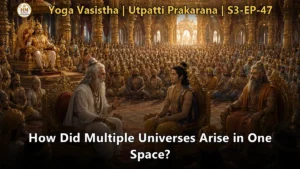
The diverse universes perceived across existence are not independent physical realities, but the projection of the mind’s intense contemplation. Through the dialogue of Lord Brahma and the story of the sons of Indu, Sage Vasistha reveals to Sri Rama how ten distinct cosmoses emerged simultaneously within the space of pure consciousness through unwavering mental resolve.
Four individuals seated in the same room wander through four entirely different realms depending on the intensity of their thoughts. While a dense forest of anxiety spreads across one mind, a palace of aspirations rises within another. When thoughts sculpt individual experience, every earnest seeker naturally ponders whether this vast cosmic creation of Brahma is also born of a profound mental resolve.
The question of whether deeply rooted inner convictions transform into tangible outer forms perpetually engages human inquiry. Whatever reality the mind accepts as absolute truth becomes its experienced realm, binding or liberating the observer.
Observing the quiet contemplation in the eyes of Sri Rama within the royal court of King Dasharatha, Sage Vasistha invoked an ancient dialogue once imparted to him by Lord Brahma himself. That profound inquiry into the origin of creation held the sages and scholars of the assembly in complete stillness.
📚 Yoga Vasistha — full guide & all episodes
The Inquiry into the Origin of Creation by Lord Brahma
Waves of quiet contemplation spread across the assembly hall. Beneath the shadows of gem-encrusted pillars, scholars and royal sages kept their gaze fixed upon the luminous face of the master. Beholding the thirst for truth in Sri Rama’s eyes, Sage Vasistha addressed the court with serene grace. Sage Vishwamitra sat alongside in deep reverence, attentive to the supreme wisdom about to unfold.
Sweeping his gaze across the gathering, the sage looked toward the vast expanse of the sky. In the solemn stillness of the hall, his voice resonated straight into their hearts, carrying the tranquil weight of timeless peace.
Vasistha: Rama! Long ago, I approached my father, Lord Brahma, the embodiment of supreme bliss, with a question: ‘Father, from where do all these creations arise? From what source does this entire visible universe emerge, and what is the true ground for the existence of diverse material phenomena?’
Vasistha: With a gentle smile, Lord Brahma replied: ‘Vasistha! In a pool of water, numerous swirling eddies and ripples arise. None of these whirlpools exist separate from the water itself; they are purely of water and possess no independent reality. Likewise, this mind, endowed with boundless creative power, expands as the universe. Listen attentively to an extraordinary event I once witnessed.’
Lord Brahma and the Wonder of Ten Universes in Cosmic Dissolution
As Vasistha recounted the direct experience of Lord Brahma, astonishment deepened among the listeners. It was the state following the great dissolution at the close of an epoch, when the entire manifested world had dissolved back into unmanifest silence.
A profound silence hung in the hall, so deep that even a falling needle would have resounded. Sri Rama looked upon his guru without blinking. Evoking that cosmic scene, the sage recalled the exact words of the Creator.
Vasistha: Lord Brahma said: ‘At the end of a cosmic cycle, having withdrawn the entire creation into stillness, I rested throughout the cosmic night with an undisturbed mind. At dawn, having completed my morning meditation, I turned my gaze toward the firmament to commence creation anew. There was neither light nor darkness. Forms and names did not exist. Everything had dissolved into complete void.’
Vasistha: ‘Gazing intently into that void, ten distinct cosmic creations appeared before my inner vision. To my astonishment, within each creation sat a Creator identical to my own reflection! Complete with heavenly realms, mortal planes, netherworlds, the wheel of time, seasons, oceans, and constellations, all ten universes shone in full splendor, existing independently within the very same space without ever colliding.’
👉 Previous Episode: Did the Universe Arise from Brahman? The Secret of Dualistic Scriptures | Yoga Vasistha S3 EP-46
RECOMMENDED PRODUCT
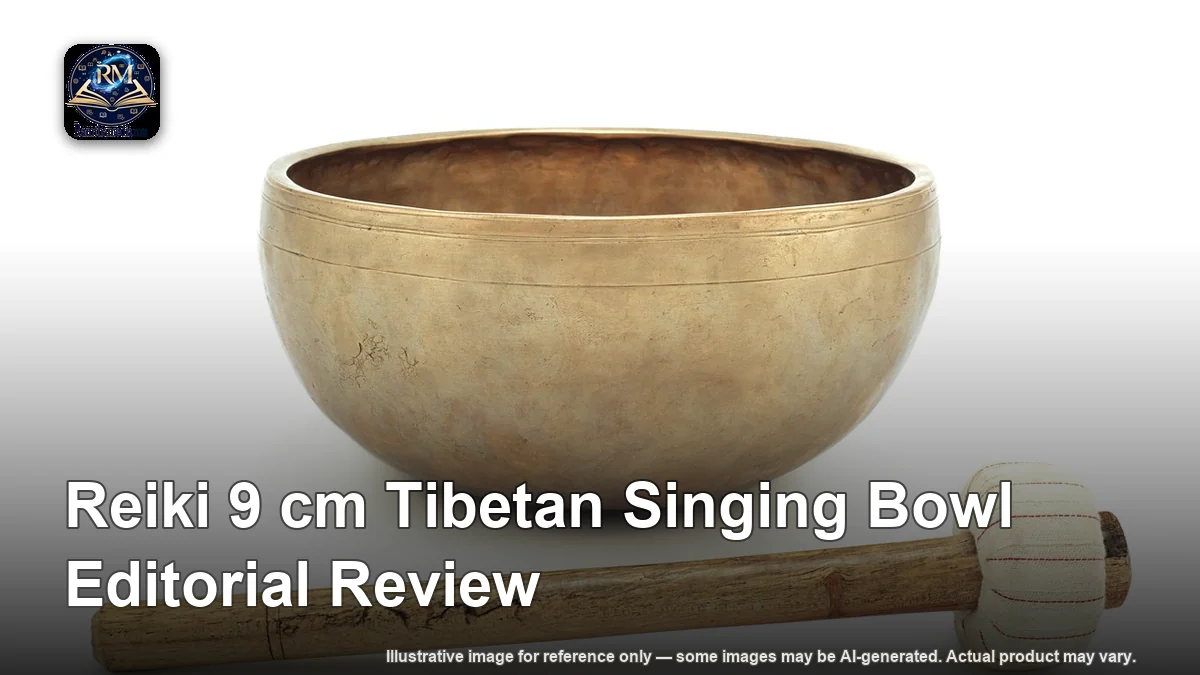
Reiki 9 cm Tibetan Singing Bowl Editorial Review : How can this product help you?
This review examines the Reiki using verified buyer feedback and the manufacturer’s listed specifications. Establishing a calm morning meditation ritual or dedicated prayer… The Reiki 9 cm Tibetan Singing Bowl meets this exact requirement by offering a dense 300 g cast metal alloy structure paired with a purpose-built wooden striker stick. Its… The Reiki 9 cm Tibetan Singing Bowl is a compact metal alloy meditation instrument engineered for personal sound therapy, mindfulness, and quiet prayer spaces. It produces a…
Read more about this productBuy on Amazon
As an Amazon Associate, RamthaMedia earns from qualifying purchases.
Dialogue Between Brahma and the Sun in the Celestial Expanse
Those parallel cosmoses shining within the void filled even Lord Brahma with deep wonder. A desire arose within him to discover how those universes had come into being without his command or intention.
The Creator focused his vision upon one of the ten universes. Observing the sun traversing its celestial course, Lord Brahma addressed that luminous deity.
Vasistha: Lord Brahma summoned that celestial deity: ‘O radiant Sun! Who are you? Who brought you into being? Having awakened from the sleep of cosmic dissolution, I find these universes existing without my resolve. Tell me if you know the origin of this creation!’
Vasistha: Folding his hands in reverence, the Sun answered: ‘Lord! You are the ultimate source of this entire manifested realm. Omniscient as you are, you question me purely for your cosmic delight. In obedience to your command, I shall recount the story of the sons of Indu, whose resolve brought these cosmoses into being.’
The Austerities of Indu at the Foothills of Kailash
Describing the rigorous austerities recounted by the Sun, Sage Vasistha guided the assembly into deep spiritual stillness. The sacred landscape of Jambudvipa rose vividly in the minds of the listeners.
The tranquil vibrations of Mount Kailash seemed to echo within the royal court. As Sri Rama listened with rapt attention, the narrative unfolded further.
Vasistha: The Sun spoke to Brahma: ‘Lord! In the region of Mount Kailash on Jambudvipa lay a sanctified place known as Suvarnajata. There lived an enlightened sage named Indu, born of the lineage of Kashyapa. Though devoted to virtuous living and constant holy communion, he remained childless for a long time.’
Vasistha: ‘Desiring offspring, Indu and his wife retreated to a secluded wilderness near Kailash and performed intense austerities, subsisting solely on water. Undeterred by scorching heat or torrential rains, they continued their penance until Lord Shiva appeared with Goddess Parvati, granting them a boon of ten sons endowed with supreme intellect and extraordinary power of retention.’
📖 Read More: What Is Death? What Truly Happens to the Soul in the Final Moments? | Yoga Vasistha S3 EP-27
The Deliberation of the Ten Brothers — Quest for the State of Brahma
Born by the grace of Lord Shiva, the ten sons mastered all scriptures by the age of seven. They lived in profound wisdom and discernment. In the course of time, their parents cast off their physical bodies and attained bodiless liberation.
Left on their own with all worldly ties severed, the ten brothers assembled atop a peak of Mount Kailash. Their collective reflection stirred deep contemplation throughout the court.
Vasistha: The eldest brother addressed the others: ‘Brothers! Our parents have attained liberation; grieving for them is pointless. This precious human birth must not go in vain. We must strive for that supreme attainment which bestows eternal welfare and imperishable bliss. What is the highest and most indestructible state of all? Let each of you speak your mind.’
Vasistha: One wished to become a local ruler, another a king of a sovereign empire, while others sought the status of an emperor or the throne of Indra. But the youngest brother spoke: ‘Kingdoms and imperial thrones are ephemeral. Even the status of Indra perishes at the end of a single day of Brahma. The only eternal status that survives across cosmic cycles is that of the Creator, Lord Brahma!’ Unanimously, they resolved to attain the state of Brahma alone.
📖 How Did the Individual Soul Emerge from Infinite Brahman? | Yoga Vasistha S3 EP-36
Motionless Meditation Like Painted Trees
Having determined how to attain the state of the Creator, the ten youths translated their resolve into immediate action. Severing all ties with the external world, they entered into absolute internal penance.
Their unbroken focus and transcending of bodily physical laws held the assembly spellbound. Vasistha’s voice deepened with intense inward focus.
Vasistha: Guiding his brothers, the eldest said: ‘Let us all sit firmly in the lotus posture and meditate without interruption: “I am the luminous Creator! I alone create, sustain, and dissolve the universes.” Even if the body falls away and breath departs, let us never abandon this conviction.’
Vasistha: Seated upon the mountain peak, the ten brothers restrained mind and breath, remaining motionless like trees painted on a canvas. As time elapsed, their flesh withered and was consumed by wild beasts, and their bones fell to the earth, yet their conviction of ‘I am Brahma’ stood firm as a mountain. Though their physical frames dissolved, their mental resolve remained unshakable.
RECOMMENDED FOR YOU
This four-volume set serves as an authentic guide to exploring the profound philosophical dialogues of Yoga Vasistha in their classical depth.
An essential daily companion for seekers wishing to understand the creative power of the mind and the path to self-realization.
Vasishtha Rama Samvadam (Set of 4 Volumes in Telugu) →
As an Amazon Associate, Ramthamedia.in earns from qualifying purchases.
Ten Universes Unfolding in the Space of Consciousness
Though their physical forms disintegrated, the inner realm sculpted by their contemplation expanded into boundless universes. The supreme principle manifested clearly: the more unyielding the mental resolve, the more concrete the reality it projects.
Standing as a pristine testament to the mind’s creative potency, the narrative held Sri Rama in deep awe as Sage Vasistha unfolded its inner dimension.
Vasistha: The Sun spoke to Brahma: ‘Lord! Those ten brothers envisioned themselves seated upon the cosmic lotus, encompassing the Vedas, the gods, the sun and moon, and the guardians of the eight directions within their own awareness. As a result of that concentrated contemplation, ten distinct universes solidified as real creations within the space of their consciousness, where rivers flow, mountains stand, and beings live.’
Vasistha: ‘I shine as the sun in one of those ten universes. Their unwavering conviction brought me and all these worlds into existence. This entire manifestation is a pure projection of the mind, free of any external material substance, existing entirely as focused resolve within the space of Consciousness.’
Action Without Agency — The Sun’s Philosophical Counsel to Brahma
Hearing the words of the Sun, a subtle doubt arose in Lord Brahma regarding his own cosmic duty.
The enlightened sages in the assembly nodded as they grasped the depth of the philosophical exchange. Vasistha shared the exact words exchanged between the Creator and the Sun.
Vasistha: Lord Brahma asked the Sun: ‘O radiant one! When they have already manifested their creations through their own resolve, what remains for me to create? Should I cease my cosmic functions? With ten universes already existing, what is my rightful duty?’
RECOMMENDED BOOK
The Maya Simulation: Quantum Physics and the Science of Consciousness by A. Ravinder
Is the world around us real? Or is it just a Maya Simulation?
A guide that bridges the ancient wisdom of the Yoga Vasistha with quantum physics and modern consciousness science — for readers ready to question the nature of reality and calm the mind with practical tools like the Zero Voice Technique. It explores mind, maya and consciousness in plain language, and offers a practical path for the seeker on the spiritual journey. Available in print and ebook instant-read versions.
Buy on AmazonBuy on Ramthamedia
As an Amazon Associate, RamthaMedia earns from qualifying purchases.
Vasistha: The Sun replied: ‘Lord! The ignorant act out of desire and cling to the notion of agency. But you are entirely free from personal volition. Just as a mirror reflects whatever stands before it without desire, as the sun reflects upon still water, and as a shadow follows a walking person effortlessly, continue the play of creation without attachment. Action devoid of the sense of personal doership incurs no bondage.’

Water on Stone — The Irresistible Power of Mental Conviction
The Sun articulated the timeless truth that while external actions of the physical organs can be restrained, no external force can dismantle a deeply entrenched conviction of the mind.
Physical forces stand utterly helpless before the crystallized conviction of the inner mind. Vasistha let these profound analogies resonate through the stillness of the hall.
Vasistha: The Sun continued: ‘Lord Brahma! Just as no seed can sprout on a solid rock no matter how much water is poured upon it, no external effort can dissolve an unyielding mental conviction. No force can destroy the universes established within the minds of the ten sons of Indu, for they are not crafted from physical clay, but from the crystallized resolve of consciousness.’
Vasistha: ‘It is the mind that constructs this entire cosmos; the mind itself is the primal agent. Joy and sorrow, birth and death persist only so long as identification with the physical body remains. When the realization dawns that “I am not the doer; all is the play of the Supreme,” all bonds of action dissolve into nothingness.’
The Serenity of Lord Brahma and the Nature of Mind
Listening to the profound wisdom of the Sun, Lord Brahma’s mind rested in perfect serenity. The mystery of creation, free from all illusion, stood fully revealed.
A sacred stillness enveloped the assembly. Sri Rama folded his hands in deep reverence before his master as Vasistha concluded the narrative.
Vasistha: Full of joy, Lord Brahma blessed him: ‘O Sun! Your words are absolute truth. They have brought great peace to my being. Hearing the sacred account of the sons of Indu has rendered my vision even more pristine. Shine ever radiant within your own universe.’
Vasistha: Look, O Ramachandra! Solely through the power of mental contemplation, the sons of Indu created ten distinct universes and attained the state of Brahma. Even after their physical bodies decayed, their projected reality stood firm. Therefore, this entire visible realm is nothing other than the playful display of the mind. Dissolving the mind into the Supreme Self is the true path to liberation.
The Power of Mental Resolve and the States of Brahma’s Creation
| Stage / Concept | Characteristic | Scriptural Analogy | Spiritual Truth |
|---|---|---|---|
| External Action | Activity carried out through bodily senses | Functions of the sensory and motor organs | Can be restrained externally, but cannot alter the inner state |
| Mental Conviction | Crystallized resolve within the mind | Meditation of the sons of Indu on ‘I am Brahma’ | An independent creative force that cannot be destroyed by external means |
| State of Non-Agency | Performing action with the awareness of not being the personal doer | Reflection in a mirror, shadow of a walking person | Complete and permanent freedom from the bondage of karmic fruit |
| Illusory Cosmos | The visible world projected by the mind | Eddies and whirlpools in a pool of water | No reality exists independent of the Supreme Self |
Spiritual Significance of the Brahma Dialogue
The universe is not an independent collection of material atoms, but the tangible projection of crystallized mental resolve. Through the story of the sons of Indu and their attainment of the status of Brahma, Sage Vasistha demonstrates that external reality derives its apparent substance entirely from the mind. Even when the physical frame perishes, a deeply sustained conviction survives intact to manifest its own distinct realm. Whatever reality the mind contemplates with absolute intensity inevitably becomes its experienced world.
Furthermore, the dialogue between Lord Brahma and the Sun illuminates the highest practice of unattached action. Just as a mirror reflects whatever stands before it without attraction or aversion, as the sun casts its reflection upon tranquil water, and as a shadow accompanies a walking figure effortlessly, the enlightened sage engages with worldly duties. Actions are performed purely out of duty, completely untouched by the ego of ‘I am doing this’ or the craving for results. Action free from the sense of doership never binds the individual.
The analogy of water poured upon a rock failing to sprout a seed offers invaluable guidance to every spiritual seeker. When the mind is firmly rooted in self-realization or a noble spiritual resolve, neither bodily afflictions nor outer obstacles can derail it. Ultimately, the mind alone is the author of both bondage and liberation.
📖 Where Do Up, Down, and Direction Come From in Countless Universes? | Yoga Vasistha S3 EP-20
Recognize that the challenges and anxieties you encounter are reflections of rigid mental constructs formed within your own mind. External circumstances do not inflict sorrow; rather, the mind’s interpretation of them generates joy or distress. By cultivating the tranquil awareness of being a detached witness rather than the personal doer, no binding consequence of action can ever disturb your inner peace.
Chapter Summary — Brahma and the Multiple Universes
Relating the direct experience of Lord Brahma to Sri Rama, Sage Vasistha proves that the entire cosmic creation is purely a manifestation of the mind. Observing ten parallel universes within the cosmic void at the end of dissolution, Brahma learned from the presiding Sun that these realms were generated by the ten sons of Indu through unyielding mental meditation on being the Creator. Guided by the Sun’s wisdom on action devoid of personal agency, Brahma peacefully resumed his cosmic play.
Scripture Notes on Brahma and Mind-Born Creation
- Main Message: The entire visible universe is a projection of the mind; unwavering mental conviction is the primal cause behind the creation of cosmoses.
- Philosophical Teaching: When free from the notions of doership and enjoyership, actions cannot bind. Living like a mirror, or like the sun reflecting upon still water, is the path to liberation.
- Connection to the Next Chapter: Witnessing the creations of the sons of Indu, Lord Brahma prepares to explore the inner nature of those parallel cosmoses in deeper detail.
Just as whirlpools in a pool are not different from water, the world projected by the mind is not different from the Self.
Just as water poured on a solid rock cannot make a seed sprout, external forces cannot dissolve a crystallized mental conviction.
Performing one’s natural duty with the unwavering awareness of non-agency is the highest yoga.
Frequently Asked Questions About Brahma and Creation
How do multiple distinct universes arise in the experience of Brahma?
Distinct universes arise not from external physical forces, but from the crystallized resolve and deep mental contemplation of living beings. When the mind focuses with absolute intensity within the space of consciousness, its sustained thoughts manifest as tangible, parallel realities operating simultaneously.
How did the sons of Indu attain the status of the Creator?
The ten sons of Indu attained the state of Brahma by withdrawing their senses and meditating unceasingly on the conviction of being the cosmic Creator, even as their physical bodies decayed. Through that unwavering mental absorption, ten independent cosmoses unfolded within their consciousness, establishing them as genuine Creators.
What is action devoid of personal doership?
Action devoid of personal doership is the performance of natural duties without egoistic pride or attachment to outcomes. It is characterized by spontaneous action without personal desire, resembling a mirror reflecting an object or a shadow naturally accompanying a walking person.
What does the analogy of water on a rock signify?
The analogy signifies that just as water poured on a rock cannot make a seed germinate, no external force can destroy or alter a firmly established conviction of the mind. While physical sensory organs can be restrained, the creative power of deep mental resolve remains entirely indestructible.
What is the central teaching of this chapter in Yoga Vasistha?
The central teaching is that the entire manifested cosmos is a projection of the mind, and true liberation lies in purifying inner intent and relinquishing bodily identification. By acting without the sense of personal agency and dissolving the mind into the Self, one attains lasting freedom.
Conclusion — The Vision of Brahma and the Creative Mind
Through the account of the sons of Indu, the truth that the universe is constructed by the mind stood fully revealed. Beholding how unwavering mental conviction outlasts the physical body to manifest living cosmoses, the light of wisdom shone brightly upon Sri Rama’s face. The entire assembly felt deeply that just as water cannot penetrate a solid rock, the waves of delusion cannot touch the heart of the wise. Yet, what deeper realizations awaited those ten creators within their parallel cosmoses, and how did Lord Brahma perceive the subtle reality of those independent worlds?
👉 Click this link to read the next episode: Is the Mind Stronger Than the Body? The Tale of Indra and Ahalya | Yoga Vasistha S3 EP-48


