

By RamthaMedia
RamthaMedia Free eBooks · August 2026
Price: Priceless
· 11 min read
Preface
This book is for a pilgrim who has decided to make the Vaishno Devi yatra and now has to plan the parts nobody warns you about – which month, which bag, which bed, which meal, and whether a closer darshan is worth booking. It does not cover the yatra registration counter itself or the story of the shrine, both of which belong to other books. By the end you will be able to plan your trip around what the Shrine Board itself publishes, not around guesswork.
Chapter 1
For a related perspective, read Kamakhya Devi Temple — The Sacred Mystery of the Divine Feminine.
Vaishno Devi Yatra,Vaishno Devi — Why the Same Trek Takes Four Hours for One Pilgrim and Fifteen for Another
A family reaches Katra on a Saturday in June expecting to walk up, have darshan by evening and catch a bus home the next morning. Instead they are told to wait. Not because anything has gone wrong – because the mountain itself has a ceiling on how many people it can move through the cave in a day, and June has more pilgrims arriving than that ceiling allows.
The Holy Cave sits inside a narrow passage, and darshan happens through a single, continuously moving queue, round the clock. On an ordinary day the Trikuta hill can carry roughly 30,000 to 35,000 pilgrims through that queue. During the summer months, the Navratras, and the last two weeks of December, arrivals routinely exceed that number, and the excess simply waits at Katra. This waiting period is a known, named phenomenon on the yatra, not a breakdown.
The pattern is public and worth checking before you book tickets, not after. As a rough guide, a day with under 15,000 to 18,000 pilgrims usually means a comfortable trip; above that, expect delays that grow with the crowd. The site itself publishes daily arrival figures for exactly this reason – checking them the week before you travel tells you more than any calendar rule.
If your dates are flexible, the monsoon and winter months carry the lightest crowds. Monsoon brings waterfalls and green hillsides along the track; winter brings snow at Bhawan and a working version of the original Holy Cave, which stays open through the cold months for a distinct kind of darshan. Neither season is a compromise – both are simply quieter than a May weekend.
Knowing when not to go solves half the planning problem. The other half is what to actually carry once you've picked a date – and that decision changes with the season you just chose.
For a related perspective, read Tirumala Srivari Salakatla Brahmotsavams — A Complete Guide to the Sacred Nine-Day Festival.
What you can actually do here
Two decisions carry most of the cost of a Vaishno Devi trip: where you sleep, and whether you want a darshan closer than the standing queue gives you. Both are published, in full, on the Shrine Board's own pages.
Where to stay along the route
| Use | Who it fits | Where | Worth knowing |
|---|---|---|---|
| A dormitory bed at Katra, Adhkuwari or Bhawan | budget pilgrims travelling light | Shrine Board guest houses – book at reception or the Enquiry and Reservation counter, Niharika Complex | Free cloak room and a no-profit Bhojanalaya on site Rs 150 a bed, and beds go first on weekends |
| A private room in Katra or Jammu | families or elderly pilgrims who want a door that shuts | Niharika, Shakti Bhawan or Ashirwad Bhawan in Katra; Vaishnavi Dham, Kalika Dham or Saraswati Dham in Jammu | AC and non-AC options in both cities Katra rooms run Rs 1,900 to Rs 3,300; book ahead for weekends |
| A bed just below the final climb | pilgrims aiming for an early morning darshan | Shrine Board accommodation at Sanjichhat or Bhawan itself | Cuts the last stretch of the climb to the morning of darshan Sanjichhat runs about Rs 1,200; Bhawan rooms run higher, and both fill first |
Choosing a closer darshan
| Use | Who it fits | Where | Worth knowing |
|---|---|---|---|
| Individual Poojan, Category A | someone who wants their name chanted in the morning Havan without travelling for it | book through the official website or in person; Prashad is sent by courier | Rs 2,100, up to five family names per booking the devotee is not required to be present at all |
| Individual Poojan, Category B | a family that wants to attend the Havan together | report to Room No. 8 at Bhawan before 8 am on the booked day | Rs 11,000 for up to five people present arriving after 8 am forfeits the slot entirely |
| Shradha Suman Vishesh Pooja (SSVP) | pilgrims who want Aarti-time darshan inside the cave, plus a room and transport bundled in | book via the Enquiry and Reservation office, Shakti Bhawan, Niharika Complex, Katra | Four categories, Rs 26,000 to Rs 1,21,000, scaling with group size the rate applies whether or not every service in the package is used, and Heli/Battery Car refunds are not given for weather cancellations |
Chapter 2
For a related perspective, read Saamethalu — The Timeless Telugu Proverbs and Their Deep Meaning.
The Bag You Carry and the Bag You Leave Behind
A pilgrim arrives at the Yatra Registration Counter with a wheeled suitcase and two shoulder bags, and spends the next twenty minutes discovering that none of it is coming up the mountain. Everything essential for the climb is already available on the track itself – blankets, food, medicine, even raincoats can be bought or rented along the way, and the Shrine Board explicitly advises travelling light rather than carrying a full pack.
Clothing follows the season decided in the previous chapter. Winters call for heavy woollens; the rest of the year, light woollens are enough, because even when Katra turns hot and humid, Bhawan stays noticeably cooler, especially at night. Footwear matters more than most pilgrims expect – flat or platform soles handle the tiled track far better than fashionable shoes, and a walking stick helps considerably on the steeper stretches for anyone walking rather than riding.
Two categories of item are worth naming specifically because they cause the most confusion at the checkpoint. Video cameras and mobile phones are not permitted on the track at all, for security reasons, and need to be deposited before the yatra begins rather than carried and confiscated later. On the other side, blankets are handed out free wherever needed, so carrying your own is simply extra weight.
This is where the cloak room facility earns its place in the plan rather than as an afterthought. Every Shrine Board guest house offers free cloak room storage, and Bhawan itself has two round-the-clock cloak rooms – one opposite the main queue complex for shoes, belts and anything not allowed inside the cave, and a second inside Sridhar Bhawan for full luggage before the final approach to darshan. None of it costs anything, and none of it should hold cash, jewellery or electronics, which the Shrine Board is explicit about leaving out.
Travelling light solves the packing problem. It does not solve where you sleep once you arrive – and that decision has more shape to it than most first-time pilgrims expect.
Chapter 3
For a related perspective, read Konark — Why Is Surya Missing and Pooja Forbidden in the Sun Temple?.
Where the Shrine Board Expects You to Sleep
A pilgrim who assumes Katra works like any other Indian town – book a hotel a day ahead, walk in – finds every private hotel full on a festival weekend, with no idea that the Shrine Board itself runs a parallel network of guest houses built for exactly this problem.
That network runs the length of the yatra, not just at the base. In Jammu it holds rooms at Vaishnavi Dham, Kalika Dham and Saraswati Dham, all near the railway station, for pilgrims who choose to break their journey there first. In Katra, Niharika, Shakti Bhawan and Ashirwad Bhawan sit near the main bus stand, alongside a 700-bed dormitory building called Trikuta Bhawan near the second yatra counter, and a Spiritual Growth Centre about a kilometre from the main bus stand. Further up the track, the Board provides accommodation at Adhkuwari, Sanjichhat and Bhawan itself – meaning a pilgrim can, in principle, break the whole twelve-kilometre climb into stages with a bed waiting at each one.
The rows in the map above this chapter cover the shape of it, but the range is worth seeing directly: dormitory beds run about Rs 150 regardless of location, while private rooms scale from roughly Rs 800 at Adhkuwari up to over Rs 3,300 for larger AC rooms in Katra. Every unit, dormitory or private, comes with a no-profit Bhojanalaya, a souvenir shop and a free cloak room attached – the accommodation and the eating arrangement were built together, not separately.
Booking works two ways: in person at the reception of whichever guest house you want, or at the Enquiry and Reservation counter in the Niharika Complex, or online through the official website. The one rule that actually matters is timing – weekends and holidays see heavy rush, so a pilgrim planning around a Saturday should book well ahead or shift the trip to a weekday instead.
Choosing where to sleep also decides where you'll be eating, which is a separate question with its own quiet rules on this route.
You may also like:
How to Learn ISO Standards and Country Codes
Chapter 4
📖 Kamakhya Devi Temple — The Sacred Mystery of the Divine Feminine
Eating on a Track With No Restaurants
Midway up the climb, a pilgrim who skipped breakfast starts looking for something resembling a restaurant, and finds instead a small counter perched at a bend in the track with a view of the whole valley below it. That counter is a viewpoint, and there are twelve of them – nine on the main track, three on the alternate route – each one deliberately placed where the scenery does the work a menu usually does.
The Shrine Board runs every one of these on a no-profit basis, which is stated policy rather than a marketing line: prices are kept low on purpose, and the larger viewpoints serve full meals – bread, buns, hot food – while the smaller ones stick to packed snacks, tea and bottled water. A few also stock oxygen cylinders and milk for infants, which is worth knowing if you're travelling with a baby or an older relative who tires on the climb.
For a proper sit-down meal, five Bhojanalayas cover the route – one each at Adhkuwari and Sanjichhat, and three at Bhawan, where they run around the clock rather than closing at night. A separate catering cell in Katra serves the Niharika accommodation cluster specifically. All of them share the same no-profit pricing, which is why the food here tends to be noticeably cheaper than anything sold by the private stalls that also line the track.
Those private stalls are legal and common, but the Shrine Board is direct about the risk: check that any packaged item is sold at its printed retail price, and don't pay more just because you're mid-climb and thirsty. It's the one place on the whole route where a pilgrim's own vigilance, rather than a Board rule, is what protects the price.
Food and shelter cover the body. The climb itself still has to be made – and that decision, walking it or not, is worth thinking through before you're standing at the base looking up.
Chapter 5
On Foot, On a Pony, or Carried
An elderly pilgrim stands at Banganga weighing two options: walk twelve kilometres she hasn't attempted in years, or hire a pony for a climb she's never done on horseback either. Both are common choices, and the Shrine Board treats both as normal rather than one being the 'real' way to make the yatra.
Many pilgrims walk deliberately, treating the tiredness of the climb as part of the devotion rather than an obstacle to it. Others – anyone older, unwell, or simply not used to sustained walking – use ponies, porters (locally called pithus) or palanquins, all of which are registered with the local municipal committee and carry a numbered, dated identity card. That card is the one thing worth checking before you hire anyone: an expired card means an unregistered operator, and the Shrine Board specifically warns that some unregistered pithus try to use old cards to get work anyway.
Rates for all three services are fixed and posted on sign boards and at Assistance Centres along the track, at Katra and at Banganga. Paying above the posted rate is never required, and offering food or a tip afterward is a choice, not an expectation. It's also easier to hire a pony, porter or palanquin at the start of the journey than partway up, so deciding before you set out saves a wait later.
One detail catches pilgrims by surprise: a downhill ride can be more tiring on the body than the uphill walk was, because the strain shifts from the legs to the back and grip. Someone who walked up out of devotion and is now exhausted may find hiring a pony down is not automatically the easier choice it looks like.
However you make the climb, most pilgrims arrive wanting more than the standing queue's single glimpse of the Pindies – which is exactly the decision the next chapter is built around.
Chapter 6
Booking a Closer Darshan Than the Queue Gives You
A family of five reaches Katra hoping for something more personal than the moving queue – a few extra minutes near the deity, a Havan performed in their name, a proper room to rest in rather than a dormitory bunk. The Shrine Board has built exactly this into two separate schemes, and choosing between them mostly comes down to whether you want to be present, and how many people are travelling with you.
Individual Poojan is the simpler of the two. Category A, at Rs 2,100, performs a morning Havan in your name without requiring you to attend at all – the Prashad is couriered afterward, and up to five family names can be included in one booking. Category B, at Rs 11,000, requires the devotee to physically report to Room No. 8 at Bhawan by 8 am on the booked day, with up to four additional family members; arriving late means forfeiting the slot with no exception made.
Shradha Suman Vishesh Pooja (SSVP) is built for a different kind of trip entirely – one where accommodation, meals, transport and an Aarti-time darshan inside the Holy Cave are bundled into a single package. The four categories run from Rs 26,000 for one adult and a child, up to Rs 1,21,000 for a group of five adults and two children, each tier adding a larger room, more meals covered, and Helicopter or Battery Car tickets for every person in the package. The rate is fixed per category regardless of which individual services you end up using, and a weather cancellation of the Heli or Battery Car service does not trigger a refund.
Both schemes can be booked through the official website in advance, or confirmed on a walk-in basis at the Enquiry and Reservation office, Shakti Bhawan, Niharika Complex – though spot booking depends entirely on slot availability, which shrinks fast during the peak months already covered in Chapter 1.
A booked poojan changes your morning at Bhawan. It changes nothing about the conditions on the track itself, which the Shrine Board governs with a set of rules every pilgrim is bound by, booked package or not.
You may also like:
Runway From Free Trial to Full Production
Chapter 7
📖 Somnath Jyotirlinga: How Did the First Sacred Shrine Rise After Countless Invasions?
The Rules Written After Someone Learned Them the Hard Way
During a sudden cloudburst warning one monsoon, pilgrims already on the track had to be redirected mid-climb, and the instructions that reached them that day – stay off unmarked shortcuts, don't shelter near drains or disturbed slopes, follow the public address system – are now written down as standing rules for everyone, not just for that one afternoon.
The core of it is simple: check official channels (the Shrine Board's website, its helpline numbers, its verified social media) before travelling, and postpone the trip if the India Meteorological Department or the district administration issues a heavy rain, cloudburst or landslide warning. On the track itself, stick to the designated route – shortcuts and unmarked trails are explicitly prohibited, not merely discouraged – and follow any public address announcement without delay.
A quieter benefit sits underneath the registration process that this book isn't covering in detail: every pilgrim who registers is automatically covered by free accidental-death insurance, valid only for accidental causes and not for natural deaths such as heart attacks. It's a real protection, and one many pilgrims never realise they were given.
The don'ts matter as much as the do's. No unauthorized or oversized luggage on the trek. No trekking alone at night or in low visibility. No crowding near rest shelters or emergency access routes. And no relying on social media forwards for weather or track updates – the Board is specific that only its own official channels should be trusted for that.
None of these rules ask much of a pilgrim who has already planned the trip carefully – they mostly reward the person who checked the forecast, packed light, and knows which counter to call if something changes. If your schedule leaves a day spare before or after the climb, that same planning mindset is worth applying to the towns around Katra and Jammu as well.
Chapter 8
What to Do With a Spare Day in Jammu or Katra
A pilgrim who finishes darshan a day earlier than planned, with a return train still two days off, often spends that extra time simply waiting in Katra rather than realising Jammu itself has a full day's worth of sights within an easy taxi ride.
In Jammu city, the Raghunath Temple complex – begun in 1835 and completed by 1860, its inner walls sheathed in gold on three sides – sits alongside dozens of smaller shrines connected to the Ramayana. The Ranbireshwar Temple nearby holds a seven-and-a-half-foot Shiva Lingam among thousands of smaller crystal ones. For something less devotional, the Amar Mahal palace-turned-museum has a solid gold throne and a 25,000-book library, and the Bahu Fort, older than the city itself, overlooks the Tawi river from terraced gardens.
Pilgrims heading further afield before or after the yatra pass through Patnitop, Kud and Sanasar – a connected hill-station circuit roughly two hours from Jammu, with pine forests, a golf course, and snow sports in winter. None of it requires special planning beyond a taxi and a free day; all of it sits on the same road most pilgrims already travel to reach Katra.
A spare day is optional. Everything in the chapters before this one is not – and taken together, they cover the same ground a first-time pilgrim usually only learns by making mistakes on the trip itself.
Questions readers actually ask
Is the Vaishno Devi yatra open in winter or during the monsoon?
Yes, the yatra runs year-round. The original Holy Cave stays open through winter for a distinct darshan, and both monsoon and winter see far shorter waits than the summer peak months.
Can I carry a mobile phone or camera on the track?
No. Video cameras and mobile phones are not permitted on the track for security reasons and should be deposited in a cloak room before starting the climb.
Are pony, porter and palanquin rates fixed, or negotiable?
Fixed. Rates are posted at Assistance Centres and on sign boards at Katra, Banganga and other points along the track, and paying above the posted rate is never required.
Do I need to be present for Individual Poojan to be performed?
It depends on the category. Category A (Rs 2,100) is performed in your name without you attending, with Prashad sent by courier. Category B (Rs 11,000) requires you to attend in person at Bhawan.
Can accommodation and poojan be booked online in advance?
Yes. The official website accepts advance bookings for both; offline confirmation and spot booking (subject to availability) are also possible through the Enquiry and Reservation office at Niharika.
Is a downhill pony ride easier than walking down?
Not necessarily. The Shrine Board notes that a downhill pony ride can be more tiring on the body than walking, since the strain shifts to the back and grip rather than the legs.
Contact / More useful information from RamthaMedia
- Officer Incharge, Enquiry and Reservation (poojan and accommodation booking): 01991-234053
- General Helpline (24×7): 01991-234804
- Donations desk, Central Office Katra: 01991-232167
The details above (phone numbers, emails and the like) can change over time. For the latest information, visit the official link below.
Official source links:
Vaishno Devi
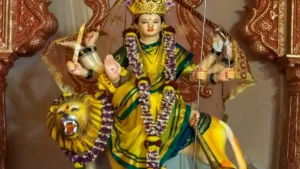
Disclaimer: This eBook is compiled from publicly available information and was accurate at the time of writing. For full and up-to-date details, please visit the official website linked above. RamthaMedia accepts no legal liability for any decision made on the basis of this eBook, and nothing here is professional, financial or legal advice. The image used for the cover page is illustrative only, not a real photograph of the site described – image source credit: Pexels.