
Tirumala Brahmotsavams main guide
This main guide explains the background of the Salakatla and Navaratri Brahmotsavams. The companion articles below examine individual vahana sevas and practical pilgrimage questions in greater depth.
Keep the two 2026 calendars separate: the Salakatla festival took place on September 15–23, following Ankurarpanam on September 14. Navaratri Brahmotsavams run from October 12–20, following Ankurarpanam on October 11. September procession timings should not be carried over to October. The September 27 TTD announcement is the reference for October timings.
Latest official TTD Navaratri announcement
| Companion article | Publication date |
|---|---|
| Navaratri dates and complete vahana timetable | 2026-09-28 |
| Sesha, Hamsa, Simha and pearl canopy | 2026-09-29 |
| Kalpavriksha, Sarvabhupala and Mohini | 2026-09-30 |
| Garuda Seva timing and significance | 2026-10-01 |
| Hanumantha, Pushpaka Vimanam and Gaja | 2026-10-02 |
| Suryaprabha and Chandraprabha | 2026-10-03 |
| Golden chariot, Ashwa and Chakrasnanam | 2026-10-04 |
| Darshan and booking confirmation | 2026-10-05 |
| Accommodation and travel planning | 2026-10-06 |
| Annaprasadam, family visits and SVBC | 2026-10-07 |
Published companion guides
-
Why Navaratri Brahmotsavams Again? Tirumala October 2026 Dates
-
What Does Kalpavriksha Vahanam Teach About Our Wishes?
-
Garuda Seva Lasts Five Hours — What Should Pilgrims Know?
-
Why Is Pushpaka Vimanam Special to Navaratri Brahmotsavams?
-
What Do Suryaprabha Vahanam and Chandraprabha Symbolise?
-
How Does Chakrasnanam Conclude Navaratri Brahmotsavams?
-
Tirumala Darshan — How Can You Verify Your Booking?
-
Tirumala accommodation — How Can You Plan Without a Room?
-
Tirumala Annaprasadam — How Does It Support a Family Visit?
Tirumala Brahmotsavam is a nine-day celestial festival celebrated annually at the Tirumala Venkateswara Temple, featuring sacred vahanas (divine vehicles), the majestic Garuda Seva, and concluding with the holy Chakra Snanam in Pushkarini. The 2026 Salakatla Brahmotsavams are scheduled from September 15 to 23, with enhanced security, free insurance for devotees, and arrangements to serve over 9.3 lakh annaprasadam meals.
When are the Tirumala Brahmotsavams in 2026, and what is the difference between Salakatla and Navaratri Brahmotsavams? Due to the occurrence of Adhika Maasam (an intercalary month), the Salakatla Brahmotsavams took place from September 15 to 23, and the Navaratri Brahmotsavams will be conducted separately from October 12 to 20. This comprehensive guide covers the Vahana Sevas, darshan arrangements, Agama traditions, and historical background.
Key Clarification: The Salakatla Brahmotsavams and Navaratri Brahmotsavams are not identical. In 2026, owing to Adhika Maasam, these two Brahmotsavams will be celebrated on distinct dates for Lord Venkateswara in Tirumala.
By tradition, these sacred festivals are held when the Sun enters the constellation of Virgo (Kanya Rasi), concluding on Sravana Nakshatra, the birth star of the Lord. Because 2026 includes an Adhika Maasam, TTD has made full preparations in accordance with Agama Sastra rules to conduct two separate Brahmotsavams (Salakatla and Navaratri). As part of this schedule, the ‘Salakatla Brahmotsavams’ will be held in grand celestial splendor from September 15 to 23…
Due to the arrival of Adhika Maasam in the 2026 Hindu calendar, two Brahmotsavams are being organized for Lord Venkateswara. Following the conclusion of the Salakatla Brahmotsavams, the Navaratri Brahmotsavams will take place with supreme grandeur from October 12 to October 20, 2026.
Under Agama Sastra injunctions, Navaratri Brahmotsavams do not feature Dwajarohanam and Dwajavarohanam (the hoisting and lowering of the celestial flag); instead, the Vahana Sevas commence directly. As lakhs of pilgrims are expected to converge for these festivals as well, TTD is making extensive special arrangements for darshan and security.
In view of these grand celebrations, and to uphold Agama mandates while ensuring pilgrim welfare, TTD has taken several pivotal decisions:
- Cancellation of Arjitha Sevas: TTD has completely canceled all paid virtual and physical Arjitha Sevas—including Ashtadala Pada Padmaradhana, Tiruppavada, Kalyanotsavam, Oonjal Seva, and Sahasra Deepalankara Seva—from September 15 to 23. This measure ensures uninterrupted conduct of the festival rituals and maximizes darshan time for ordinary devotees.
- Suspension of Privileged Darshans: Special darshan privileges provided to senior citizens, differently-abled persons, parents with infants, Non-Resident Indians (NRIs), and temple donors remain suspended throughout these nine festival days.
- Strict Regulation of VIP Break Darshans: VIP Break Darshans have been placed under stringent protocol rules and are restricted exclusively to constitutional dignitaries visiting in person. This ensures primary preference is accorded to the lakhs of ordinary pilgrims waiting in line.
On the evening of Monday, September 14, Vishvaksena—the supreme commander of Lord Srinivasa’s forces—will proceed around the temple precincts and the sacred Mada Streets to inspect the Brahmotsavam arrangements. On the same evening, amidst the solemn Vedic chanting of priests and scholars, Bhoomi Puja will be performed in the Yagasala to gather sacred ant-hill earth (Mritsangrahanam) and sow the nine sacred grains (Navadhanyas) into fresh earthen pots (Palikas) during the formal ‘Ankurarpanam’ rite.
| Festival Date (2026) | Day | Morning (8:00 AM) | Evening / Night (7:00 PM) |
| September 14 | Monday | – | Mritsangrahanam, Ankurarpanam, Senadhipathi Utsavam |
| September 15 | Tuesday | – | Dwajarohanam (Evening), Pedda Sesha Vahanam |
| September 16 | Wednesday | Chinna Sesha Vahanam | Hamsa Vahanam |
| September 17 | Thursday | Simha Vahanam | Mutyapu Pandiri Vahanam |
| September 18 | Friday | Kalpavriksha Vahanam | Sarva Bhoopala Vahanam |
| September 19 | Saturday | Mohini Avataram | Garuda Seva (Night 6:30 – 11:30 PM) |
| September 20 | Sunday | Hanumantha Vahanam | Swarna Rathotsavam (Evening), Gaja Vahanam |
| September 21 | Monday | Suryaprabha Vahanam | Chandraprabha Vahanam |
| September 22 | Tuesday | Rathotsavam (Morning at 7:00 AM) | Aswa Vahanam |
| September 23 | Wednesday | Chakra Snanam (Morning 6:00 – 9:00 AM) | Dwajavarohanam (Night) |
Due to the arrival of Adhika Maasam in 2026 according to the Hindu calendar, two Brahmotsavams are being conducted for Tirumala Srivaru. Following the conclusion of the Salakatla Brahmotsavams, the Navaratri Brahmotsavams will be celebrated with magnificent splendor from October 12 to October 20, 2026.
The schedule and Vahana Seva details for the Navaratri Brahmotsavams are as follows:
- Ankurarpanam: On the evening of October 11, the preliminary seed-sowing ritual (Ankurarpanam) will formally initiate the Navaratri Brahmotsavams.
- Festival Inauguration (Day 1): On the night of October 12, the festival commences as the Lord processes along the Mada Streets upon the ‘Pedda Sesha Vahanam’, flanked by Sridevi and Bhudevi.
- Garuda Seva (Day 5): The supreme highlight of the festival, ‘Garuda Seva’, will take place on the night of October 16 (from 6:30 PM to 11:30 PM). Earlier that morning, the Lord will appear in the enchanting Mohini Avataram.
- Pushpaka Vimanam (Day 6): On October 17, the Lord processes on the Hanumantha Vahanam in the morning, followed in the evening by the ‘Pushpaka Vimanam’—exclusive to the Navaratri festival—and the Gaja Vahanam.
- Swarna Rathotsavam (Day 8): While the Salakatla Brahmotsavams feature a massive wooden chariot (Rathotsavam), the Navaratri Brahmotsavams feature a special golden chariot. On the morning of October 19 at 7:00 AM, the Lord will process on the ‘Swarna Ratham’ (Golden Chariot), followed by the Aswa Vahana Seva at night.
- Chakra Snanam (Day 9): On the concluding day, October 20, the Navaratri Brahmotsavams culminate with the sacred ‘Chakra Snanam’ in the Swami Pushkarini facing the Sri Varahaswami Temple from 6:00 AM to 9:00 AM.
According to Agama Sastra rules, Navaratri Brahmotsavams do not have Dwajarohanam and Dwajavarohanam ceremonies; the Vahana Sevas begin directly. TTD is putting in place comprehensive arrangements for crowd safety and smooth darshan during these festivals.
For a related perspective, read Jyotirlinga Temples — Sacred Guide to the Twelve Manifestations of Lord Shiva.
Recommended reading or puja accessory
This optional item may be useful for readers who wish to continue their study or home practice.
Wooden Sambrani Dhoop Stand for home puja →
As an Amazon Associate, Ramthamedia.in may earn from qualifying purchases.
RECOMMENDED PRODUCT
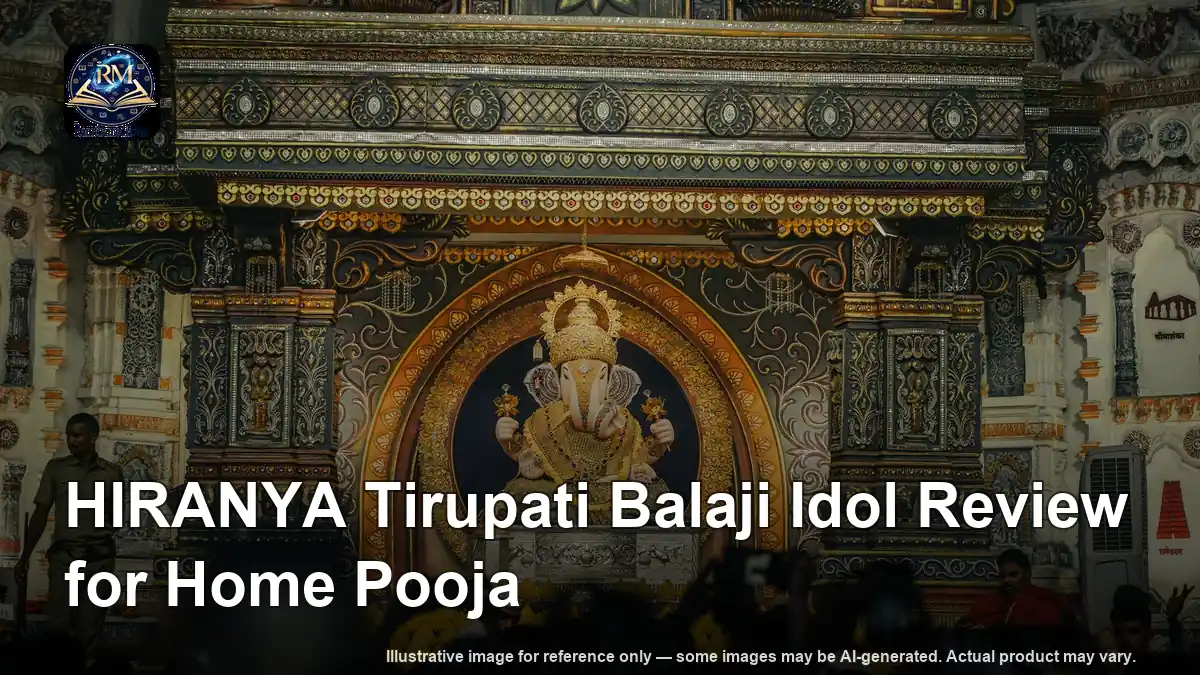
HIRANYA Tirupati Balaji Idol Review for Home Pooja : How can this product help you?
This review examines the HIRANYA using verified buyer feedback and the manufacturer’s listed specifications. Establishing a dedicated devotional space in a modern home or… The HIRANYA Tirupati Balaji idol directly addresses this requirement by combining a stable 650-gram polyresin and copper base with genuine 24K gold and 999 silver dual… The HIRANYA 8-inch Lord Tirupati Balaji idol is a traditional standing deity sculpture crafted from a polyresin and copper core, finished with dual 24K pure gold and 999 pure…
Read more about this productBuy on Amazon
As an Amazon Associate, RamthaMedia earns from qualifying purchases.
Brahmotsavams — Historical Origins and Epigraphical Evidence
The majestic grandeur that characterizes the Tirumala Brahmotsavams today is the culmination of more than a thousand years of continuous historical evolution. Far beyond mythological tradition alone, over 640 stone inscriptions preserved on the prakaram walls of the Tirumala temple meticulously chronicle this spiritual journey.
The earliest formal epigraphical record of an endowment dates back to 966 CE (10th century). Pallava Queen ‘Samavai Sri Perundevi’ (Kadavan-Perundevi) consecrated and presented a one-foot silver icon of ‘Bhoga Srinivasa Murti’ (Kautuka Beram) to Lord Venkateswara. An inscription on the northern wall of the first prakaram explicitly records that she donated precious jewels along with two fertile tracts of land measuring 10 acres and 13 acres to conduct annual Brahmotsavams during the Purattasi (Kanya) and Margali months. This stands as the definitive, foundational epigraphical milestone in the recorded history of the Brahmotsavams.
This tradition established by the Pallavas gained significant momentum under the subsequent patronage of the Cholas, Yadavarayas, Pandyas, and the Vijayanagara Emperors. The frequency of Brahmotsavams grew substantially over time. Under Vira Narasimha Yadavaraya (1209–1263), the ‘Panguni Utsavam’ was instituted, while Chola King Vijaya Gandagopaladeva established the ‘Chittirai Utsavam’ in 1254. Between 1300 and 1330 CE, the ‘Aadi Utsavam’ was inaugurated under Yadavaraya chieftains.
The Vijayanagara Emperor Sri Krishnadevaraya paid his maiden visit to Lord Venkateswara at Tirumala on February 10, 1513. To commemorate this sacred visit, he initiated the ‘Thai Brahmotsavam’ in his birth month of Thai. During Achyutaraya’s reign (1533–34), the ‘Karthika Brahmotsavam’ was instituted, and under the leadership of Tallapaka Pedda Tirumalayyangar in 1539, the ‘Aani Brahmotsavam’ took shape. Historical records show that between 1539 and 1616 CE, as many as 10 to 11 separate Brahmotsavams were celebrated at Tirumala in a single year.
In the modern era, from 1843 to 1933, the administration of the shrine remained under the Mahants of the Hathiramji Mutt. Following the constitution of the autonomous ‘Tirumala Tirupati Devasthanams’ (TTD) board in 1933, the Brahmotsavams acquired their modern, highly organized operational structure.
A Broader Tradition of Pilgrimage: Alongside the rich historical heritage of Tirumala’s festivals, you can explore the profound spiritual significance of ancient Shaivite shrines across India in our guide to the importance of the Dwadasa Jyotirlingas.
For a related perspective, read Kamakhya Devi Temple — The Sacred Mystery of the Divine Feminine.
Brahmotsavams — Vaikhanasa Agama Sastra — Authenticity of Worship and Daily Rituals
All daily worship, Brahmotsavams, Kalyanotsavams, and sacred rites in the Tirumala temple are performed in strict conformity with the Vaikhanasa Agama Sastra. Sage Vikhanasa, revered as having manifested from the mind of Lord Sri Mahavishnu, authored this sacred Agama. His four chief disciples—Marichi, Bhrigu, Atri, and Kasyapa—systematized and propagated its philosophical tenets. In particular, authoritative works composed by Sage Marichi, such as the “Vimanarchana Kalpam” and “Ananda Samhita”, serve as the ultimate canonical guides for temple rituals and the conduct of Brahmotsavams at Tirumala.
The Five Divine Manifestations of Lord Mahavishnu
According to the Vaishnava Agamas, Lord Sri Mahavishnu reveals Himself in five distinct states of manifestation:
- Para: The supreme, transcendent, and eternal form abiding in Sri Vaikuntha, attended by the Nitya Suris and the divine consorts Lakshmi, Bhu, and Nila Devi.
- Vyuha: The emanations that oversee cosmic creation, sustenance, and dissolution through the fourfold manifestations of Vasudeva, Samkarshana, Pradyumna, and Aniruddha.
- Vibhava: The divine incarnations assumed across different Yugas—such as Sri Rama, Sri Krishna, and the Dashavataras—to eliminate evil and protect the virtuous.
- Antaryami: The immanent, subtle divine presence residing within the spiritual heart of every sentient being.
- Archavatara: The physical iconographic form manifested on Earth to facilitate worship, contemplation, and devotion by mortal beings. Lord Sri Venkateswara at Tirumala is the self-manifested (Swayambhu) Archavatara. The Vaikhanasa Agama teaches that total surrender to this accessible Archavatara is the direct path to Moksha (liberation).
Philosophical and Practical Differences Between Vaikhanasa and Pancharatra Agamas
Hindu temples primarily adhere to either the Vaikhanasa or the Pancharatra Agama. While Lord Venkateswara at Tirumala is worshipped under the Vaikhanasa Agama, the Sri Padmavathi Ammavari Temple at Tiruchanur follows the Pancharatra Agama. Clear philosophical and procedural differences distinguish the two traditions:
- Mantras and Mudras: Vaikhanasa Agama relies strictly on Vedic mantras, placing supreme importance on Vedic yajnas, homas, and strict fire rituals, while minimizing the use of Tantric mudras. In contrast, Pancharatra integrates both Vedic and Tantric mantras, making extensive use of ritual mudras.
- Priestly Eligibility: In Vaikhanasa, the right to conduct worship is strictly hereditary and limited to Brahmins born into the Vaikhanasa lineage; it cannot be acquired through initiation alone. Under Pancharatra, any qualified individual who receives formal initiation (Diksha) from an authorized Guru becomes eligible to perform temple rituals.
- Mode of Inward Invocation (Atma-Sukta): In Vaikhanasa worship, the priest regards his own physical body as the living shrine of the Divine. Chanting the Atma-Sukta, he draws forth the divine radiance from his own heart through rhythmic pranayama (breath) and invokes it into the idol before him. This deeply interiorized ritual process is exclusive to Vaikhanasa.
- Ontological Principles: The Vaikhanasa tradition focuses strictly on a single ultimate reality (Narayana Tattva), whereas Pancharatra recognizes the three fundamental realities (Tattva Traya)—Chit (consciousness), Achit (matter), and Isvara (God).
To deepen your understanding of Vishnu’s divine incarnations and the timeless spirit of temple festivals, read our detailed article on the significance of Sri Rama Navami.
For a related perspective, read Sri Krishna Janmashtami: The True Story, Archaeo-Astronomy, and Sacred Rituals.
Brahmotsavams — Pancha Berams — Manifestation and History of Sri Malayappa Swami
The principal stone deity (Dhruva Beram) inside the sanctum sanctorum of Tirumala must never be relocated from the Ananda Nilayam. Therefore, in accordance with Agama rules, five distinct deities (Pancha Berams) are installed to conduct daily, special, and festival rituals. The Sanskrit word “Beram” denotes a consecrated idol or form.
| Beram Name | Temple Name | Significance and Functions |
| Dhruva Beram | Moolavirat / Srinivasa | The self-manifested (Swayambhu) stone deity standing roughly 8 feet high upon a lotus pedestal inside the sanctum. The central fountainhead of all divine power in the temple. All festival deities derive their spiritual energy through direct connection to this Moolavirat. |
| Kautuka Beram | Bhoga Srinivasa Murti | The 14-inch silver idol consecrated and donated by Pallava Queen Samavai Perundevi in 966 CE. Daily Abhishekam and night-time Ekanta Seva are offered to this deity. Situated at the feet of the Moolavirat, it remains permanently connected to the main deity via a sacred silk cord (Sambandha Kurcha). |
| Snapana Beram | Ugra Srinivasa Murti | The ancient procession deity representing the removal of sudden cosmic calamities. This deity is brought outside the sanctum only once a year on Kaishika Dwadasi, with the procession concluding strictly before sunrise. Tradition holds that if sun rays fall upon this deity, widespread disaster will affect the world. |
| Bali Beram | Koluvu Srinivasa Murti | The guardian deity of the temple’s daily administration. Every morning in the Koluvu court, the daily accounts of receipts, expenditures, and the Panchangam (astrological almanac) are formally read aloud before this deity. |
| Utsava Beram | Sri Malayappa Swami | The 3-foot golden procession deity flanked by Sridevi and Bhudevi, utilized for all outdoor processions including Brahmotsavams, Kalyanotsavams, and Vasantotsavam. This sacred trio is also self-manifested (Swayambhu). |
The Historical Emergence of Sri Malayappa Swami
Until the 14th century (around 1339 CE), Ugra Srinivasa Murti served as the official procession deity during temple festivals. During one such procession, a catastrophic fire suddenly swept through the Mada Streets, reducing houses and properties to ash. This terrifying event caused great distress and panic among priests and devotees.
At that critical juncture, the Lord spoke through a devotee in a divine trance: “Times have changed; do not bring my fierce Ugra form out for street processions henceforth. Return this deity to the sanctum before sunrise. In the nearby glade of the Malayappa hill, my peaceful, serene forms accompanied by Sridevi and Bhudevi are resting as self-manifested deities. Recover them and use them for all future festival processions.” The holy idol unearthed from that spot was originally named ‘Malai Kuniya Ninra Perumal’ (the Lord before whom the mountain bowed in reverence). Over time, this title was shortened to ‘Malayappa Swami’. It is this magnificent, benevolent form of Malayappa Swami that pilgrims behold today during the Brahmotsavams, Rathotsavam, and Garuda Seva.
For a related perspective, read Kamakhya Shakti Peeth Darshan: Entering the Sacred Womb Before Rebirth.
Brahmotsavams — The Sequence of Brahmotsavams – Spiritual Significance of the Vahana Sevas
The defining highlight of the Brahmotsavams is Lord Malayappa Swami processing along the Mada Streets morning and evening atop splendid carriers (vahanams), accompanied by His divine consorts Sridevi and Bhudevi. The Vaikhanasa Agama describes these festivals as ‘Sarvakamika Brahmotsava’, asserting that these rites establish universal righteousness (Dharma) and cosmic peace while liberating living souls. Every single vehicle carries a profound philosophical and spiritual meaning.
1. Ankurarpanam & Dwajarohanam: On the eve of the festival (September 14), priests perform Bhoomi Puja in the Yagasala, collect sanctified soil (Mritsangrahanam), and sow the nine sacred grains in fresh pots during the Ankurarpanam rite. On the following evening (September 15), Dwajarohanam is performed. A flag bearing the emblem of Garuda (Garuda Dhwaja) is hoisted atop the temple mast (Dhwajastambha) amidst Vedic chants, serving as the formal invitation to Brahma, Indra, Yama, Agni, and the celestial hosts to attend the festival.
2. Pedda Sesha Vahanam: On the opening night, the Lord processes upon the seven-hooded serpent Adisesha. In Vaikuntha, Adisesha serves the Lord as a bed, throne, and parasol, epitomizing supreme servitude (Dasa Bhakti). The inner message is that the individual soul (Jivatma) must take refuge in the Supreme Being (Paramatma) with unreserved dedication.
3. Chinna Sesha Vahanam: On the morning of the second day, the Lord mounts the five-hooded Vasuki (Chinna Sesha). The five hoods represent the five elements and five sensory organs, signifying the Lord’s mastery over nature and urging devotees to practice sensory restraint.
4. Hamsa Vahanam: On the second night, the Lord appears in the guise of Goddess Saraswati, holding a veena atop the Swan (Hamsa) vehicle. The mythical swan possesses the unique power of discrimination (Neera-Ksheera Viveka) to separate pure milk from water, instructing devotees to cultivate spiritual wisdom by embracing the righteous and discarding worldly impurities.
5. Simha Vahanam: On the third morning, the Lord processes on the Lion carrier, the undisputed king of the animal kingdom. The lion represents supreme majesty, valor, and strength, recalling the fierce Narasimha incarnation who protected Prahlada and destroyed evil. It illustrates Sri Krishna’s declaration in the Gita: “Among beasts, I am the Lion.”
6. Mutyapu Pandiri Vahanam: On the third night, the Lord is seated under a canopy woven entirely of lustrous natural pearls. Pearls symbolize spotless purity, serenity, and coolness, conveying the Lord’s comforting promise that His divine grace will extinguish the burning torments of worldly existence.
7. Kalpavriksha Vahanam: On the fourth morning, the Lord appears on the celestial wish-fulfilling tree (Kalpavriksha) alongside Sridevi and Bhudevi. Just as the divine tree grants all heavenly boons, Lord Srinivasa assures His surrendered devotees that He is the ultimate fulfiller of all righteous desires.
8. Sarva Bhoopala Vahanam: On the fourth night, the Lord processes on the Sarva Bhoopala carrier. This procession affirms that Sri Hari is the supreme sovereign over all earthly rulers and directional deities (Dikpalakas like Indra, Agni, and Yama), and that the entire cosmos operates under His supreme governance.
9. Mohini Avataram: On the fifth morning, the Lord assumes the form of the enchantress Mohini—the sole female form donned by Lord Vishnu. He assumed this avatar during the churning of the ocean (Samudra Manthan) to secure the celestial nectar for the Devas. This seva reminds seekers to overcome the illusions of physical delusion (Moham) and pursue pure spiritual enlightenment.
10. Garuda Vahanam: The Garuda Seva is the most sacred and widely anticipated event of the Brahmotsavams. On the fifth night (September 19), the Lord rides His beloved eternal carrier, Garuda, who is the personification of the Vedas. On this unique night, Malayappa Swami is adorned with the most ancient and sacred temple heirlooms—including the Makara Kanti, Emerald Garland (Pachala Haram), Sahasra Nama Mala, and Lakshmi Haram—which are otherwise reserved exclusively for the Moolavirat. Between 3 to 5 lakh devotees are expected to witness this grand procession in 2026.
11. Hanumantha Vahanam: On the sixth morning, the Lord appears in the guise of Sri Rama riding upon His foremost devotee, Hanuman. Hanuman stands as the supreme paradigm of total surrender (Saranagati) and selfless devotion (Dasya Bhakti), inspiring pilgrims toward selfless service to the Divine.
12. Swarna Ratham & Gaja Vahanam: On the sixth evening, the Golden Chariot (Swarna Rathotsavam) procession is conducted, followed at night by the Elephant (Gaja) carrier. The elephant represents royal splendor, wealth, and strength, recalling the Gajendra Moksha episode where the Lord swiftly rescued the elephant king from distress.
13. Suryaprabha and Chandraprabha Vahanams: On the seventh day, the Lord processes upon the Sun carrier (Suryaprabha) in the morning and the Moon carrier (Chandraprabha) at night. The Sun represents cosmic vitality, radiantly witnessing all actions (Karmasakshi), while the Moon governs the human mind and peace. This indicates that all cycles of day, night, and time remain entirely within the Lord’s authority.
14. Rathotsavam: On the eighth morning, the Lord processes along the Mada Streets on the colossal wooden chariot. Ancient scriptures declare: “Rathastham Kesavam drishtva punarjanma na vidyate” (One who beholds Lord Keshava upon the chariot is liberated from the cycle of rebirth). Tens of thousands of devotees pull the heavy chariot through the streets amidst deafening chants of “Govinda! Govinda!”
15. Aswa Vahanam: On the eighth night, the Lord mounts the Horse (Aswa) vehicle as the Kalki Avatar. The horse represents speed and kinetic power, symbolizing the Lord’s future arrival at the close of Kali Yuga to vanquish unrighteousness and restore cosmic order.
📖 Sri Rama Navami Significance: The Sacred Day Dharma Was Restored on Earth
Snapana Tirumanjanam and Yagasala Rituals
Following the morning Vahana Seva each day, ‘Snapana Tirumanjanam’ is performed for the procession deities inside the Ranganayakula Mandapam. This ceremony is not a simple ablution, but an elaborate Vedic sacrifice performed to the accompaniment of the Purusha Suktam, Sri Suktam, Bhu Suktam, Nila Suktam, and Narayana Suktam. The deities are anointed with holy sanctifiers including milk, curd, honey, tender coconut water, turmeric, and pure sandalwood paste. The Kankana Bhattar explains that this ceremony cools the deities, wards off negative energies, and restores supreme divine radiance. Special decorative garlands made of fruits (grapes, apples, oranges), rare exotic orchids, and fragrant vetiver roots are specially crafted for this event.
RECOMMENDED BOOK

The Maya Simulation: Quantum Physics and the Science of Consciousness by A. Ravinder
Is the world around us real? Or is it just a Maya Simulation?
A guide that bridges the ancient wisdom of the Yoga Vasistha with quantum physics and modern consciousness science — for readers ready to question the nature of reality and calm the mind with practical tools like the Zero Voice Technique. It explores mind, maya and consciousness in plain language, and offers a practical path for the seeker on the spiritual journey. Available in print and ebook instant-read versions.
Buy on AmazonBuy on Ramthamedia
As an Amazon Associate, RamthaMedia earns from qualifying purchases.
Pallaki Utsavam, Chakra Snanam, and Dwajavarohanam
On the morning of the ninth day (September 23), a palanquin procession (Pallaki Utsavam) is conducted, followed by the momentous ‘Chakra Snanam’ in the Swami Pushkarini facing the Sri Varahaswami Temple. Because the Brahmotsavams represent a grand cosmic Yajna, the concluding ceremonial bath known as ‘Avabhritha Snanam’ takes the form of Chakra Snanam. The sacred disc, Sri Sudarshana Chakrattazhwar, is bathed in the consecrated waters of the Pushkarini amidst Vedic chants. The precise moment the Sudarshana disc is immersed, lakhs of devotees take a holy dip in the tank, firmly believing that this ablution cleanses sins and purifies the soul. The Swami Pushkarini waters are continuously filtered and recycled using advanced modern treatment plants, keeping them pristine. That night, the festival concludes with ‘Dwajavarohanam’, the formal lowering of the Garuda flag.
Andal’s unconditional love and devotion toward Lord Krishna are fondly celebrated during this holy period; you can explore this vibrant Vaishnava tradition in our guide on Sri Krishna Janmashtami.
Brahmotsavams — Cultural and Devotional Synthesis — Andal Garlands and Prabandha Chanting
The Tirumala Brahmotsavams transcend regional boundaries; they serve as an inspiring testament to South India’s devotional harmony and cultural synthesis.
Srivilliputhur Andal Garlands: Every year on the morning of Garuda Seva, specially consecrated floral garlands and a parrot made of fresh betel leaves arrive at Tirumala from the temple of Andal (Goda Devi) at Srivilliputhur in Tamil Nadu. Worn and offered first to Andal herself, these garlands are draped over Malayappa Swami during the Garuda Seva, symbolizing Goda Devi’s divine love and absolute surrender to Venkateswara. The Garuda Seva is deemed incomplete without these sacred garlands.
Chennai Silk Umbrellas: Under the auspices of the Hindu Dharmartha Samithi in Chennai, traditional artisans from Chintadripet handcraft majestic silk umbrellas, which are transported to Tirumala on foot through an arduous pilgrimage. Presented on Garuda Seva day, these umbrellas add royal grandeur and divine protection to the Lord’s procession.
Dravida Veda Recitation and the Role of Jeeyar Mutts: In the 12th century, Sri Ramanujacharya codified the worship system of the Tirumala temple and established the ‘Tirupati Jeeyar Mutt’ (1119 CE) for perpetual spiritual supervision. Since that time, Sri Vaishnava Jeeyangars and scholars have led the Vahana processions, chanting the ‘Four Thousand Divya Prabandhams’ (Nalayira Divya Prabandham) composed by the Alwars in Tamil. Led by the Pedda Jeeyangar and Chinna Jeeyangar, the chanting begins with Poygai Alwar’s ‘Mudhal Tiruvandhadhi’ and covers the Iyarpa prabandhams, filling the sacred streets with divine melody.
Annamacharya Sankeertanas: Revered as the pioneer of Telugu hymnology and an incarnation of the Lord’s sword Nandaka, Tallapaka Annamacharya (15th century) composed over 32,000 hymns in praise of Lord Srinivasa. Annamayya immortalized the Brahmotsavams through timeless masterpieces like “Brahmotsavam Idi Brahmotsavam” and “Adivo Alladivo Sri Hari Vasamu”. During the festival, congregational renditions of these kirtanas at the Nada Neerajanam Mandapam and along the Mada Streets inspire spiritual elevation among visiting devotees. Preserved on ancient copper plates, these verses remain living historical treasures.
For festival dates, auspicious occasions, and pilgrim planning, please check the official TTD 2026 Telugu Calendar.
📖 Somnath Jyotirlinga: How Did the First Sacred Shrine Rise After Countless Invasions?
Brahmotsavams — TTD’s Grand Arrangements for 2026 Brahmotsavams — Security, Accommodation, and Annaprasadam
Anticipating an unprecedented rush of pilgrims during the September 2026 Brahmotsavams (estimated at 15–20% higher than last year), the TTD Trust Board under the leadership of Chairman Sri B.R. Naidu and the Executive Officer (EO) has enacted landmark administrative decisions. Under the guidance of Chief Minister Sri Chandrababu Naidu, comprehensive arrangements are being rolled out across the district administration and police force.
Security and Crowd Management: To safeguard the millions of visiting pilgrims, roughly 3,000 police personnel alongside 2,500 TTD Vigilance and Security personnel are being deployed. Elite anti-terror Octopus units and NDRF disaster response teams are stationed on high alert. Over 2,800 CCTV cameras integrated with facial recognition and real-time behavioral analytics are actively monitored from a Central Command and Control Room across the Mada Streets and Vaikuntham Queue Complexes.
Because parking capacity atop Tirumala is strictly limited to 2,500–3,000 vehicles, a systematic ‘Holding Points’ strategy is being enforced to eliminate traffic gridlocks and stampedes. Private vehicles must be parked across 5 mega parking lots in Tirupati (located at Kukkala Doddi, Renigunta, Vakulamatha Temple area, and Mangalam Cross), with free onward bus transit provided by APSRTC to Tirumala.
Annaprasadam and Laddu Distribution: Free, hot meals are served continuously through the ‘Matrusri Tarigonda Vengamamba Annaprasada Complex’ (MTVAC). The morning menu features upma, pongal, vada, and Tirumala’s famous coconut chutney, while lunch and dinner consist of fresh rice, vegetable curries, sambar, rasam, buttermilk, and traditional ‘Matra Annam’ (a wholesome rice dish infused with pure ghee). While daily capacity is 55,000 to 65,000 meals, over 6.13 lakh devotees were served on Garuda Seva day last year. For 2026, capacity has been increased by 52% to serve up to 9.30 lakh pilgrims.
To prevent any shortfall of consecrated laddus, a buffer stock of 10 lakh laddus is being maintained daily. To boost production in the temple kitchen (Potu), 400 additional outsourced staff members are being recruited alongside automated manufacturing units.
Pioneering Free Insurance Coverage for Pilgrims: In a historic first for Indian temple management, the TTD Board has introduced a transformative pilgrim welfare initiative. In the unfortunate event of an accidental death in Tirumala, the insurance compensation provided to the pilgrim’s family has been raised from ₹3 lakh to ₹10 lakh. Additionally, if a pilgrim passes away due to natural causes (such as age or sudden medical complications), TTD will provide ₹2 lakh in immediate financial aid. Administered in partnership with the Life Insurance Corporation of India (LIC), the entire annual premium of approximately ₹3 crore will be borne entirely by TTD without charging pilgrims.
Sanitation and Environmental Initiatives: To maintain strict hygiene despite heavy pilgrim movement, an additional 3,000 to 3,300 sanitation personnel have been deployed, with TTD allocating ₹1.6 crore for their transportation. A rigorous plastic ban remains enforced under the “Sundara Tirumala – Suddha Tirumala” environmental drive.
Between 40 and 50 metric tons of wet and food waste are generated daily from the dining halls, queue lines, and local canteens. To recycle this waste efficiently, a modern biogas facility costing ₹12.85 crore is being set up at Kakula Manu Dibba in partnership with Indian Oil Corporation Limited (IOCL). This plant will generate 1,500 kg of Compressed Bio-Gas (CBG) daily, which will be piped directly over 2.5 km to the Tarigonda Vengamamba Annaprasadam Complex for cooking. This green initiative will help Tirumala achieve its ‘zero-waste’ target while generating substantial savings in fuel expenditure.
RECOMMENDED FOR YOU
Incense offering holds a special place in daily devotional practice; this stand may be useful during your home prayers.
This is not a mandatory item related to the Brahmotsavams; choose it only if it aligns with your personal worship requirements.
SIGNAMIO® Wooden Sambrani Dhoop Stand →
As an Amazon Associate, Ramthamedia.in earns from qualifying purchases.
Brahmotsavams — Conclusion
The Brahmotsavams of Lord Sri Venkateswara at Tirumala are not just an ordinary religious festival; they embody a magnificent spiritual synthesis of over a thousand years of recorded history, epigraphical evidence, absolute fidelity to the Vaikhanasa Agama Sastra, and the collective devotion of millions. The seed of service planted in 966 CE by Pallava Queen Samavai, nurtured through the centuries by the Cholas, Yadavarayas, and Vijayanagara monarchs, stands today as a mighty spiritual institution under the stewardship of TTD.
The Salakatla Brahmotsavams of September 2026 blend ancient sanctity with modern technology—including integrated CCTV command centers, a renewable biogas plant, an unprecedented ₹10 lakh pilgrim insurance policy, and free Annaprasadam for 9.30 lakh devotees—keeping pilgrim welfare at the very core of temple management. The proactive cancellation of privileged darshans and Arjitha Sevas reaffirms TTD’s sincere commitment to prioritizing ordinary devotees.
Sanatana Dharma proclaims that witnessing the Lord of the Seven Hills upon His chariot and the divine Garuda mount, listening to the resonant chanting of the Dravida Veda and Annamacharya hymns, and taking a holy dip in the sacred Swami Pushkarini during Chakra Snanam confers the spiritual merits of multiple lifetimes. Beholding the benevolent form of the Lord during His celestial processions leaves an indelible, deeply elevating spiritual imprint in the life of every devotee.
Official TTD Information
For the latest official updates, revised schedules, or pilgrim guidelines regarding the Brahmotsavams, please refer to the official TTD portals:
- TTD: Official Announcement of 2026 Salakatla and Navaratri Brahmotsavams
- TTD: Release Details of the Brahmotsavam Booklet
Frequently Asked Questions
When is Tirumala Brahmotsavam 2026?
The Tirumala Srivari Salakatla Brahmotsavam 2026 is scheduled from September 15 to September 23. The nine-day festival begins with Dwajarohanam (flag hoisting) and concludes with Chakra Snanam in Pushkarini.
What are the main vahanas during Brahmotsavam?
The main vahanas (divine vehicles) include Pedda Seshavahanam, Simhavahanam (Lion), Muthyapandiri Vahanam, Hamsavahanam (Swan), Kalpavriksha Vahanam, Sarvabhouma Vahanam, Garuda Seva, and Hanumantha Vahanam. Each vahana carries Lord Venkateswara around the four mada streets.
What is Garuda Seva and why is it important?
Garuda Seva is the most important and spectacular event during Brahmotsavam. Lord Venkateswara rides the divine eagle Garuda around the mada streets, showering blessings on lakhs of devotees. It typically falls on the fifth evening of the festival and attracts massive crowds.
What is Salakatla Brahmotsavam?
Salakatla Brahmotsavam is the annual grand festival celebrated at Tirumala Venkateswara Temple, held for nine days. It is one of the most important festivals at the temple, involving special pujas, abhishekams, vahana sevas, and concluding with the sacred Chakra Snanam in Pushkarini.
What is Chakra Snanam?
Chakra Snanam is the grand finale of Brahmotsavam. The sacred Sudarshana Chakra of Lord Venkateswara is bathed in Pushkarini (the temple tank) with holy waters, marking the conclusion of the nine-day festival. It is performed on the final day after the Dhvajarohanam.
How many annaprasadam meals are served during Brahmotsavam?
TTD arranges to serve over 9.3 lakh (930,000+) annaprasadam meals during the nine-day Brahmotsavam to the visiting devotees. Special food counters are set up at multiple locations around Tirumala.
Is there free insurance for devotees during Brahmotsavam?
Yes, TTD provides free insurance coverage for all devotees attending the Brahmotsavam. This is part of the enhanced arrangements made for the safety and welfare of pilgrims during the festival.


