
Sage Agastya compared the pursuit of liberation to a bird flying in the sky. He beautifully explained that just as two wings are essential for a bird to fly, both action (karma) and knowledge (jnana) are equally essential for achieving liberation.
In human life, whether action is superior or knowledge reigns supreme remains a fundamental dilemma for every spiritual seeker. The sacred scripture of Yoga Vasistha opens precisely with this profound question. Sage Agastya reveals that just as a bird requires both wings to soar across the sky, a seeker requires both selfless action and spiritual wisdom to attain ultimate liberation.
📚 Yoga Vasistha — full guide & all episodes
Introduction — The Divine Wisdom Expounded by Sage Agastya
Every seeker pursuing the ultimate purpose of life encounters deep inner questions and paralyzing doubts. Even Sutikshna, a brilliant scholar who had mastered the Vedas and sacred sciences, faced this very dilemma. He found himself torn between renouncing all worldly duties in pursuit of self-knowledge or performing righteous actions continuously without seeking contemplation. The sublime answer given by Sage Agastya sets the foundation for the entire Yoga Vasistha.
Sutikshna’s Inner Turmoil and Agastya’s Sacred Teaching
Long ago, the eminent scholar Sutikshna found himself caught in a whirlwind of philosophical doubt. Having studied numerous scriptures, he constantly debated whether action or knowledge formed the true vehicle for spiritual liberation. He struggled to determine whether complete renunciation of worldly duties was necessary for self-inquiry, or if selfless action alone remained the ideal path.
Seeking to resolve this inner torment, Sutikshna journeyed to Sage Agastya’s hermitage. Bowing reverently at the sage’s feet, he revealed the deep conflict burdening his heart.
Sage Agastya smiled gently and addressed the earnest seeker:
“Look at that bird soaring freely in the open sky, my child. To ascend to such magnificent heights, it requires the coordinated strength of both its wings. Just as it cannot conquer the vast sky with a single wing, a spiritual seeker aspiring to soar in the infinite expanse of liberation needs both karma and jnana. Neither ritual action alone nor intellectual knowledge alone can ever bestow complete spiritual attainment.”
RECOMMENDED PRODUCT
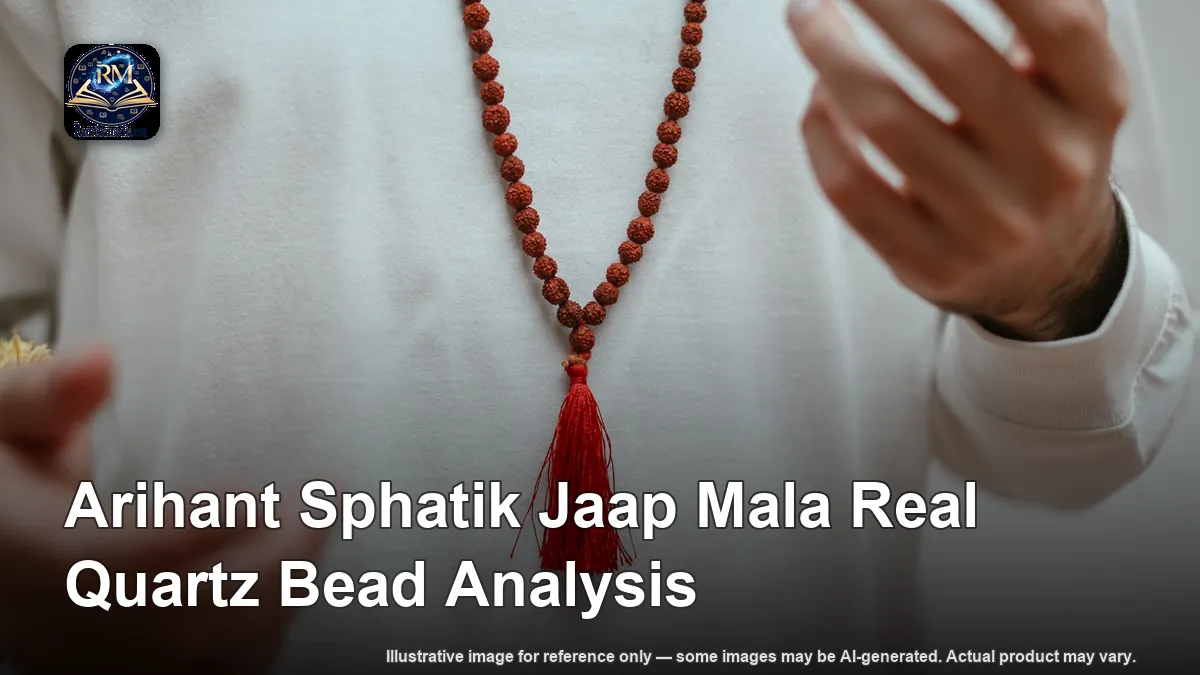
Arihant Sphatik Jaap Mala Real Quartz Bead Analysis : How can this product help you?
This review examines the Arihant using verified buyer feedback and the manufacturer’s listed specifications. Establishing a disciplined daily meditation or mantra chanting… Arihant Sphatik Jaap Mala addresses these practical prayer requirements by supplying one hundred and eight natural crystal quartz beads paired with a single guru bead on a… Arihant Sphatik Jaap Mala is a traditional 108 plus 1 bead rosary made from natural white crystal quartz designed for mantra chanting and meditation. Sourced with…
Read more about this productBuy on Amazon
As an Amazon Associate, RamthaMedia earns from qualifying purchases.
The Silence of Karunya and the Vedic Dilemma
To illuminate this eternal truth further, Sage Agastya shared an ancient narrative.
In earlier times, a devout brahmin named Agniveshya had a son named Karunya. Having mastered the Vedas and scriptures under his preceptor, Karunya completed his studies and returned home. Yet, instead of performing his ancestral daily rituals such as the agnihotra and sandhyavandana, the young man remained withdrawn in complete silence.
Observing his son’s unusual conduct, Agniveshya called Karunya near and asked with deep affection:
“My son, if you abandon all prescribed duties and remain idle in silence, how will you ever achieve spiritual perfection?”
Karunya shared his inner struggle:
“Father, the Vedic scriptures have plunged me into profound conflict. On one side, the path of Pravritti insists that one must diligently perform all prescribed actions. On the other side, the path of Nivritti declares that actions cannot yield liberation and that total renunciation alone grants spiritual freedom. Unable to discern which path represents absolute truth, I have chosen to remain silent.”
Recognizing the genuine longing in his son’s heart, Agniveshya offered guidance through another illuminating history.
The Celestial Messenger and Suruchi on the Himalayan Slopes
One day, upon the snowy peaks of the Himalayas, a celestial nymph named Suruchi sat in peaceful solitude, enjoying the grandeur of nature. Suddenly, a divine messenger appeared before her, his countenance radiating an unearthly spiritual brilliance. Surprised by this remarkable radiance, Suruchi inquired about the source of his radiant glow.
The divine messenger shared the extraordinary event he had just witnessed.
King Arishtanemi’s Supreme Dispassion and Rejection of Heaven
The divine messenger said to Suruchi:
📖 Is the Mind Stronger Than the Body? The Tale of Indra and Ahalya | Yoga Vasistha S3 EP-48
On Mount Gandhamadana, a great monarch named King Arishtanemi was performing severe austerities. Pleased with his steadfast devotion, Lord Indra sent me to invite him to heaven with celestial honors. When I presented Indra’s invitation, the wise king responded with a discerning question:
“O celestial messenger, does heaven offer only eternal, unalloyed bliss, or does it also contain shortcomings like the mortal world? Please tell me the truth.”
Struck by the monarch’s profound inquiry, I presented the true nature of celestial realms:
“O King, souls ascend to heaven solely to experience the fruits of their virtuous deeds. Yet even there, beings are categorized into superior, intermediate, and inferior ranks based on their accumulated merits. Consequently, heaven is not free from jealousy, ego, pride, and conflict. Most importantly, once their merits are exhausted, souls are compelled to fall back to the mortal realm, suffering immense sorrow.”
Hearing these words, King Arishtanemi revealed profound dispassion:
“O celestial messenger, I thank you for revealing the reality of heaven. I desire no such transient realm. I seek only the eternal state of supreme liberation. To attain that permanent state, I shall continue my severe austerities even if this physical body perishes.” With these words, the king returned to deep meditation.
Indra’s Joy and Arishtanemi’s Journey to Valmiki’s Hermitage
Astonished by the king’s resolve, I returned to Lord Indra and reported everything. Hearing this, Indra rejoiced, recognizing that Arishtanemi had attained the highest dispassion and now required only self-inquiry to attain enlightenment. Indra immediately commanded me to escort the king to the hermitage of Maharshi Valmiki. Having safely brought King Arishtanemi to Valmiki’s sacred abode, I am now returning.
RECOMMENDED BOOK

The Maya Simulation: Quantum Physics and the Science of Consciousness by A. Ravinder
Is the world around us real? Or is it just a Maya Simulation?
A guide that bridges the ancient wisdom of the Yoga Vasistha with quantum physics and modern consciousness science — for readers ready to question the nature of reality and calm the mind with practical tools like the Zero Voice Technique. It explores mind, maya and consciousness in plain language, and offers a practical path for the seeker on the spiritual journey. Available in print and ebook instant-read versions.
Buy on AmazonBuy on Ramthamedia
As an Amazon Associate, RamthaMedia earns from qualifying purchases.
Spiritual Inner Meaning — The Path to Liberation Shown by Agastya
True spiritual liberation requires both selfless righteous action (such as meditation and dutiful penance) and intense inquiry into eternal truth. Fixating on trivial rewards like heavenly pleasures never leads to self-knowledge, as one inevitably returns to the cycle of birth and death once accumulated merit exhausts. Real spiritual freedom arises when a seeker renounces ephemeral pleasures like King Arishtanemi and takes refuge under an enlightened master like Valmiki to dissolve ignorance forever.
Chapter Summary — Key Truths Revealed by Agastya
Sage Agastya resolved Sutikshna’s fundamental doubt by explaining that wisdom and action are like the two essential wings of a bird. Agniveshya guided his bewildered son Karunya through sacred stories when Vedic paradoxes paralyzed him. Finally, King Arishtanemi demonstrated supreme dispassion by rejecting transient heavenly pleasures, leading Indra to guide him toward Maharshi Valmiki for ultimate self-realization.
Scripture Notes — Core Principles Taught by Agastya
- Primary Message: Liberation is attained only when action and wisdom advance hand in hand; embracing one while abandoning the other results in an incomplete spiritual path.
- Core Philosophical Teaching: Heaven is merely a transient physical state subject to decay; once accumulated merit exhausts, the soul falls back into suffering, making eternal self-knowledge infinitely superior.
- Memorable Quotations: “A human being can soar in the skies of liberation only with the harmonious union of action and wisdom.” “I do not desire heaven; I yearn solely for supreme liberation.”
- Practical Reflection: In daily life, abandoning worldly duties under the pretext of philosophy is futile. True yoga consists of performing one’s responsibilities diligently while anchoring the mind in the divine.
- Connection to the Next Chapter: Having reached Sage Valmiki’s hermitage, what supreme wisdom will King Arishtanemi receive, and how was this transcendent teaching ultimately imparted to Sri Rama? The next chapter explores this profound revelation.
📖 Enigmatic Riddles of Self-Knowledge Posed by Karkati | Yoga Vasistha S3 EP-42
Frequently Asked Questions — Insights from Agastya’s Discourse
1. What was Sutikshna’s primary doubt?
Sutikshna wondered whether action (karma) or wisdom (jnana) is supreme in spiritual practice, questioning if one must abandon all actions to pursue self-inquiry.
2. How did Sage Agastya illustrate the path to liberation?
Sage Agastya compared spiritual practice to a bird in flight, explaining that just as a bird requires two wings to soar, a seeker requires both selfless action and wisdom to attain liberation.
3. Why did Karunya remain silent after completing his education?
Karunya was paralyzed by the apparent contradiction in the Vedas between the path of action (Pravritti) and the path of renunciation (Nivritti), unsure of which way to choose.
4. Why did King Arishtanemi reject the invitation to heaven?
King Arishtanemi rejected heaven after learning from the divine messenger that celestial realms also suffer from jealousy and pride, and that souls must fall back to earth once their merit is exhausted.
5. Why was the messenger instructed to take Arishtanemi to Maharshi Valmiki?
Recognizing Arishtanemi’s profound dispassion toward heavenly pleasures, Lord Indra knew the king was ready for supreme self-knowledge and directed him to Maharshi Valmiki.
Conclusion — The Path of Spiritual Practice Shown by Agastya
Sage Agastya’s discourse in the prologue of Yoga Vasistha serves as an eye-opener for every spiritual seeker. It establishes that action without wisdom leads to blind routine, while theoretical wisdom without righteous living remains sterile. King Arishtanemi’s supreme dispassion proves that all transient worldly and celestial pleasures pale before eternal self-knowledge, setting the stage for the profound wisdom that follows.


