
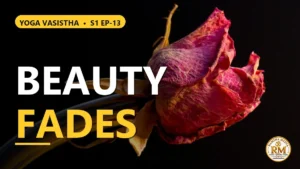
Rama objected that poets attribute non-existent beauty to the physical form by comparing it to natural wonders like the moon and water lilies, which misleads ordinary people into deeper infatuation and causes them to lose their discernment.
Why do human beings remain perpetually infatuated with physical beauty despite its fleeting nature? In the Yoga Vasistha, Sri Rama analyzes the truth hidden beneath bodily attraction with profound discernment. He declares to Vasistha that one must transcend fascination with this mortal frame of flesh and blood, turning steadfastly toward eternal Self-knowledge.
📚 Yoga Vasistha — full guide & all episodes
Introduction – The Transience of the Body
Physical attraction remains one of the strongest bonds chaining humanity to the cycle of worldly existence. Blinded by superficial charm, people forfeit their enduring peace for momentary pleasures. In the Vairagya Prakarana of Yoga Vasistha, Sri Rama presents a penetrating philosophical inquiry into the emptiness of bodily obsession before Sage Vasistha. This dialogue dissolves illusions surrounding the body, awakening genuine spiritual clarity.
The Illusion of the Human Body
Sri Rama addressed Sage Vasistha:
“O Great Sage! I fail to understand why mortals in this world exalt lust and physical infatuation, losing themselves in sheer delusion. In reality, this body is merely an assemblage of blood, flesh, bones, and nerves. What genuine splendor exists within it? Why do people squander their precious lives clinging to these perishable frames?”
RECOMMENDED PRODUCT

JaipurCrafts 22cm Metal Ram Darbar Idol Review : How can this product help you?
This review examines the JaipurCrafts using verified buyer feedback and the manufacturer’s listed specifications. Setting up a compact home altar or introducing a sacred… The JaipurCrafts Ram Darbar statue addresses these practical requirements through a cast aluminium alloy construction that delivers traditional gold-tone decorative warmth in… JaipurCrafts Ram Darbar is a 22-centimetre gold-coloured aluminium alloy murti weighing 460 grams, designed as a decorative relief showpiece for home mandirs and office…
Read more about this productBuy on Amazon
As an Amazon Associate, RamthaMedia earns from qualifying purchases.
When examined individually, outward features such as hair, skin, and eyes hold nothing inherently captivating. Rama observed that by clinging to a physical structure made merely of the five elements, humanity obscures its innate wisdom.
The Cremation Ground – The Vanity of Adornment
Rama portrayed the inevitable fate of bodies adorned today with vibrant garments, fragrant ointments, and pearl necklaces. Sooner or later, this cherished form must lie abandoned in the cremation ground, turning into food for jackals and dogs or reducing to ashes upon a pyre. Even the most tenderly nurtured bodies inevitably return to dust, and those who perceive this truth never surrender to infatuation.
Just as intoxicating wine impairs human judgment, lust overwhelms the living soul. Rama logically questioned the distinction between human limbs and the anatomy of wild beasts, noting the absence of any fundamental difference.
Poetic Exaggerations – Catalysts of Human Downfall
Rama critiqued erotic poets whose romantic verses intensify worldly delusion. He warned that exaggerated descriptions likening hair to darkness, faces to the moon, and eyes to lotuses serve merely as fuel for blazing infernos. Trapped in the allure of poetic imagery, people become enslaved to sensual indulgence, straying from righteousness and ruining their human birth.
The Soul Entangled in the Snare of Bodily Desires
Wandering in the mire of worldly thoughts within the pool of Samsara, living beings allow the torrent of desire to sweep away their peace and discernment.
Just as a bear draws a serpent from its hole with its breath to devour it, sensory allurements entice mortals, draining their vitality and honor. Like a bird trapped in a fowler’s net, the individual soul struggles in captivity to sensory cravings. Lust functions like a massive wooden post binding an elephant, holding the living being in helpless bondage.
Dispassion Toward the Body as the Path to Liberation
“Therefore, O Sage! I clearly recognize that outward attractions form the origin of all suffering and bondage. The dread of decay and mortality has created in me a deep distaste for transient associations. When I harbor no attachment even toward my own body, how could I crave external objects? I have resolved to turn this mind away from trivial worldly pursuits, anchoring it solely in the eternal knowledge of the Self.”
RECOMMENDED BOOK

The Maya Simulation: Quantum Physics and the Science of Consciousness by A. Ravinder
Is the world around us real? Or is it just a Maya Simulation?
A guide that bridges the ancient wisdom of the Yoga Vasistha with quantum physics and modern consciousness science — for readers ready to question the nature of reality and calm the mind with practical tools like the Zero Voice Technique. It explores mind, maya and consciousness in plain language, and offers a practical path for the seeker on the spiritual journey. Available in print and ebook instant-read versions.
Buy on AmazonBuy on Ramthamedia
As an Amazon Associate, RamthaMedia earns from qualifying purchases.
Spiritual Insight – The Reality of the Physical Body
Physical beauty is fundamentally a mental construct and a sensory illusion. When analyzed through discernment rather than emotional identification, the impermanence of the body becomes clear. The essence of Sri Rama’s teaching on dispassion is that only when attachment to the mortal frame dissolves can egoism vanish, clearing the path toward Self-realization.
Chapter Summary — The Body – Teachings on Dispassion
Sri Rama demonstrates profound dispassion toward instinctual infatuation with the physical body. He urges seekers to discard the illusion that a frame of skin, bone, and blood holds genuine beauty. Reminding us that even adorned bodies end in the cremation ground, Rama warns against poetic exaggerations that distract the mind. Recognizing that bodily attachment binds beings to worldly misery, Rama firmly resolves to transcend this illusion and seek eternal Self-knowledge.
Scripture Notes
- Core Message: Transcend the illusion of bodily beauty and seek the immutable truth within.
- Philosophical Teaching: The physical body is perishable; the Self (Atman) alone is eternal and real.
- Practical Reflection: Shift attention away from external appearances toward enduring wisdom and virtue.
- Connection to the Next Chapter: Having attained deep dispassion toward sensory pleasures, Rama’s mind prepares for the inquiry into Brahman.
Frequently Asked Questions
- How does Sri Rama analyze the nature of the body in Yoga Vasistha? Rama defines the body as an assemblage of blood, flesh, and bones. He explains that when examined part by part, no limb possesses intrinsic beauty, exposing outward charm as a temporary illusion.
- Why does Rama criticize romantic poetic descriptions? Rama observes that romantic poetry compares mortal limbs to moons and lotuses, misleading ordinary minds deeper into attachment and destroying their natural discernment.
- What metaphors describe lust in this discourse? Lust is compared to intoxicating liquor that robs one of reason, a bird trapped in a fowler’s snare, a bear devouring a serpent, and a post restraining a wild elephant.
- What is Sri Rama’s final resolution regarding worldly desires? Rama resolves to renounce attachment to the impermanent body and dedicate his consciousness entirely toward Self-realization.
📖 Sri Rama’s Dispassion Towards the Infinite Nature of Time | Yoga Vasistha S1 EP-15
Conclusion – The Perishable Body and the Eternal Self
Sri Rama’s teaching of dispassion offers a profound awakening for seekers pursuing the mirage of external beauty. True spiritual freedom begins the moment attachment to the mortal frame dissolves, steering the mind toward everlasting stillness and peace.
🎥 ఈ అధ్యాయం వీడియో:


