
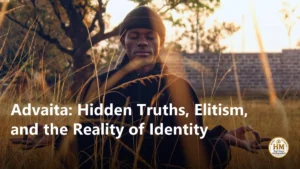
Advaita teaches non-duality and universal oneness, yet modern interpretations often create confusion by dismissing human identity and natural thoughts as mere illusion. In reality, true spiritual understanding requires acknowledging the subconscious mind’s automatic functions, embracing everyday responsibilities, and grounding conceptual wisdom in genuine personal experience rather than intellectual escapism.
In the modern spiritual landscape, terms like Advaita and non-duality have surged in popularity across digital media and spiritual discourses. Teachers proclaim doctrines such as ‘You do not exist’ and ‘Your personal identity is merely an illusion.’ While these statements echo ancient Vedantic insights, their superficial misapplication often creates profound distress instead of inner tranquility for genuine seekers navigating everyday life.
Historically rooted in the Upanishads and systematized by Adi Shankaracharya, Advaita Vedanta points to the ultimate non-separation between the individual soul (Atman) and the supreme reality (Brahman). However, ancient masters taught this subtle truth only after rigorous preparation, emotional purification, and practical grounding in dharma. When modern seekers skip these foundational disciplines, high philosophy degenerates into intellectual escapism and existential anxiety.
Modern neuroscience reveals that the human brain operates as an automatic thought-generating machine, producing vast subconscious patterns outside conscious control. Attempting to suppress these natural neurological phenomena under the pretext of Advaita non-duality leads to spiritual bypass and emotional repression. Understanding how identity and brain function interact with Advaita philosophy is essential for holistic psychological well-being and genuine spiritual progress.
Read the complete Telugu edition of this article.
Advaita Elitism and the Trap of Intellectual Gaslighting
Contemporary spiritual discourse on digital platforms frequently distills the profound philosophy of Advaita into superficial slogans. Popular speakers and online influencers repeatedly insist that the individual human being possesses no true existence, framing the seeker as merely an unattached witness to events. Although this premise sounds captivating on an intellectual level, its unchecked propagation often fosters a subtle form of spiritual elitism, where those who experience genuine emotional distress are judged as spiritually inferior, unawakened, or caught in delusion.
In psychological terms, this dynamic closely mirrors intellectual gaslighting, where individuals are pressured to invalidate their lived experiences and emotional pain under the dogmatic banner of non-duality. Spiritual seekers begin to doubt their genuine perceptions, feeling guilty for experiencing anxiety, sorrow, or grief in daily life. Meanwhile, the very teachers who preach that the ego does not exist continue to maintain branded personas, digital channels, and assertive personal identities to disseminate their doctrines. Recognizing this paradox allows seekers to distinguish between authentic wisdom and dogmatic suppression, cultivating genuine peace by honoring their human emotions rather than denying them through artificial intellectual formulas.
RECOMMENDED BOOK
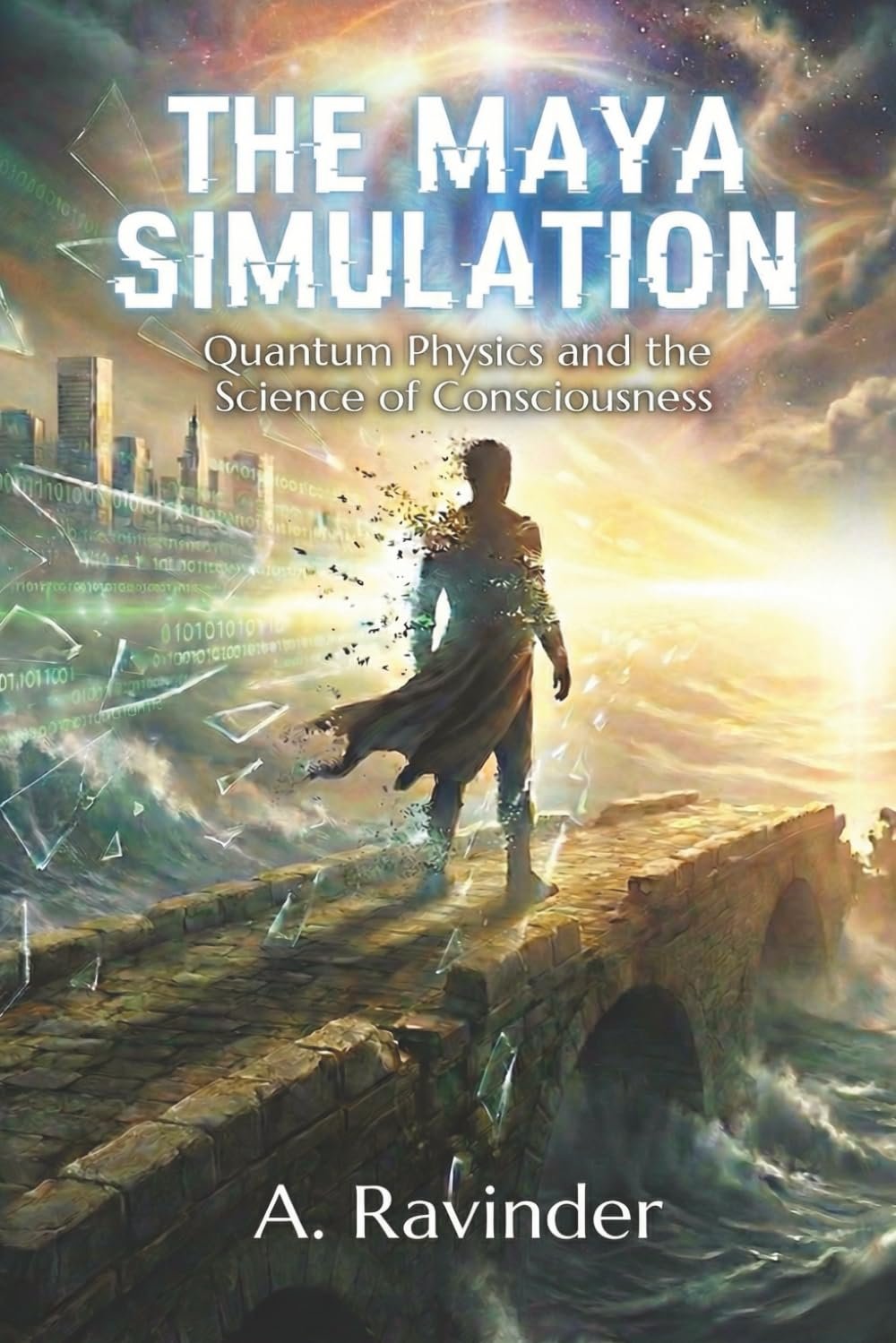
The Maya Simulation: Quantum Physics and the Science of Consciousness
by A. Ravinder
A guide that bridges the ancient wisdom of the Yoga Vasistha with quantum physics and modern consciousness science — for readers ready to question the nature of reality and calm the mind with practical tools like the Zero Voice Technique.
As an Amazon Associate, RamthaMedia can earn from qualifying purchases.
Advaita and the Involuntary Flow of Thoughts in the Brain
Neuroscientific research demonstrates that the brain functions continuously as a generative organ, producing cognitive narratives and mental imagery automatically. Modern cognitive science estimates that nearly ninety-five percent of our daily thoughts emerge involuntarily from the subconscious mind without deliberate intention. Expecting the mind to instantly fall silent simply because one accepts Advaita theory is biologically unrealistic and psychologically harmful. Seekers exploring the <a href=”https://ramthamedia.in/atma-sakshatkaram-consciousness-waves-science/”>science of self realization and consciousness</a> understand that brain chemistry and neurological impulses operate according to precise physiological laws.
Traditional scholars and spiritual mentors emphasize that attempting to forcibly stop this subconscious stream creates chronic inner friction. When difficult emotions arise, dismissing them as mere cosmic illusion does not eliminate suffering; it merely drives emotional pain beneath conscious awareness. Authentic Advaita practice does not demand the denial of natural cognitive phenomena, but encourages gentle awareness and compassionate acceptance of the mind’s organic processes, allowing thoughts to rise and subside without reactive attachment or artificial suppression.
Advaita Philosophy and the Inevitable Function of Personal Identity
Human life in the physical realm fundamentally requires a coherent personal identity to navigate societal interactions, ethical duties, and practical responsibilities. While popular Advaita speakers often urge seekers to discard identity entirely, practical reality demonstrates that the functional ego is an indispensable evolutionary tool. One cannot fulfill the sacred duties of parenthood, citizenship, or professional integrity without an active sense of individual agency and healthy personal boundaries.
Personal identity is not a rigid cage, but an adaptable instrument that can evolve through conscious spiritual practice. A person suffering from chronic agitation can cultivate emotional stability and inner stillness through consistent contemplation, finding practical methods for <a href=”https://ramthamedia.in/yoga-vasistha-manasu-ashanti-s1-ep-17-yoga-vasistha/”>understanding mind and inner peace</a> without annihilating their unique human personality. Advaita teaches that recognizing the underlying divinity within all beings does not require dissolving practical individuality, but purifying it through selfless service and ethical living in the world.
Advaita Experience Versus the Limits of Mere Intellectual Knowledge
The direct perception of universal oneness cannot be attained through analytical thinking alone. A classic illustration highlights the limitation of human cognition: human eyes perceive reality primarily through three primary color receptors. If someone is asked to imagine an entirely new, unseen spectrum of color, intellectual effort proves completely futile; however, seeing that color directly conveys its full reality instantaneously. In a similar manner, conceptual descriptions of non-duality remain abstract until direct inner realization occurs.
Authentic Advaita realization is an experiential awakening arising from profound meditative absorption, emotional maturity, and spiritual grace. Reciting conceptual slogans about cosmic oneness without this experiential foundation turns profound truth into lifeless dogma. Seekers must practice self-compassion, honoring their present developmental stage rather than chastising themselves for lacking transcendent spiritual states. For anyone living in the empirical world, honoring personal identity as a practical truth remains the foundation of spiritual authenticity.
Advaita Wisdom in Action — Lessons from Pilgrimage and Daily Dharma
Visiting sacred pilgrimage shrines offers an intuitive lesson in balancing non-dual awareness with practical life. Within the devotional atmosphere of a consecrated temple, pilgrims naturally set aside worldly status, social pride, and egoistic attachments, experiencing a temporary state of profound peace. Yet, upon departing the temple grounds, they willingly resume their worldly duties, carrying the sanctified peace into their routine obligations and societal interactions.
Advaita philosophy should ideally provide soothing psychological relief and moral clarity, rather than breeding fear of one’s own human existence. As detailed in the comprehensive historical perspectives on <a href=”https://en.wikipedia.org/wiki/Advaita_Vedanta” target=”_blank” rel=”noopener”>Advaita Vedanta philosophy overview on Wikipedia</a> and established philosophical traditions in the <a href=”https://www.britannica.com/topic/Advaita” target=”_blank” rel=”noopener”>Encyclopaedia Britannica entry on Advaita</a>, genuine non-duality integrates the vision of supreme consciousness with the dedicated performance of worldly dharma. By seeing the divine presence within every daily duty, seekers honor both the transcendental truth of Advaita and the sacred reality of their earthly journey.
📖 Maya Simulation: Is Our Physical Reality a Cosmic Computer Program?
Spiritual Meaning of Advaita and Authentic Self-Realization
The deeper philosophical truth of Advaita Vedanta rests on the critical distinction between empirical reality (Vyavaharika Satya) and absolute reality (Paramarthika Satya). Ancient classical masters never advised ordinary seekers to treat the empirical world as non-existent while living within it. Doing so confuses the ultimate metaphysical truth with practical living, creating severe existential disorientation and emotional detachment.
True non-duality is not the violent destruction of individual personality, but the expansion of conscious awareness to encompass all existence. When an individual recognizes that the same underlying consciousness animates every living being, their daily actions naturally become infused with empathy, kindness, and moral duty. Personality is transformed from a selfish barrier into a transparent vehicle for universal compassion.
Spiritual awakening is an organic unfolding that occurs when the mind achieves purity, calm, and genuine humility. Forcing a state of non-dual detachment before the emotional landscape is healed only results in suppression. True Advaita embraces our human vulnerabilities, thoughts, and responsibilities, recognizing them as sacred expressions of the infinite Divine manifesting through finite form.
In our daily lives, spiritual wisdom should make us kinder, more reliable, and emotionally grounded parents, partners, and colleagues. Instead of escaping into intellectual non-duality when challenges strike, we can consciously acknowledge our feelings, practice self-compassion, and execute our daily responsibilities with devotion and mindful presence.
Chapter Summary
This article explores the deep truths and modern misunderstandings surrounding Advaita non-duality teachings. While modern digital spirituality often promotes intellectual elitism by urging seekers to deny their emotions and personal identities, cognitive neuroscience confirms that the human brain naturally produces involuntary thoughts from the subconscious mind. Personal identity is not a spiritual enemy but an essential tool for living responsibly and lovingly in the empirical world. Conceptual knowledge of oneness without experiential realization is ineffective, just as imagining unseen colors fails without direct sight. By integrating the insights of classical Vedanta, neuroscience, and sacred pilgrimage, true Advaita emerges not as escapism, but as compassionate acceptance, emotional honesty, and the faithful performance of daily dharma.
👉 Sony BRAVIA 3 65″ Review: Picture vs. Reality
Scripture Notes
- Main Message: Advaita Vedanta reveals the ultimate unity of the individual consciousness with the universal divine, emphasizing that true wisdom harmonizes relative empirical duties with absolute transcendental understanding.
- Philosophical Teaching: Classical Advaita establishes that the world possesses empirical reality for the embodied soul. Spiritual maturity consists of practicing selfless action (Nishkama Karma), purifying the intellect, and witnessing thoughts without emotional suppression or philosophical denial.
Frequently Asked Questions
What is Advaita and what does it mean?
Advaita literally translates to ‘not two’ or non-duality. It is the ancient Indian philosophical system which teaches that the individual soul (Atman) and the supreme cosmic consciousness (Brahman) are non-different in their essential nature.
Why do modern Advaita teachings often cause confusion and anxiety?
Confusion occurs when experiential non-duality is reduced to intellectual dogma. When seekers are told their identity and suffering do not exist, it causes intellectual gaslighting and emotional suppression rather than genuine peace.
Can a person with family and career responsibilities practice Advaita?
Yes. Authentic Advaita does not require abandoning worldly duties. It encourages performing one’s duties with dedication and love while relinquishing selfish egoism and the obsessive claim of authorship over actions.
Are our thoughts really outside our conscious control?
Neuroscience indicates that roughly 95 percent of human thoughts originate automatically from the subconscious mind. While we cannot stop thought generation completely, mindful awareness helps us choose how we respond to them.
📖 What Is the Nature of the World? Is Reality an Illusion? | Yoga Vasistha S3 EP-34
Is personal identity an obstacle in spiritual growth?
Identity is not an obstacle; it is a necessary functional tool for life in this world. Spiritual growth refines and purifies identity, transforming it from narrow self-centeredness into an instrument of service and compassion.
How can one genuinely attain the state of Advaita realization?
The Advaita state cannot be forced through intellectual repetition. It unfolds naturally through steady meditation, emotional purification, selfless action, moral integrity, and deep self-acceptance under proper spiritual guidance.