
Kondagattu Anjaneya Swamy Chandanotsavam 2026: Quick Guide & Key Facts
- Temple & Location: Sri Kondagattu Anjaneya Swamy Devasthanam, Mutyampet, Malyal Mandal, Jagtial District, Telangana.
- Historical Occurrence: Celebrated once in 60 years (first occurrence since the 1960s) to de-crust accumulated sandalwood layers.
- Chandanotsavam Ritual Dates: November 15 to November 20, 2026 (Sanctum sanctorum closed to public during these 5 days).
- Nijaroopa Darshanam Opening: November 20, 2026, at precisely 9:59 AM following Mahasamprokshana.
- Duration: 41 consecutive days (November 20 through December 29, 2026 – full Mandala cycle).
- Expected Pilgrims: An estimated 20 Lakh (2 million) devotees across Telangana, Andhra Pradesh, Maharashtra, and Karnataka.
- Concluding Ceremony: December 29, 2026, concluding with traditional fresh Sindhoora Lepanam (vermilion coating).
- Transport & Amenities: Special TSRTC buses every 30 minutes from Hyderabad, Karimnagar, and Jagtial, alongside time-lock ghat road regulations.
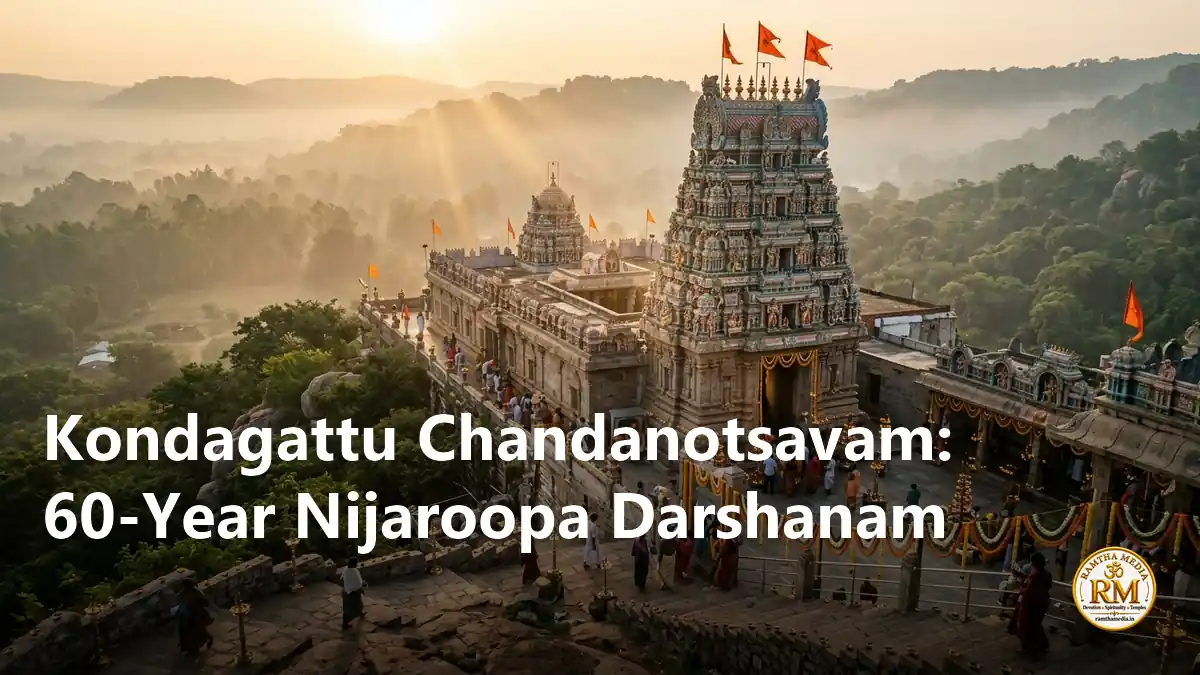
Nestled amidst dense deciduous forests and rugged granitic hills near Mutyampet village in Jagtial district, Telangana, the renowned Sri Kondagattu Anjaneya Swamy Temple is one of the most revered Hanuman shrines in South India. After a historic wait of six decades, the temple is preparing for an extraordinarily rare and sanctified ritual: the 60-Year Chandanotsavam (sacred sandalwood de-crusting ritual) and the ensuing Nijaroopa Darshanam (unveiling of the original, unadorned rock-carved deity).
Priests and Agama scholars will systematically remove the 6-to-7 inch thick layer of hardened sandalwood that has enveloped the deity since the 1960s, offering devotees an unprecedented 41-day opportunity to witness Lord Hanuman’s natural rock-hewn visage. This comprehensive pilgrimage report provides verified details on ritual timelines, sthala purana, revised ticket prices, accommodation, and travel guidelines.
1. Historical Context — Why Chandanotsavam Occurs Once Every 60 Years
For generations, priests at Kondagattu have performed continuous Chandana Lepanam (sandalwood paste coating) and Sindhoora Seva every Tuesday and Saturday. Over the past 60 years, these uninterrupted layers formed a dense, hardened sandalwood armor measuring between 6 to 7 inches in thickness over the ancient stone deity, completely obscuring the fine sculptural engravings, ornaments, and facial expressions.
According to Pancharatra Agama Shastra and ancient temple canons, accumulated layers must periodically be removed through Vedic rituals to inspect, clean, and revitalize the core stone idol with herbal infusions and sacred oils. Guidance from the Sringeri Sharada Peetham and Tridandi Chinna Jeeyar Swamiji has shaped this sacred event.
2. Agama Vedic Rituals and Mahasamprokshana (Nov 15 – 20)
The removal of the six-inch sandalwood layer is an intricate spiritual and physical operation guided by over 50 Vedic scholars, Tantric masters, and Jeeyar Swamijis from Vijayawada and Bengaluru:
- Prana Aavahana (Transference of Divine Energy): On November 15, the core divine energy of the deity is spiritually transferred into a consecrated golden Kalasham placed in the Yagashala. A temporary Balalayam is established for daily worship of processional idols.
- Herbal Softening Process: To detach the hardened sandalwood without harming the centuries-old rock, priests apply an Ayurvedic blend of pure cow milk, sesame oil, and herbal concoctions. Specially crafted silver tools and natural bamboo scrapers are used with extreme caution.
- Mahasamprokshana: On the early morning of November 20, the idol undergoes Panchamrutha Abhishekam, Maha Poornahuti, and the reconsecration of the divine energy into the sanctum sanctorum.
Sanctum Closure & Protocol: From November 15 through the morning of November 20 (until 9:30 AM), the main sanctum sanctorum remains strictly closed. No VIP protocols or Arjitha Sevas will operate during this purification window. Devotees may only worship processional deities in the Balalayam.
📌 Recommended Spiritual Reading: Explore our comprehensive guide on auspicious Karthika observances and temple traditions: Karthika Masam Spiritual Significance and Rituals Guide.
3. The 41-Day Window of Nijaroopa Darshanam
At 9:59 AM on November 20, 2026, the sanctum doors will swing open to reveal the true rock-hewn form of Sri Kondagattu Anjaneya Swamy. For the next 41 days—spanning an entire Mandala cycle—pilgrims can gaze upon the pristine, unlayered visage of the deity.
The district administration of Jagtial has made extensive logistical arrangements to handle the anticipated surge of 50,000 to 60,000 devotees daily, projecting over 20 lakh total visitors. On December 29, 2026, the Mandala celebrations conclude with a traditional application of new Sindhoora, returning the sanctum to its customary appearance.
4. The Historic Artwork of Alishetti Prabhakar (Alishetti Maharaj)
During the previous Chandanotsavam held six decades ago in the 1960s, the acclaimed poet, artist, and photographer from Karimnagar, Alishetti Prabhakar (Alishetti Maharaj), was granted the rare privilege of witnessing the bare stone idol. Moved by spiritual awe, he painted the iconic depiction of the dual-faced (Dvimukha) Anjaneya Swamy with his master brushes. That very painting serves as the revered portrait worshipped in millions of homes across Andhra Pradesh and Telangana today. The 2026 Nijaroopa Darshanam offers the current generation their first direct glance at the sacred archetype that inspired this masterpiece.
5. Temple Sthala Purana & The Unique Dvimukha Iconography
According to regional mythology rooted in the Ramayana, when Lord Hanuman carried the Sanjeevani hill from the Himalayas to Lanka to revive Lakshmana, a sacred fragment broke off and fell into this hilly jungle tract. The hills of Kondagattu are regarded as that celestial herb-laden outcrop, known for their therapeutic breezes and medicinal flora.
Nearly 400 years ago, a cowherd named Singam Sanjeevudu entered these hills searching for lost cattle. Exhausted, he slept beneath a tree and received a divine vision of Lord Hanuman directing him to an anthill covered in thorn bushes. Clearing the shrubs, he discovered the self-manifested (Swayambhu) idol and erected the first shrine. Krishna Rao Deshmukh later expanded the complex.
The Singular Dvimukha (Dual-Faced) Divinity: The idol at Kondagattu is singular in Hindu iconography. One side features the benevolent, compassionate face of Lord Hanuman with serene eyes, while the reverse reveals the fierce, protective face of Sri Lakshmi Narasimha Swamy with protruding fangs, invoked for the destruction of evil energies and planetary afflictions. The chest of the idol holds the embedded figures of Sri Sita and Rama, while the deity wields the divine mace (Gada), conch (Shankha), and discus (Chakra).
6. Acoustic and Architectural Marvels
Kondagattu showcases ancient Indian acoustic wisdom. Inside the Mukha Mandapam, a subtle whisper against one specific stone pillar reverberates along sound conduits to be clearly heard at the opposing pillar several meters away. The inner sanctum is carved into a natural granite cavern, maintaining a perennial cool temperature and intense vibrational sanctity.
7. Hanuman Deeksha & Devotional Traditions
Kondagattu is the paramount destination for devotees wearing the 41-day Hanuman Deeksha mala. Tens of thousands trek on foot (Padayatra) to relinquish their vows here. Pilgrims facing chronic ailments, psychiatric disturbances, or childlessness often perform a 41-day ritual stay (Nidra), bathing in the sacred Dharma Gundam tank daily to seek the healing grace of Anjanna.
8. Infrastructure Development — TTD ₹35.19 Crore Project
To transform Kondagattu into a premier national pilgrimage hub, Tirumala Tirupati Devasthanams (TTD) sanctioned ₹35.19 crores, spearheaded by Andhra Pradesh Deputy Chief Minister Sri Pawan Kalyan:
- Vayuputra Sadan: A modern 100-room guest house complex under construction along the ghat road.
- Deeksha Viramana Mandapam: A massive open hall specifically designed for Hanuman mala relinquishment rituals.
- Permanent Drinking Water Project: A ₹21.20 crore pipeline from the Indiramma Flood Flow Canal (km 81) to ensure round-the-clock water supply to the hill shrine.
9. Revised Arjitha Seva Ticket Prices (Effective Nov 15, 2026)
| Seva Name | Previous Price (₹) | Revised Price (₹) |
|---|---|---|
| Chandana Pooja (Tuesdays & Saturdays only) | ₹800 | ₹1,500 |
| Antharalaya Darshanam | ₹400 | ₹800 |
| Shaswatha Abhishekam (10-Year Tenure) | ₹1,116 | ₹10,116 |
| Suprabhatha Seva (For two, includes special darshan) | – | ₹1,000 (New) |
| Shani Graha Peeda Nivarana Pooja (Amavasya only) | – | ₹1,000 (New) |
| Manya Suktha Homam | – | ₹2,000 (New) |
| Vadamala Bhogam | – | ₹1,116 (New) |
10. Daily Temple Timings (Nitya Pooja Schedule)
| Time Window | Ritual / Temple Activity |
|---|---|
| 04:00 AM – 05:30 AM | Suprabhatha Seva & Mangala Aaradhana |
| 05:30 AM – 06:00 AM | Balabhogam & Nivedana Haarathi |
| 06:00 AM – 04:30 PM | Sarva Darshanam & Arjitha Sevas |
| 08:00 AM – 10:00 AM | Nitya Abhishekam (Garbhalayam / Mandapam) |
| 04:30 PM – 06:00 PM | Temple Intermission (Cleansing & Alankaram) |
| 06:00 PM – 08:30 PM | Evening Sarva Darshanam & Kumkumarchana |
| 08:30 PM | Maha Nivedana, Pavalimpu Seva & Temple Closure |
11. Travel and Accommodation Guide
- TSRTC Special Buses: Direct buses run every 30 minutes from Hyderabad (JBS & MGBS), Karimnagar, and Jagtial. Express routes between Vemulawada and Jagtial divert directly via the Kondagattu hill summit.
- Guest Houses: The Devasthanam manages 54 cottage rooms alongside donor facilities like Sana, Swetha, and Sagar guest houses (tariffs ranging from ₹50 to ₹600 per day).
- Ghat Road Regulations: Similar to Tirumala, a time-lock speed protocol is enforced to prevent vehicular accidents. Two-wheelers are restricted during night hours due to surrounding wildlife movements.
12. Other Holy Attractions Around Kondagattu
- Sri Bethala Swamy Temple: Located at the entrance arch, Bethala Swamy is the Kshetrapalaka (guardian deity). Pilgrims traditionally seek his blessing first to ward off negative spirits and mental torments.
- Dharma Gundam (Holy Pushkarini): The sacred perennial step-well where a ceremonial dip is said to cure stubborn dermatological conditions and wash away sins.
- Seetamma Kaneeti Bavi: A perennial sweet-water spring mythologically believed to have emerged from Mother Sita’s tears during the Treta Yuga.
- Kondalarayuni Gutta Viewpoint: A panoramic hillock offering breathtaking scenic vistas over the Karunapuram valley and green canopy.
Frequently Asked Questions (FAQ)
1. What are the dates for Kondagattu Chandanotsavam 2026?
The purification and sandalwood removal rituals take place from November 15 through November 20, 2026. The sanctum remains closed during these five days.
2. When can devotees experience the Nijaroopa Darshanam?
Nijaroopa Darshanam opens to the public on November 20, 2026, at 9:59 AM and remains accessible for 41 consecutive days until December 29, 2026.
3. Why is Chandanotsavam celebrated only once in 60 years?
Over decades of weekly sandalwood offerings, the accumulated paste forms a solid 6-7 inch rock-like layer that obscures the deity. Agama Shastra prescribes de-crusting and Mahasamprokshana once in 60 years.
4. Are VIP darshans or special sevas available during the first five days?
No. Between November 15 and the morning of November 20, the sanctum sanctorum is completely closed to all pilgrims, including VIPs. Devotees can only worship the processional idols in the temporary Balalayam.
5. When do the revised Arjitha Seva ticket prices take effect?
The revised temple service rates approved by the Endowments Department will officially take effect from November 15, 2026.
Conclusion & Devotee Advisory
The 60-year Kondagattu Sri Anjaneya Swamy Nijaroopa Darshanam represents a once-in-a-lifetime spiritual opportunity for devotees worldwide. Pilgrims are advised to plan their itinerary, respect queue disciplines and ghat road regulations, and immerse themselves in the divine, protective aura of Sri Dvimukha Anjanna during this sacred 41-day Mandala festival.