
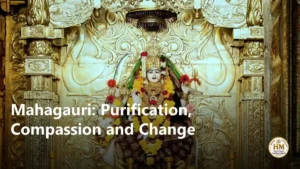
Mahagauri is the Navadurga form remembered as the radiant, peaceful Goddess who follows the austerities and transformations of Parvati. She stands for purification as a change in conduct; this series compares her with Durga, the protective power of the Goddess in many living traditions.
When we think of purification, the mind often rushes to criticize flaws in others, yet the contemplation of Mahagauri turns that gaze quietly inward toward our own conduct. The journey moves away from finding fault and settles into an honest desire for inner transformation and genuine compassion. As these reflections unfold from the Telugu source tradition, the lines between ancient scriptural roots, cherished local customs, and everyday interpretive insights remain clear and respected, helping us see how genuine devotion reshapes the way we live and speak with those around us each day.
After enduring long austerities and profound inner transformations, Parvati emerges in memory as Mahagauri, serene, bright, and wrapped in stillness. Alongside this sacred north-facing image stands Durga, evoked across southern living traditions as the fierce, protective strength that guards the faithful against turmoil. While their histories and regional narratives carry distinct expressions, both representations converge at the quiet threshold of compassion, reminding a seeker that gentle grace and steadfast protection arise from the very same divine heart.
Read the complete Telugu edition of this article.
Mahagauri — Understanding the Source Tradition
Devotees cherish Mahagauri as the radiant, peaceful presence that blossoms after the intense austerities and patient transformations of Parvati. In a parallel devotional view, southern traditions invoke Durga to remember the resolute protective power of the Goddess watching over daily life. These two sacred visions meet naturally in compassion, even while honoring the separate streams of their cultural histories. Approaching their story with personal reverence opens the heart, yet it is never meant to replace consulting a primary text directly or reading an official temple announcement. Whenever a specific ritual belongs strictly to a family lineage or local custom, acknowledging that boundary ensures nobody mistakes a regional practice for a universal spiritual command.
The Sacred Symbols of Mahagauri
The white garments, the patient bull, and the serene gaze of Mahagauri gently turn our thoughts toward inner stillness and clarity. True purification is not an excuse to claim ritual superiority or elevate oneself over neighbors; it simply means taking time each morning to set aside harsh words, mend careless actions, and shed habits that wound the spirit. In daily worship, a symbol fulfills its purpose when it invites quiet contemplation rather than rigid routine. Across various shrines and paramparas, different teachers and elder priests offer unique explanations of this iconography, and embracing this quiet variety is what keeps the tradition breathing and alive.
The Deeper Meaning of Mahagauri
Inner cleansing finds its real meaning only when it visibly alters how we treat someone across the kitchen table or during a hectic workday, steering clear of any urge to judge our companions. Genuine devotion works quietly by pausing a sudden flash of anger, reminding us of promises we made in calmer moments, and carving out a breathing space where wise discernment can step in. The true goal of sitting in prayer has never been to gather dazzling mystical tales to boast about, but rather to grow more truthful in our conversations, steady in our patience, and conscious of the responsibilities we carry for others.
The inner lesson of reverence naturally flows out into community life and domestic relationships. Lighting an oil lamp, chanting a sacred mantra, or offering fresh garlands before a decorated idol reaches its true fulfillment only when it inspires tender care for elderly family members, deep respect toward daily workers, straightforward speech, and a ready hand for a struggling neighbour. These practical habits represent thoughtful, living interpretations of sacred teachings, rather than magical formulas or guaranteed material outcomes promised by the performance of any single rite.
Simple Home Worship for Mahagauri
Begin by sweeping and tidying a quiet corner of the home, reaching out to heal a strained relationship wherever it is safe to do so, and preparing a simple sattvic offering made with sincere devotion. Let the morning prayers be matched with tangible charity, whether that means sharing warm food with a hungry passerby, offering a patient ear to someone in sorrow, or extending shelter and protection to those who need it. A devotional fast must never be pushed to the point of becoming a severe health risk. Keep the family altar tidy, tailor your devotional offerings strictly to your physical stamina and household finances, and avoid mimicking complex initiation-based rituals picked up from unverified sources. Young children can be warmly drawn into the festival by listening to a gentle bedtime story, placing a single blossom on the altar, or sharing what they feel grateful for before the lamp.
📖 Chandraghanta: Courage and Compassion on Day Three
North Indian Worship and the Southern Comparison
Across the Telugu states, the worship of Durga flourishes in an array of beloved temple ceremonies and cherished domestic rituals passed down through generations. Drawing a connection between Mahagauri and the traditional eighth day of Navaratri offers an insightful comparative lens for contemplation, rather than setting down a rigid, universal alankara calendar for every community. Presenting the regional southern name alongside her serves solely as an enriching cultural comparison, never as an assertion that every temple across South India follows the identical ten-day sequence of sacred adornments.
Temple Traditions Across the Telugu States
Families celebrating Dasara throughout Telangana and Andhra Pradesh mark the season through grand temple alankaras, colorful displays of bommala koluvu in their living rooms, spirited community recitations, and voluntary acts of feeding and service. Because every shrine maintains its own distinct schedule, the exact 2026 festival programmes and daily timings remain the sole responsibility of each temple administration. Devotees planning a pilgrimage should verify darshan hours, special queue arrangements, and local ritual requirements directly from official temple boards, rather than treating general devotional writing as an administrative circular.
What Mahagauri Teaches Us in Daily Life
Take just one clear, deliberate action today that embodies this spirit of renewal and restraint. It might mean cultivating a calm and steady morning habit, devoting a quiet hour to study, sitting down to share an unhurried meal without wasting food, or holding a challenging conversation with unyielding courtesy. It could also mean picking up the daily tools of your trade and handling your craft with pure professional ethics. After all, the spiritual power of any sacred festival endures only when its quiet wisdom continues to guide our actions long after the colorful decorations and ceremonial pandals have been packed away.
Looking Deeper into the Worship of Mahagauri
These devotional reflections invite a sustained, careful study of Mahagauri, going far deeper than a passing caption beneath a festival picture on social media. Her traditional stories, visual iconography, and devotional customs stem from distinct historical and regional layers of sacred culture. An earnest seeker can wholeheartedly venerate her peaceful presence while discerning which elements originate directly from core scriptures, which emerge from regional temple customs, and which represent helpful interpretive advice for modern living. Drawing these distinctions makes personal faith both thoughtful and resilient, while leaving generous room for households to preserve the treasured ways of their own lineage.
The true grace of Mahagauri reaches far past the brass lamps and incense smoke of the household shrine. Bringing that teaching into daily business and domestic duties happens through a steady moment of listening, quiet service to a weary relative, patience under pressure, or moral courage in a workplace dilemma. At all times, oil lamps and ritual articles must be handled safely to avoid fire accidents, while offerings of sweets and fruit should always suit the physical health and financial limits of the family. Shunning superstitious promises of guaranteed worldly windfalls or instant luck preserves the purity of worship, for the enduring value of Navaratri shines in our conduct long after the altar flame has gone out.
Keep in mind that festival dates, muhurtam hours, and temple celebrations are tied strictly to astronomical calculations that change with every passing year. Devotees ought to cross-check local panchanga timings and consult current notices released by temple trusts before arranging long travel journeys or sharing festival circulars with friends. While the timeless spiritual meaning of Mahagauri remains steady across generations, a schedule designed for the 2026 calendar year should never be carried over as an automatic rule for years that follow.
Sources and further reading
The living tradition combines the Devi Mahatmya and related Puranic narratives with regional temple memory and family practice. Read the year-specific calendar alongside the local panchanga, and identify a temple custom by its actual source. The complete Devi Navaratri guide keeps the ten parts together.
| Focus | Story, symbol, worship, and lived application |
| Source levels | Scriptural narrative, regional custom, and editorial reflection |
| Practical outcome | One small dharmic action carried beyond the festival |
Frequently asked questions about Mahagauri
What is the main theme of Mahagauri?
Purification as a change in conduct, not a judgement of another person is the main theme explained through the story and symbols of the form.
How can I worship Mahagauri at home?
Clean one small space, repair one neglected relationship where it is safe, and choose a simple sattvic offering. Prayer can be paired with practical help for someone who needs food, listening, or protection. Do not turn a fast or ritual into a health risk. A simple, safe observance is sufficient for a household devotee.
📖 Aligina Bathukamma: Rest and listening — Bathukamma 2026
Is the southern comparison universal?
No. Durga worship in Telugu regions includes many temple and family forms. The day-eight pairing in this series is a guide to one devotional comparison, not a universal alankara calendar. It should be checked against the specific temple or family tradition.
Are the promised results guaranteed?
Claims about blessings belong to devotional faith. They are not medical, legal, financial, or scientific guarantees.
Where can I verify the 2026 dates?
Check a reliable local panchanga and official temple notices. The calendar details for 2026 should not be copied into future years without recalculation.
For the wider English series, visit the English devotion and temple category or continue with the Vijayadashami and Rajarajeshwari chapter.