
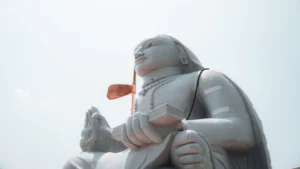
నేడు పట్టువస్త్రాలు, సుగంధ ద్రవ్యాలతో అలంకరించబడిన శరీరం కొద్ది రోజుల్లోనే ఒక గుంతలో పారవేయబడి ఎముకల కుప్పగా మిగులుతుందని శ్రీరాముడు తెలిపాడు. అలాగే మానవ జీవితం గాలికి రెపరెపలాడే దీపం వంటిదని, నీటిపై బుడగలా ఏ క్షణమైనా నశించిపోతుందని పేర్కొన్నాడు.
📚 Yoga Vasistha — full guide & all episodes
Have you ever wondered whether anything in this world truly lasts forever? In the Yoga Vasistha, Sri Rama confronts this profound dilemma: oceans turn into mountains, mighty sovereigns turn to ash in a moment, and immense fortunes disappear. Through his deep dispassion, Rama recognizes the solitary unalterable truth—within this transient existence, change alone remains permanent.
Change — Where Are the Things We Once Thought Were Eternal?
Does the home of your childhood still stand unchanged today? That street, that circle of companions, and everything you once believed would endure forever have now shifted into distant memory. Only when leafing through an old photograph album does the swift passage of this transformation become starkly clear. This poignant realization is never confined to an isolated individual; it unfolds across every human life.
Thousands of years ago, Sri Rama experienced this very reality with immense philosophical depth. Standing before his revered preceptors, Sage Vishwamitra and Sage Vasistha, he laid bare the profound dispassion moving within his heart. Let us enter into his contemplative words.
The Sky Turns into Forest, the Ocean into a Mountain
“Everything perceived before us—whether moving or stationary—is as fragile and fleeting as a passing dream, O holy master!” Rama addressed his preceptors. “A expanse that appears as open sky today may transform into a dense wilderness tomorrow. A region where the deep ocean rolls today will one day rise as a towering mountain range.
“Consider this physical form: today it walks adorned in exquisite silks, fragrant sandalwood pastes, and delicate flower garlands, drawing the admiration of all who behold it. Yet in a matter of time, stripped of every covering, that very body lies discarded in an open pit outside the town, reduced to nothing more than scattered bones,” Rama lamented.
A Sovereign Reduced to Dust
Rama continued his contemplation: “Magnificent cities decay into overgrown jungles. A mighty ruler who commanded thousands with his dazzling authority is reduced to a mere handful of ash in an instant. Grand mansions once radiant with luminous lamps and vibrant festivities crumble into silent ruins under the march of time. Waters fertile with life turn into barren deserts, while parched sands become lush valleys fed by flowing rivers.
“This unrelenting transformation is not limited to an isolated object or a single mortal, revered masters. Childhood, youth, physical vitality, and material fortunes—all are as momentary as bubbles on the surface of water. Life itself is like a flickering lamp exposed to the open breeze, liable to be snuffed out at any second. What then in this creation can we truly designate as permanent?” Rama asked his teachers.
The Monstrous Ogre Called Death
Expressing his sorrow regarding Death—the monstrous force that abruptly claims mortals who boast of their permanence and illustrious lineage without offering the slightest warning—Rama laid bare his grief: “Death possesses the power to dismantle immense wealth, companionship, and peace of mind in a single heartbeat. The robust suddenly succumb to illness, and the prosperous sink into destitute misery.
“Beholding this utter instability, how can my heart remain tranquil? The firmament glows with golden sunshine at one hour, only to be overwhelmed by terrifying thunderbolts the next. Witnessing this constant flux, how can one live without inner fear?” Rama asked his preceptors.
Āpadaḥ kṣaṇamāyānti, kṣaṇamāyānti sampadaḥ | Kṣaṇaṁ janma, kṣaṇaṁ mṛtyuḥ! Mune! Kimiva na kṣaṇam || (XXVIII-31)
“O great sage! Misfortunes strike in a single moment, and fortunes arrive in a moment. Birth happens in a flash, and death arrives in an instant! Tell me, what in this entire universe is not momentary?” Rama questioned directly, giving voice to the full intensity of his dispassion.
My Mind That Acts Like a Theatrical Player
Rama laid open his inner contemplation: “Every object witnessed in this world assumed one appearance in the past, displays another in the present, and will adopt an entirely different form tomorrow. Not a single thing possesses enduring stability or immutable identity. My own mind behaves in the exact same manner, holy sage—it experiences fleeting exhilaration over wealth at one moment, plunges into grief the next, and assumes an artificial composure at another, constantly altering its roles like an actor upon a stage.
“Even Brahma, the cosmic creator, seems to create without rest, continually anxious as he sustains the very beings he brings into manifestation. Deluded by worldly transactions, we remain submerged in endless sorrow without ever realizing our true, unchanging nature.
📖 How Did Multiple Universes Arise in One Space? | Yoga Vasistha S3 EP-47
“No one remains exempt from the inexorable movement of Time—not even exalted masters of supreme wisdom like Sage Vishwamitra can evade its reach,” Rama observed, gesturing toward Vishwamitra himself. “Beings across all three worlds remain perpetually caught in this revolving wheel. Yet amidst this transient universe, only one outcome offers lasting sweetness—the fruit of supreme spiritual knowledge.
“O revered masters! Are all worldly tribulations merely fragile water bubbles? If so, are we squandering our lives without true foresight? When confronted by the inevitable trials of birth, decay, and death, why should I exist aimlessly without the inner strength to overcome them? I pray you, guide me toward the path of liberation,” Rama pleaded before his gurus.
Spiritual Significance
The spiritual dispassion articulated by Sri Rama points to a singular fundamental reality: every perceptible phenomenon undergoes ceaseless change, and whatever the mind clings to as permanent dissolves in an instant. Fear, anxiety, and sorrow emerge exclusively when we resist this cosmic law of transience.
Contemplate this truth deeply: regardless of how firmly one grasps wealth, social standing, worldly attachments, or bodily youth, they remain as fragile as bubbles upon the water. Reflect upon what you depend on so heavily in daily life, and consider how long it can genuinely endure. True peace begins not by treating change as an adversary, but by recognizing it as the natural fabric of existence.
| Transient Elements (Momentary) | Eternal Reality (Enduring) |
|---|---|
| Wealth, political power, and empires | Spiritual Knowledge (the ultimate, sweet fruit) |
| Physical beauty, youth, and bodily strength | Realization of one’s true nature |
| Cities, palaces, and geographic forms | The immutable principle of universal change |
| Fluctuating emotions of joy and grief | Equanimous, balanced inner awareness |
Chapter Summary
Sri Rama conveys profound dispassion before his preceptors, Sage Vishwamitra and Sage Vasistha, recognizing that all worldly entities—cities, kingdoms, physical bodies, and fortunes—are as fleeting as a passing dream. He observes that the relentless force of death strikes without warning and that even enlightened sages cannot escape the sweep of Time. Realizing that supreme spiritual wisdom alone yields an enduring and sweet fruit amidst this transient world, Rama earnestly implores his gurus to illuminate the true path to freedom.
Scripture Notes
In this chapter of the Yoga Vasistha, Sri Rama directly expresses his philosophical dispassion before Sage Vishwamitra and Sage Vasistha. Through sharp inquiry, Rama discerns that all created things remain in constant flux, devoid of enduring substance. The heart of this chapter lies in understanding this universal principle of change and seeking the higher path of spiritual wisdom.
Memorable Quotes (Words of Sri Rama):
- “The ocean becomes a mountain, and the mountain becomes a plain—nothing in existence remains unaltered.”
- “Death gives no prior warning; it brings an end to everything in a single fraction of a moment.”
- “In this unstable cosmos, supreme spiritual wisdom alone yields an enduring and sweet fruit.”
Practical Reflection: Once this week, take a moment to reflect honestly upon a single worldly possession, status, or relationship to which you feel intensely attached, and ask yourself: “Will this truly remain exactly like this forever?”
How Sage Vasistha responds to Rama’s earnest plea, and what timeless wisdom he offers for living in serenity amidst this changing world, unfolds in the upcoming episode.
Frequently Asked Questions
What is the inquiry into the permanent and impermanent in Yoga Vasistha? It is the profound philosophical discrimination between what is eternal and what is transient, ignited by Sri Rama’s dispassion as he examines the ephemeral nature of all worldly phenomena.
What does the ocean turning into a mountain signify in this chapter? It serves as a vivid illustration of the continuous transformation of nature, demonstrating that no physical form retains its state indefinitely over time.
Why is death described as a monstrous demon? Death is compared to a relentless ogre because it strikes unexpectedly without any forewarning, instantly terminating life, grandeur, and earthly peace.
Why is Sage Vishwamitra mentioned in Rama’s discourse? Sri Rama refers to Vishwamitra to illustrate that even revered sages of immense wisdom and spiritual stature remain subject to the cosmic laws of time and transformation.
📖 Crystal, Dream, Gold — If This World Is False, Why Does It Feel So Real? | Yoga Vasistha S3 EP-23
According to this chapter, what is the only enduring fruit? Supreme spiritual knowledge (Jnana) is the only eternal and sweet fruit that delivers lasting liberation from the fleeting cycles of existence.
To whom does Sri Rama speak these words? Sri Rama addresses his revered mentors, Sage Vishwamitra and Sage Vasistha, openly presenting the deep dispassion stirring within his consciousness.
How does this teaching apply to modern everyday life? It reminds us that treating wealth, status, and physical youth as permanent realities breeds anxiety, whereas accepting universal change is the foundational step toward enduring peace of mind.
Conclusion
Every entity in this visible creation undergoes continuous change like the shifting scenes of a dream—cities, empires, bodies, and fortunes remain utterly transient. Sri Rama stands in deep contemplation before his masters, recognizing that no one escapes the dominion of relentless time and death. What then is the true path to abiding peace amidst this unending change? Sage Vasistha begins unveiling that illuminating path of wisdom in the next episode.
👉 Click this link to read the next episode: Why Is There No Peace Even After Getting Everything? Sri Rama’s Answer | Yoga Vasistha S1 EP-20
👉 Click this link to read the next episode: Why Is There No Peace Even After Getting Everything? Sri Rama’s Answer | Yoga Vasistha S1 EP-20
👉 Previous Episode: Is Aging a Joy or Is Diminishing Lifespan the Truth? Rama’s Dispassion | Yoga Vasistha S1 EP-18