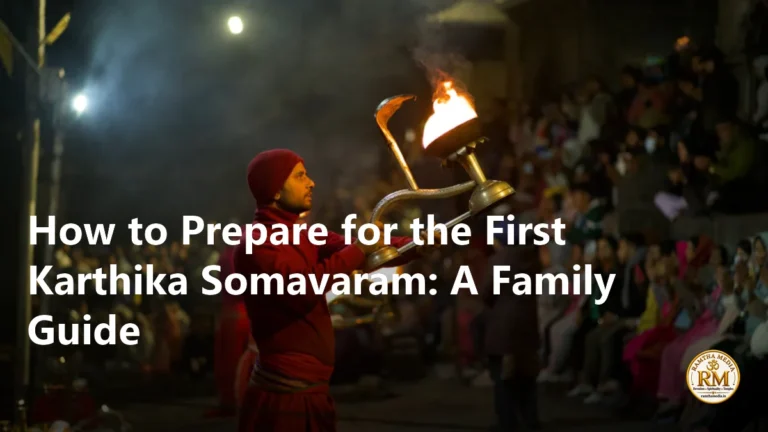


Karthika Somavaram begins on November 16 in many Telugu calendars in 2026. Families may worship Shiva at home or visit a temple according to their custom. Check local dates, consider health needs and supervise lamps while observing the day. Local temple service arrangements and observances may differ.
For the wider background, read the Karthika Masam main guide.
Karthika Mondays bring a distinctive rhythm to many Telugu homes. Some families begin the day with a visit to a Shiva temple; others light a lamp, offer bilva leaves or recite a prayer at home. People who observe a vrata may fast or read a story according to the practice they learned from their elders. The details differ, but each family makes space for devotion in its own way.
In Telugu calendar practice across many regions, the first Karthika Somavaram of 2026 falls on Monday, November 16. This guide offers practical suggestions for a home prayer and a temple visit. If you have undertaken a particular vrata, follow the instructions of your family or the priest guiding it. Readers in other regions or countries should check their local panchangam and temple calendar.
Read the complete Telugu edition of this article.
Why is Karthika Somavaram observed?
Monday is associated with Shiva worship in many Hindu families. During Karthika Masam, lighting lamps, remembering Shiva, reading devotional texts and visiting temples are among the practices seen in Telugu households. The month is also associated with the worship of both Shiva and Vishnu. These traditions are not identical from one region or family to another.
The first Monday can be a useful starting point for the month. Afterward, a family might consider whether the prayer time suited everyone, whether older relatives were comfortable and whether the journey to the temple allowed enough time. Small adjustments can make later Mondays easier without changing the devotional purpose of the day.
The meaning of an observance is often passed on through stories and habits at home. Ask an elder how your family learned its practice and what each part means to them. Listening to their recollections can help younger members understand why a familiar lamp, prayer or visit matters to the household.
When is the first Karthika Monday in 2026?
Many Telugu calendars identify November 16 as the first Karthika Somavaram of 2026. Confirm the date and any service times with a panchangam used in your location and the temple you intend to visit. Some festivals depend on a lunar tithi, while this observance is associated with Monday; the rules used to identify different observances are not necessarily the same.
Families living abroad should consult their local temple calendar. Sunrise, the local civil date and the calendar tradition followed by the temple can affect the information they need. A message forwarded from another city is not a substitute for the local announcement, especially when a service requires advance registration.
If the temple publishes a programme for the whole month, note the date and time of the particular service you plan to attend. Programmes can change, so check again before travelling. A quick call to the information desk may be useful if the announcement does not answer your question.
Related reading Lamp and wick guide in Telugu
Beginning a simple home prayer
Prepare yourself and the prayer space in the way your household normally does. Place the lamp on a stable surface away from curtains and paper. Keep it out of reach of children and pets. Offer a chair or another comfortable seat to anyone who needs one, and arrange the space so that family members can move without stepping over vessels or cords.
Gather the water, flowers and bilva leaves your family customarily uses, if available. Not every household needs an identical set of materials. If an item is unavailable, ask an elder what your family considers an appropriate alternative. A prescribed vrata may have different instructions, so consult the person who taught it to you.
Begin with a prayer or name of Shiva familiar to you. Some families recite a stotra while others sit quietly. If you are new to the practice, ask about the meaning and sequence instead of adding every step encountered online. A shorter, understood prayer can be easier to share with the family than a long sequence that no one has had time to learn.
Keep a cloth nearby for any water or oil spills. When the prayer is over, check the flame and extinguish it safely before leaving it unattended. Allow the lamp holder to cool before moving it. Careful arrangements let everyone concentrate on the prayer without a preventable accident interrupting the day.
Offering bilva leaves
Bilva, known as maredu in Telugu, has a traditional place in Shiva worship. The commonly seen cluster of three leaflets is interpreted in several symbolic ways. Explain the meaning you learned in your family while acknowledging that other households may describe it differently.
Collect only as much as you need and avoid breaking branches. Ask permission before taking leaves from someone else’s tree. If you plan to bring them to a temple, first check whether outside offerings are accepted. Protecting the tree and respecting the rules of the place are practical parts of preparing the offering.
If you cannot obtain bilva, speak with an elder or priest about what is appropriate for your own observance. Do not assume that a substitute used by one family must be accepted in every formal vrata. Equally, do not damage plants or trespass because a particular material has proved difficult to find.
Related devotional guide Kedara Gowri vrata in Telugu
Abhishekam at home
Where a household has a Shiva lingam suitable for abhishekam, clean water may be offered in accordance with its tradition. Place a vessel beneath it to collect the water. Do not pour water on a framed picture or a decoration that can be damaged by moisture. Ask an experienced family member or priest if you are unsure about the object or the procedure.
Families that use milk or other substances can decide in advance how much is needed and how the materials will be handled afterward. Clean spills promptly so the floor is not slippery. Children should be supervised near vessels and wet surfaces. A temple may have different rules about whether devotees perform an abhishekam themselves, so follow its directions.
There is no need to assume that more ingredients make a prayer better. Follow the practice relevant to your household, use materials thoughtfully and keep the surrounding area clean. If the ritual is part of a specific service, the priest can explain the sequence and the materials accepted there.
Planning a temple visit
Shiva temples may be busy on Karthika Mondays. Check official information for opening hours, service tickets and transport. Allow extra time when travelling with older relatives or children, and keep necessary medicines and drinking water accessible. Find out whether there are arrangements for people with mobility needs.
Temple procedures differ. Some accept flowers and leaves brought by visitors; others provide their own offerings. Follow staff instructions and remain in the queue in an orderly way. Put wrappers in the designated bins so the premises remain comfortable for the next visitors too.
Not everyone can travel because of work, health or family responsibilities. A person who remains at home can take part in a familiar prayer if they wish. Avoid making a relative feel guilty because a journey was not possible. The family can share the day in ways suited to its circumstances.
Choosing a temple service
A temple may offer ordinary darshan as well as archana or abhishekam services. Times, charges and participation rules are set locally. Read the temple’s official announcement and ask staff if the details are unclear. Choose a service that fits your time and circumstances rather than assuming that every visitor must purchase the same one.
If a ticket covers a fixed number of people, confirm that before arrival. Check how early to report and whether photography or bags are restricted near the sanctum. When the queue is crowded, leave room for other devotees and follow the directions of those managing the service.
Before buying flowers outside the temple, ask whether they will be accepted. If the temple supplies the materials, bringing extra items may only create waste. After the visit, take care of prasadam and dispose of its packaging in the place provided.
Fasting and health
Some families observe a fast on Karthika Somavaram, but practices regarding food and timing vary. Learn what your household follows rather than presenting a single method as universal. A person observing a specific vow should ask the person guiding it about the relevant practice.
People with diabetes, other long-term conditions, pregnancy or medication needs may be harmed by restricting food or water. Seek medical advice appropriate to your circumstances. If fasting is unsuitable, discuss a way to participate in prayer that respects both the family tradition and your health. Do not pressure children or older adults to fast.
Plan ordinary meals for family members who need them. People in the same household can have different requirements. Medication schedules should not be changed without medical guidance. A considerate plan prevents one person’s observance from becoming an unexpected burden for someone else.
Keeping the lamp safe
Do not use a cracked lamp or one that leaks oil. Keep books, hanging garlands, hair and loose clothing away from the flame. An adult should remain available to watch it. Before leaving the room or house, extinguish the flame safely and wait for the holder to cool before moving it.
Apartment residents should respect building fire rules. A position exposed to strong wind may be unsuitable. Explain to children that the flame is beautiful to look at but must not be touched, and store matches and oil safely after use. These small precautions help the household observe the day with peace of mind.
Reading and learning together
If your family reads a Karthika story or Shiva stotra, one person can read while the others listen. Explain a story to children in words suited to their age. A child learning a verse can begin with a line or two, rather than being expected to memorise an entire text immediately.
Family elders may remember how the day was observed in a village or an earlier home. Invite them to share those memories, and allow younger relatives to ask questions. Where traditions differ, explain the difference with respect. Writing down the family’s practice can help new members understand which details belong to a specific vrata and which are household habits.
Children can also help arrange flowers or bring a book to the prayer space. Adults should handle the flame and supervise water and oil. If a child becomes tired, let them take a break. Listening briefly, reciting a name or helping tidy afterward are all ways to participate.
If a morning visit is difficult
Work, school and household responsibilities may make a morning temple visit impractical. Check whether the temple is open later and choose a time that suits your family. A particular vrata may specify a time, in which case ask the person guiding the observance. Avoid assuming that a general suggestion replaces those instructions.
Someone who is unwell may prefer to rest at home and join a short prayer if they feel able. Ensure that food, medication and other care remain available at the required times. A family can support that person without making a demanding journey the measure of their participation.
After the first Monday
Talk about what worked. Did the travel take longer than expected? Was there too much material left over? Could everyone sit comfortably? These questions can guide practical changes for the following weeks. Wash and dry reusable vessels, and note anything that needs replacing.
Handle flowers and leaves according to family custom and local waste rules. Do not place them in a river or lake with plastic bags. Clean the prayer area, keep books dry and make sure the lamp is extinguished before leaving. Taking care of the shared space continues the attention shown during worship.
| Part of the day | Practical check |
|---|---|
| Before prayer | Family custom, materials and lamp safety |
| Temple visit | Hours, queues, transport and service rules |
| Fasting | Health needs and medical advice |
| After prayer | Extinguish the lamp and clean the area |
The first Karthika Monday need not look the same in every home. Plan around your family’s tradition, health and available time. A thoughtful prayer, consideration for relatives and care for the surroundings can all be part of the day.
Frequently asked questions
When is the first Karthika Somavaram in 2026?
Many Telugu calendars observe it on November 16. Check the panchangam and temple information relevant to your location.
Can I do a short prayer at home?
Yes. Follow the familiar practice of your family. A specific vrata may have additional instructions, which you should check with its guide.
Are bilva leaves compulsory?
Family practices differ. If they are unavailable, ask an elder or priest what is suitable for your observance.
Must everyone fast?
No single fasting practice applies to all families. People with health concerns or medication needs should seek medical advice.
May devotees perform abhishekam themselves at a temple?
That depends on the temple’s rules and service arrangements. Check the official information or ask the staff before visiting.
Sources
This article consulted Telugu calendar information and the Kanchi Kamakoti Peetham’s published Skanda Purana summary on Shiva worship. Local calendar conventions and customs vary.