
Yoga Vasistha explains that the Jiva manifests into fourteen distinct categories based on its latent tendencies and inner qualities. Arising from variations of Sattva, Rajas, and Tamas, these states exist merely in ignorance; in absolute truth, all living beings are non-different from the supreme Brahman, like waves arising upon a boundless ocean.
Why does one person born into a family naturally turn toward dispassion and deep devotion from childhood, while another sinks deeply into worldly attachments and sensory pleasures? Why do sacred teachings bring profound peace to some seekers, yet provoke sheer indifference or resistance in others? What causes these profound inner differences among human beings?
In the royal assembly of King Dasharatha, sage Vasistha addressed these inner doubts of Sri Rama, revealing the root of all human diversity. Though supreme Brahman remains eternally undivided and changeless, the interplay of the three Gunas causes the Jiva to manifest across fourteen distinct states—and Vasistha directly showed how one can transcend these bindings to attain Self-knowledge.
📚 Yoga Vasistha — full guide & all episodes
Read the complete Telugu edition of this article.
The Division of Gunas and the Emergence of Jivas
Scholars and sages in the royal court sat in rapt silence. Observing the quiet inquiry blossoming on Sri Rama’s countenance, sage Vasistha directed his gracious gaze toward the young prince.
Vasistha: O Ramachandra! Supreme Brahman remains forever undivided, changeless, and whole across all time and states. Yet, within that pure Consciousness, the division of Jivas arises in this world through the varying interplay of Sattva, Rajas, and Tamas. Just as countless waves surge from the ocean, scriptures categorize these beings based on their distinct qualities. Listen attentively, Rama, as I unfold these divisions for your spiritual growth and maturity.
The Primordial Seekers and the Foremost Sattvic Souls
The sage’s words resonated through the grand assembly hall. As Sri Rama listened with deep humility, the royal court remained still.
Vasistha: Rama, the first category of beings is known as ‘Idam Prathamata’—the pristine first-born souls. In the final birth of the previous cosmic cycle, they practiced intense spiritual discipline, cultivating control of the mind and senses. Yet, because they could not fully hear the discernment of knowledge or encountered a sudden obstacle, they did not attain Self-realization then. When born into the present Kalpa, they radiate natural peace, sensory restraint, and pure Sattva from childhood itself. Some among them become world teachers who guide humanity out of darkness. They attain liberation either in this very lifetime or in the immediate next birth.
Vasistha: The second category comprises the ‘Guna Pravaras’—those born endowed with superior virtues. Their dispassion has not yet matured to the intensity of the first group. They perform dedicated worship and rituals seeking higher realms. Over the course of ten to fifteen future births, they gradually attain the supreme abode.
👉 Previous Episode: What Is Samyagdarshanam? Was the Universe Ever Created? | Yoga Vasistha S3 EP-51
The Path of Developing Sattva and Lesser Sattvic Souls
Every seeker present in the assembly turned inward, quietly reflecting upon their own mental inclinations.
RECOMMENDED PRODUCT
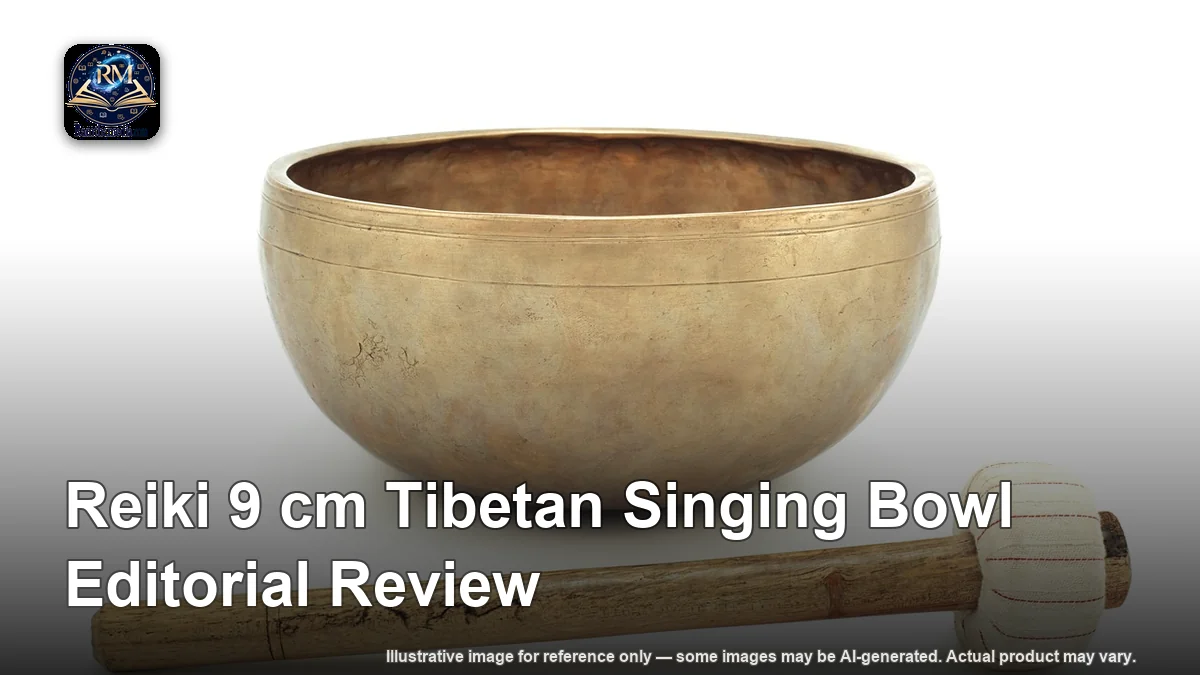
Reiki 9 cm Tibetan Singing Bowl Editorial Review : How can this product help you?
This review examines the Reiki using verified buyer feedback and the manufacturer’s listed specifications. Establishing a calm morning meditation ritual or dedicated prayer… The Reiki 9 cm Tibetan Singing Bowl meets this exact requirement by offering a dense 300 g cast metal alloy structure paired with a purpose-built wooden striker stick. Its… The Reiki 9 cm Tibetan Singing Bowl is a compact metal alloy meditation instrument engineered for personal sound therapy, mindfulness, and quiet prayer spaces. It produces a…
Read more about this productBuy on Amazon
As an Amazon Associate, RamthaMedia earns from qualifying purchases.
Vasistha: My child, Rama! The third category is known as ‘Sa-Sattvas’. They perform mixed actions of virtue and vice, experiencing both joy and sorrow. However, they hold a firm resolve: ‘We must steadily cultivate Sattva within ourselves.’ Deepening their devotion to noble actions, they establish themselves firmly in Sattva through roughly a hundred births and draw near to liberation.
Vasistha: The fourth category consists of ‘Adhama Sattvas’—the lesser Sattvic souls. Tangled in diverse worldly tendencies, they take repeated births through an impure inner intellect, seeking the fruits of pleasure and pain. They wander across thousands of lives until genuine Self-inquiry awakens within them. Though careless in discipline, they hold no aversion toward Self-inquiry. Through association with noble sages or fortunate circumstances, they always carry the possibility of turning toward truth.
The Deeply Tamasic and the Chains of Doubt
Sri Rama followed every subtle nuance of the teaching. The atmosphere in the court grew still as the sage touched upon the denser realms of ignorance.
Vasistha: Rama! The fifth category is known as ‘Atyanta Tamasis’—the deeply Tamasic souls. They harbor intense aversion toward spiritual wisdom and sacred texts. Constantly tormented by chronic doubt, they reject the presence of enlightened masters and scriptural authority. Even after countless Kalpas and thousands of births, their ingrained skepticism and lack of discipline remain towering obstacles on the path to the Self.
Vasistha: The sixth category consists of ‘Rajasas’. Driven by intense impressions carried over from previous cosmic cycles, they remain engrossed in restless actions. Having initially endured intermediate births as beasts and birds, they eventually earn a human birth through inner remorse. They swing between heavenly and lower realms according to their merits and demerits, lacking a firm resolve for immediate liberation.
📖 Read More: Crystal, Dream, Gold — If This World Is False, Why Does It Feel So Real? | Yoga Vasistha S3 EP-23
Diverse Expressions Within the Rajasic Nature
Sunlight slanted across the ornate pillars of the court, casting quiet shadows upon the stone floor.
Vasistha: Raghava! The seventh group is the ‘Rajasa-Sattvikas’. Dispassion is just beginning to dawn within them. In the near future, they attain noble births conducive to Self-realization. Their steady endeavor toward liberation acts as their protective shield.
Vasistha: The eighth group is the ‘Rajasa-Rajasas’. They are frequently born among Yakshas and Gandharvas. Living in the present moment purely for physical and mental pleasures, they spend their days as if drifting through a dream, unaware of true liberation. After several births, they elevate to the Rajasa-Sattvic state.
📖 Who is the Jiva? The Secret of Consciousness Trapped in Illusion | Yoga Vasistha S3 EP-49
Vasistha: The ninth group consists of ‘Rajasa-Tamasis’. Their spiritual progress moves exceedingly slow; only after experiencing hundreds of births do they transform into Rajasa-Sattvikas. Finally, the tenth group is the ‘Rajasa-Atyanta Tamasis’. Dense darkness envelops them to such an extent that across countless lifetimes, the inquiry ‘Who am I? What is my true nature?’ never enters their awareness.
Elevation of Tamasic Beings and Awakening from Inertia
Ministers and hermits listened with unswerving focus as the hall fell into absolute silence.
Vasistha: Rama! The eleventh category is the ‘Tamasas’. They have remained trapped in a deep slumber of delusion across multiple cosmic ages, unable to assimilate spiritual counsel. Even among them, however, unexpected association with the wise can suddenly sanctify their present birth.
Vasistha: The twelfth category belongs to ‘Tamasa-Sattvas’. Though born in Tamasic bodies, they initiate spiritual practice and attain the supreme state. The demoness Karkati and the great devotee Prahlada stand as living testimonies to this truth. The thirteenth group is the ‘Tamo-Rajasas’, who glimpse a faint light in the distance and tentatively step toward it. The fourteenth group is the ‘Tamasa-Tamasas’, locked in utter delusion across thousands of immobile and base forms such as trees, rocks, and insects.
Vasistha: Yet, Rama, even if millions of lifetimes slip away, the moment inner awareness awakens, the innate capacity for Self-knowledge remains safely preserved within every living being.
RECOMMENDED FOR YOU
An invaluable guide for exploring the fourteen states of the Jiva and the profound non-dual secrets of Yoga Vasistha.
Enhance your spiritual practice with this comprehensive edition of the profound dialogue between Sage Vasistha and Sri Rama.
Vasishtha Rama Samvadam (Set of 4 Volumes in Telugu) →
As an Amazon Associate, Ramthamedia.in earns from qualifying purchases.
All Is Brahman – Analogies of Non-Duality
Sage Vasistha looked upon Sri Rama with serene eyes as the court sat spellbound.
Vasistha: O Ramachandra! All these diverse living species dwelling in various physical bodies emerge solely from supreme Brahman. They are not separate from Brahman. Are towering ocean waves different from ocean water? Are thousands of radiant beams emerging from a lamp distinct from the lamp itself? Likewise, all living beings possessing physical and mental sheaths are nothing other than Brahman.
Vasistha: Just as sparks leap from a blazing fire, branches sprout from a tree, ornaments are fashioned from gold, water forms droplets, whirlpools, and bubbles, rays pour forth from the moon, and space within a pot seems divided from infinite space—all these Jivas manifest solely from Brahman. The water seen in a mirage is nothing other than sunlight. It is the Seer alone who appears as the seen. Therefore, my child, do not be deluded by these apparent differences in the objective world. Abide in the truth: ‘All this is myself; I am the all-pervading Supreme Self.’
RECOMMENDED BOOK

The Maya Simulation: Quantum Physics and the Science of Consciousness by A. Ravinder
Is the world around us real? Or is it just a Maya Simulation?
A guide that bridges the ancient wisdom of the Yoga Vasistha with quantum physics and modern consciousness science — for readers ready to question the nature of reality and calm the mind with practical tools like the Zero Voice Technique. It explores mind, maya and consciousness in plain language, and offers a practical path for the seeker on the spiritual journey. Available in print and ebook instant-read versions.
Buy on AmazonBuy on Ramthamedia
As an Amazon Associate, RamthaMedia earns from qualifying purchases.
The Doer, the Action, and the Illusion of the Blue Sky
Sri Rama folded his palms in reverence, seeking deeper clarity.
Sri Rama: O Holy Master! If all these Jivas originate from Brahman, who is the dispenser of their actions and the fruits of those deeds?
Vasistha: Rama! Just as a flower and its fragrance are not separate from the tree, both the doer and the action emerge solely from Brahman, the supreme state. In the spotless supreme Brahman, this sense of Jiva arises merely due to ignorance. Just as blueness appears in a sky that has no color, the notion of an individual Jiva within Brahman is purely an imagined construct.
Vasistha: In truth, the concept that ‘Jivas are born from Brahman’ is only a teaching method spoken to guide those still dwelling in ignorance. In the presence of fully realized sages, there is no place for such dualistic descriptions. The Seer alone imagines and perceives the seen; there is no objective world separate from the Seer.
The Origin of Bodies and the Forgetting of the Self
The assembly leaned forward as Sri Rama asked about the manifest physical forms across creation.
Sri Rama: O Noble Sage! How do these physical bodies composed of the five elements—manifesting as gods, demons, serpents, humans, and animals—come into existence in the first place?
Vasistha: Ramachandra! The latent tendencies (vasanas) dwelling within the Jiva construct external physical bodies marked by likes and dislikes. Forgetting its true nature as the Self and falling into the delusion: ‘There is an external world out there, and I must enjoy it’ is the primary root cause.
Vasistha: Understand that the desire of the Seer and the forgetting of the Self—these two alone are the root cause of all bondage and bodily forms. In reality, the Self has no births and no karmas.
Analysis of the 14 States of the Jiva Categorized by the Three Gunas
| Jiva Category | Primary Characteristics | Timeframe for Liberation |
|---|---|---|
| Idam Prathamata | Endowed with past mental restraint and virtues; natural devotion; world teachers | In the present lifetime or the immediate next |
| Guna Pravaras (Superior Virtues) | Seek higher realms through worship; moderate dispassion | Within 10 to 15 births |
| Sa-Sattvas | Perform mixed actions while holding a resolve to cultivate Sattva | Approximately 100 births |
| Adhama Sattvas | Carrying worldly vasanas but harboring no aversion to Self-inquiry | Gradually, upon attaining noble association |
| Atyanta Tamasis | Deep aversion to scriptures and masters; endless doubts | Countless Kalpas and thousands of births |
| Rajasas | Wander between heavens and hells driven by strong karma-vasanas | After spiritual discipline across many births |
| Rajasa-Sattvikas | Sprouts of dispassion emerging; steady spiritual seekers | In near future births |
| Rajasa-Rajasas | Indulge in sensory pleasures as Yakshas and Gandharvas; dreamlike existence | After ascending to the Rajasa-Sattvic state |
| Rajasa-Tamasis | Minimal spiritual effort; exceedingly slow evolution | After hundreds of births |
| Rajasa-Atyanta Tamasis | Enveloped in dense inertia; no inquiry into the Self | After innumerable births |
| Tamasas | Submerged in the sleep of delusion | Upon spontaneous inner awakening |
| Tamasa-Sattvas | Ascend through spiritual effort despite Tamasic bodies (e.g., Karkati, Prahlada) | Attain liberation in that very lifetime |
| Tamo-Rajasas | Glimpse a distant light and begin tentative practice | After crossing the Tamasa-Sattvic threshold |
| Tamasa-Tamasas | Trapped in the inertia of immobile and base forms (trees, stones) | Through infinite evolutionary cycles |
📖 Who Is the Jiva? Born from the Supreme Self? | Yoga Vasistha S3 EP-38
Spiritual Significance – The Jiva Discovering Its True Origin
The Jiva experiences bondage and the cycle of rebirth primarily because it forgets its true identity as pure Consciousness. Desiring external objects and relationships under the false belief that they are real creates new physical embodiments and karmic ties. Just as ocean water appears as transient waves, the one unconditioned Brahman appears as diverse beings solely due to limiting adjuncts.
A spiritual seeker must discern their current state of Gunas, consciously rising from Tamas to Rajas, and from Rajas to pure Sattva. Ultimately, transcending even Sattva to rest firmly in the attributeless Supreme Brahman is the supreme goal of human birth.
In your daily activities, take a quiet moment to reflect: ‘For whom am I performing this action, and which Guna dominates my mind?’ Reduce the intensity of latent desires and abide in the awareness of the Self.
Chapter Summary
Sage Vasistha elucidated the fourteen classifications of the Jiva to Sri Rama, detailing their distinct qualities and spiritual evolution. He affirmed that living beings emerge from supreme Brahman just as sparks fly from fire or waves surge from the sea, emphasizing that individual Jivahood is an illusion akin to blueness in the sky. Latent tendencies and forgetting the Self remain the twin roots of all embodiment.
Scripture Notes
- Main Message: The Jiva is in truth supreme Brahman; internal latent tendencies (vasanas) and the forgetting of the Self alone create the illusion of physical embodiment.
- Philosophical Teaching: Dualistic concepts and theories of creation are merely pedagogical devices to guide seekers. In absolute reality, no seen world exists independent of the Seer.
- Connection to the Next Chapter: The subsequent chapter explores how the Jiva interacts in the objective realm while assuming the physical sheaths of the five elements.
Like waves in the ocean and sparks from a fire, all beings emerge solely from supreme Brahman.
Just as an unreal blue hue appears in the sky, Jivahood appears in the spotless Brahman.
Worldly desire and forgetting the Self are the two root causes of all bondage.
Frequently Asked Questions
How many types of Jivas are categorized in Yoga Vasistha?
The Jiva is categorized into fourteen distinct classes based on the varying proportions of Sattva, Rajas, and Tamas. These range from the pristine Idam Prathamata down to the dense Tamasa-Tamasas.
Who is an Idam Prathamata Jiva?
An Idam Prathamata Jiva is an advanced soul who cultivated virtues and mental restraint in the previous cosmic cycle, took birth in this Kalpa due to a minor past obstacle, and lives with innate devotion to guide humanity as a world teacher.
Can beings born in Tamasic bodies attain liberation?
Yes, beings belonging to the Tamasa-Sattva category can attain liberation through intense spiritual practice despite occupying Tamasic forms, as exemplified by the demoness Karkati and the devotee Prahlada.
Did Jivas truly originate from Brahman?
In absolute truth, the emergence of Jivas is unreal and exists only in ignorance, like the blue color of the sky. Scriptures describe their creation solely as a practical teaching method for seekers.
What is the primary cause for the creation of physical bodies?
Inner latent tendencies (vasanas), an intense desire for external sensory pleasures, and the forgetting of one’s true nature as the Self are the primary causes for the formation of physical bodies.
Conclusion
With the nectarine wisdom of Vasistha, profound stillness enveloped the royal assembly. Reflecting upon the vast diversity of creation and his own true nature, Sri Rama found non-dual awareness settling deeply within his heart. Eager to understand how a soul breaks karmic bonds while acting in the physical world, the court waited in silent anticipation for the sage’s next illumination.


