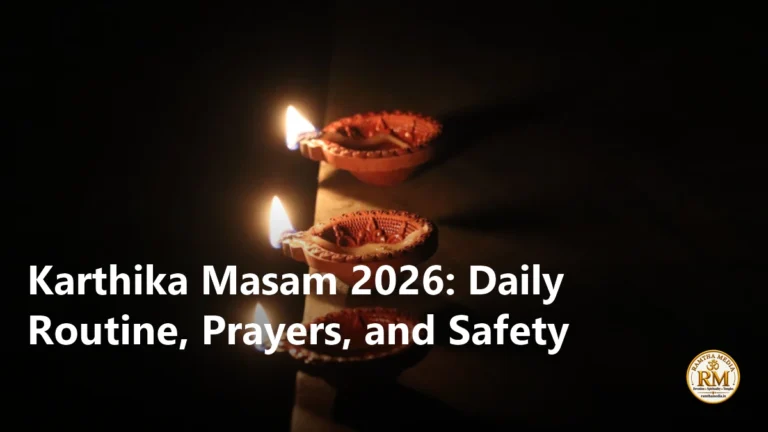

Karthika Masam First Day worship at home can begin with a clean prayer space and a familiar prayer to Shiva or Vishnu. Families may bathe and light a lamp according to their customs, while taking health, building rules and fire safety into account. Traditions vary.
For the wider background, read the Karthika Masam main guide.
The first day of Karthika has arrived, and you are preparing to perform the puja at home. Perhaps this is the first time the responsibility is yours. Where should you begin, and what if you do not have every item used by the elders in your family?
According to the Telugu amanta calendar, Karthika begins on November 10, 2026. You can start with a clean place and a familiar prayer, following your household custom. The beginning of the month can differ in other calendar systems, so consult a local panchangam if you live elsewhere.
The first day need not become a race to collect unfamiliar materials. A little preparation, a few quiet minutes and attention to safety can help you observe the day in a way that suits your household. If your family follows a particular vrata, ask an elder or priest about its specific procedure.
Read the complete Telugu edition of this article.
What can you do on the first morning?
Many Telugu families begin with a morning bath and prayer. If visiting a river is not practical, you can bathe at home using clean water. Choose a temperature comfortable for your age, health and the weather. There is no need to put your body through discomfort in order to begin a devotional practice.
Prepare clean clothes and a safe place for your bath. Make sure the bathroom floor is not slippery, especially if an older relative or a child will use it. Someone who needs assistance should have a family member nearby. If you have questions about a health condition, take the advice of your clinician.
After bathing, you may remember Shiva, Vishnu or the deity worshipped in your home. Some people recite a familiar hymn; others offer a short prayer in their own words. The practice need not take the same amount of time in every family. You can begin with a few minutes and continue according to your circumstances.
How should you prepare the prayer space?
Choose a clean, stable place away from the household walkway. You may put the image or idol normally worshipped by your family there. If you do not have an image, sit quietly and offer a personal prayer. A special purchase is not required simply because a new month has begun.
If flowers are available, arrange them according to your custom. Keep any books, fabrics, paper decorations and flowers away from a lamp flame. A small plate can hold your offerings without crowding the space. Before lighting a lamp, check that the surface does not wobble and that people can move around it safely.
Some households give particular importance to Shiva worship; others centre their prayer on Vishnu. There are also families who honour both. Shaiva and Vaishnava traditions have different philosophical explanations of these deities. Follow your family's practice and respect the way others worship.
How can you light a lamp safely?
If open flames are permitted where you live, place a clay or metal diya on a stable, heat-resistant plate. Arrange a wick and add suitable lamp oil or ghee according to your household tradition. Do not fill the vessel so full that oil can spill when it is moved. Inspect an earthen lamp for cracks before use.
Keep curtains, clothing, books, paper and plastic decorations away from the flame. Place the lamp where children and pets cannot reach or knock it over. Wind can make a flame lean toward nearby objects, so choose a sheltered place that you can watch. The flame should have an adult supervising it throughout.
Do not leave a burning diya unattended when you leave the room or go to sleep. Extinguish it safely before going out, then wait for the vessel to cool before moving or cleaning it. If your apartment, hostel or accommodation prohibits open flames, follow those rules and offer a prayer without lighting one.
Related reading Lamp and wick guide in Telugu
What if you have a Tulsi plant?
Some families offer prayers near a Tulsi plant during Karthika. If your household follows this custom, keep the lamp at a safe distance from leaves, dry branches, plastic pots and other combustible materials. Place it separately on a stable, heat-resistant plate; do not put it where a breeze could push the flame toward the plant.
Tulsi worship is associated with Vishnu devotion. Customs concerning offerings and the handling of leaves differ among families. Ask an elder if you are uncertain about your household's practice. Water and care for the plant according to its needs, the weather and the drainage of the pot rather than following a fixed quantity for every home.
You can still pray if you do not have a Tulsi plant. Remember your chosen deity in the prayer space you have. If an open flame is not allowed or you cannot supervise one, a quiet prayer is a practical way to participate. There is no need to worry about obtaining every item before beginning.
Related devotional guide Kedara Gowri vrata in Telugu
Is a temple visit necessary on the first day?
If a visit is convenient, you may go to a Shiva or Vishnu temple and follow its worship arrangements. Check the temple's current opening times and instructions locally before travelling. Older relatives and young children may need extra time to walk, rest or stand in a queue, so plan around their comfort.
A temple visit may not be possible because of work, travel, illness or distance. In that case, you can remember the Divine at home. A visit can be made on another day when circumstances permit. Your family may have a particular custom for the first day; ask someone familiar with it if you wish to follow it.
Can you read or listen to a Purana?
Many Telugu families read or listen to Karthika Purana stories during the month. On the first day, select a short passage from an edition that is understandable to you. Look at its introduction for information about the translator and sources. Chapter divisions and story order can differ between published editions.
If reading is difficult, listen while a family member reads or choose an audio presentation that identifies its source. After a story, consider what it says about devotion, kindness or giving. You might discuss the passage with your family rather than rushing simply to complete a number of pages.
Scriptural accounts and the fruits they describe belong to religious belief. They should not be presented as guarantees of a particular health or financial outcome. If a story or practice is familiar in your family but its textual source is uncertain, it is reasonable to describe it as a family tradition.
How can the family participate together?
Choose a time when those who wish to join can do so comfortably. Children can arrange flowers away from a flame or listen to a short prayer. Adults should handle matches, fuel and burning lamps. A child can also help put a book back in a safe place after the family has finished reading.
An older person who finds sitting on the floor difficult can use a chair. Keep daily meals and necessary medication in mind when planning the gathering. Fasting customs vary, and people with health conditions or medication needs should take medical advice about food. No family member needs to be pressured to follow a practice that causes physical difficulty.
If you work a shift or leave early for work, a brief prayer at a suitable time may fit better than a long ceremony. Another member of the family may read in the evening, or you may listen when you return. The way a household participates can change from one day to another.
What about offerings and charity?
Food offerings differ between homes. Some families offer fruit, milk or food prepared at home according to their custom. Use what is available and appropriate for your household. If a particular vrata has a prescribed offering and you are unsure about it, ask an elder or priest familiar with that tradition.
Giving is another practice valued during Karthika. If you are able, offer food or useful items to someone who needs them. A small act of help, offered respectfully, can fit within a household's means. There is no reason to take on debt to make a large gift.
Keep the prayer area clean after the observance. Do not leave oil, wicks, plastic or other worship materials in rivers or public places. Follow local disposal practices. These simple actions let your family observe the day while caring for the space shared by others.
A simple first-day sequence
The following is one possible home routine. It is a starting point, and it can be adjusted to family custom and personal needs.
| Step | Simple option |
|---|---|
| Bath | Use clean water at a comfortable temperature. |
| Prayer space | Choose a clean and stable place; use an image if available. |
| Lamp | Light safely only where permitted and supervise the flame. |
| Worship | Remember Shiva or Vishnu according to family custom. |
| Reading or giving | Read a short passage or help someone within your means. |
Conclusion
The first day of Karthika can begin with a simple prayer in a safe, clean place. Choose the practices your family follows and adapt them to your health, work and living conditions. A lamp, a familiar name of the Divine and a few attentive moments can be a beginning.
Today, make one practical decision: where you will pray, what you need for a safe lamp, or which short passage you would like to read. If you are unable to do everything you planned, continue with the custom when you can. The month gives you time to return to the practice.
Frequently Asked Questions
Must I bathe in cold water on the first day?
No single water temperature suits everyone. Choose water comfortable for your health and circumstances, and seek medical advice if you have concerns.
Should I worship Shiva or Vishnu?
You may worship Shiva, Vishnu or both according to your family tradition. Philosophical views vary across traditions, and each deserves respect.
How can someone with a job observe the first day?
Choose a time that fits your schedule. A short prayer or reading is possible at home; light a lamp only if it is permitted and can be supervised.
What precautions should apartment residents take with lamps?
Follow building rules on open flames. If lighting is allowed, keep the diya stable, away from combustible objects, children and pets, and never leave it unattended.
Can I pray without a Tulsi plant?
Yes. You can remember your chosen deity in your prayer space. Follow your family custom and avoid worrying about an item that is unavailable.
Sources
The Telangana Telugu calendar for November 2026 was consulted for the month's start date. Practices differ by family and region.