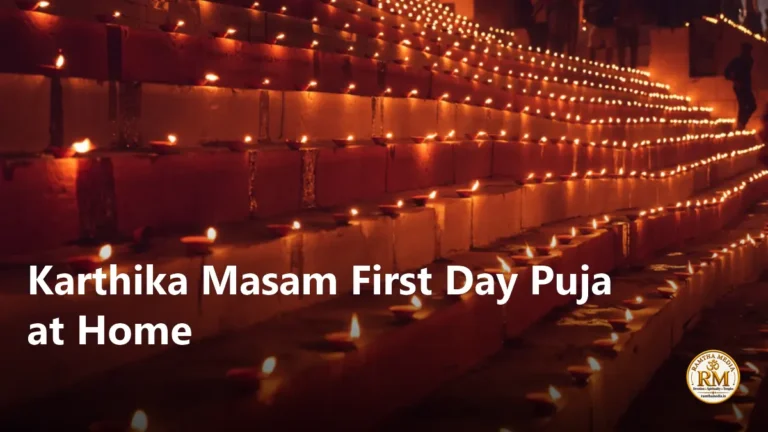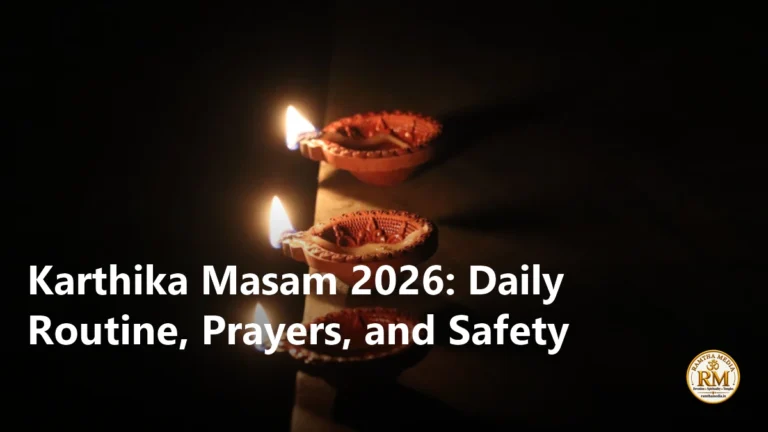


Karthika Deepam may be lit in the morning or evening according to family custom. Evening worship is common in Telugu households. Choose a safe place and a time when the flame can be supervised, and follow building rules and the instructions of your particular vow.
For the wider background, read the Karthika Masam main guide.
Karthika has begun, and you are preparing to light a lamp near the Tulsi plant. Your mother used to light one in the morning, while your partner's family lights it in the evening. Which practice should you follow? What if you return from work after sunset?
Families observe Karthika Deepam at different times. Evening lamp worship is common in Telugu households, while some also light a lamp after their morning bath and prayer. There is no single household schedule to impose on everyone. Follow your family custom and choose a safe time when someone can watch the flame.
Read the complete Telugu edition of this article.
What is the morning lamp custom?
Some families light a diya before an image of their chosen deity after bathing in the morning. The practice creates a few moments for prayer before the day's responsibilities begin. You may recite a familiar hymn, remember Shiva or Vishnu, or offer a simple prayer in your own words, according to your household tradition.
If you leave early for work, consider how long you can supervise the lamp. Do not leave it burning when you go out. Extinguish it safely after prayer and wait for the vessel to cool before moving it. If another family member will watch the lamp, speak with them rather than assuming they are available.
Keep matches and fuel where children cannot reach them. Children can participate by arranging flowers away from the flame or listening to a prayer. Adults should handle the burning lamp and hot oil. Planning who will supervise the flame is as important as choosing when to light it.
Why do families light lamps in the evening?
Many Telugu households light lamps at the entrance, in the prayer space or near Tulsi after sunset during Karthika. Evening may be a convenient time for relatives to pray together after work and household duties. Devotees often regard the light as a symbol of knowledge dispelling ignorance.
The Karthika Mahatmya of the Skanda Purana describes offerings of lamps in temples, near rivers and in other places. It also mentions protecting a lamp offered by another person. This gives a scriptural context for the custom; it does not establish one clock time for every modern household.
After prayer, family members may read or listen to a short passage from a Purana. On a busy day, a few moments of remembrance may be more practical. Ask an elder about your family's custom if you are beginning the practice for the first time.
Related reading Lamp and wick guide in Telugu
Must the lamp be lit exactly at sunset?
Some households observe a twilight routine; others light the lamp later because of work or travel. If your family follows a particular timing, ask what the practice means and how it is observed. Regional and household traditions vary. A special vrata may also have its own instructions.
If you arrive home after sunset, do not assume that being late has made prayer impossible. You can follow your family custom at a time when you can safely supervise the lamp. If you are exhausted and must sleep immediately, do not leave an open flame burning; offer a prayer and resume your routine when you can.
When you are observing a specific vow and are unsure about its timing, consult a family elder or temple priest familiar with that practice. A general home guide cannot prescribe the same rule for every vrata or every region.
Where should the lamp be placed?
Choose a stable surface first. Place an intact clay or metal diya on a heat-resistant plate. Arrange a wick and add suitable oil or ghee according to your custom. Avoid filling the vessel to the brim, since oil can spill if the lamp is nudged.
Keep books, paper, curtains, clothes and plastic decorations away from the flame. Do not set the diya on a moving table or in a busy passage where someone could knock it over. Avoid putting newspaper or cardboard under the plate. Check whether a draught could push the flame toward a nearby object.
Keep the burning lamp under supervision. Before leaving home or going to bed, extinguish the flame safely. Do not touch or move a hot vessel immediately; wait until it cools. Clean spilled oil so that another family member does not slip.
Related devotional guide Kedara Gowri vrata in Telugu
What should you check near a Tulsi plant?
Tulsi has a special place in Vishnu worship, and many families light a Karthika lamp near the plant. Keep the flame and heat away from leaves, dry branches and the pot, especially if the pot is made of plastic. Place the lamp separately on a stable, heat-resistant plate and check the direction of the wind.
If you do not have a Tulsi plant, you may pray in your usual prayer space. If there is no safe place near the plant, choose another suitable location. Your family custom can be respected while also protecting the plant and the people at home.
Care for the plant according to its needs, the weather and the drainage of its pot. Do not leave large quantities of worship materials piled around its roots. Dispose of used flowers and other items according to local rules. Caring for the plant can continue beyond a single evening of worship.
Can you light a diya in an apartment?
First check your building or accommodation rules concerning open flames. If they are permitted, use a small lamp in a stable place that you can supervise. A balcony may be too windy; choose another safe spot if the flame could reach a curtain or plant. Make sure it is out before leaving.
If open flames are prohibited, follow the rules and pray without lighting one. You can recite a familiar name of the Divine, read a passage or listen to a story. Some families use a permitted electric light as decoration. Explain your living situation to an elder if you need help adapting your family custom.
Telugu families living abroad may find that temple timings, building rules and local panchangam dates differ from those in India. Consult a local temple or calendar for a particular festival. Do not transfer an exact time from another region without checking how it applies where you live.
What if work or travel changes your routine?
Someone who leaves home early may find evening prayer practical. A night-shift worker may have a quiet period in the morning. There is no need to pretend that every household has the same schedule. Consider your work, rest, family custom and ability to supervise a flame.
Accommodation during travel may not permit oil lamps. In that case, offer a prayer without a flame or listen to a Purana passage. If older relatives or children are at home, arrange the puja around their meals, medication and rest. Consult a clinician if a health condition affects a dietary or fasting practice.
If you cannot light a lamp on one day, continue in a way that is possible the next day. A family member may read a story, or you may take a few moments for remembrance. For the rules of a particular vow, consult someone who knows your family's tradition.
What if the wick goes out?
A draught, a damp wick or insufficient oil can cause a lamp to go out. There is no need to be frightened. First make sure the flame is completely out. If the diya is hot, wait for it to cool before inspecting the wick, oil and the stability of the vessel.
If you choose to relight it, move it to a safe place away from draughts and combustible materials. Do not pour oil into a burning lamp or adjust a hot wick with your fingers. If the lamp cannot be kept steady, extinguish it and ask an experienced family member for help.
How can children and elders take part?
Explain to children that a lamp is not a toy. They may help arrange flowers away from the flame, bring a book or listen to a prayer. Keep matches, oil and a hot lamp under adult control. A simple explanation of the household custom can help them understand why the family gathers.
If an older relative prefers a chair, arrange one at a comfortable distance from the lamp. Check that the diya is on a stable surface and that someone can help if needed. When the whole family has to leave, extinguish the flame before going out.
What about lamps near rivers?
The Skanda Purana mentions lamp offerings at riverbanks as well as temples. If you visit a river, follow local authority and temple instructions. Watch for slippery steps, crowds and the current. Keep children close and do not enter an area that officials have restricted.
Do not leave oil, wicks, plastic or other worship materials in the water. Take waste away and follow local disposal rules. If flames are not allowed at the site, respect that restriction. A prayer in a safe place at home is another way to observe your custom.
A short safety checklist
| Check | Practical step |
|---|---|
| Time | Choose a time when the flame can be supervised. |
| Place | Use a stable, heat-resistant plate. |
| Surroundings | Keep leaves, books and fabrics away from fire. |
| Building rules | Check whether open flames are permitted. |
| After prayer | Extinguish safely and wait for the vessel to cool. |
This is a general checklist. Your family's practices concerning the place, number of wicks or prayers may differ. Ask an elder when you are uncertain, and make the safety arrangements that suit your home.
What should you do after the puja?
Once the flame is out, let the diya and plate cool before cleaning them. Wipe away spilled oil, then store unused wicks and matches where children cannot reach them. Dispose of used flowers and leaves according to local practice rather than leaving them in a water body.
Before using the same diya again, inspect it for cracks or leaks. Keep the oil container closed and away from heat. A small preparation in advance can make the next day's prayer easier without requiring new or elaborate materials.
Conclusion
There is no single morning or evening schedule for every Karthika household. Follow your family tradition, your living situation and the time you can safely supervise a flame. If the usual time is not possible, a short prayer without a lamp may be the practical choice.
Today, look for a safe place in your home before preparing a diya. Then spend a few quiet moments in a prayer you know. The lamp can remind the family of its tradition and of the care that ordinary actions require.
Frequently Asked Questions
Must Karthika Deepam be lit only in the morning?
No. Morning and evening practices both exist. Follow your household tradition and supervise any flame.
What if I cannot light the lamp at sunset?
Ask about your family custom and choose a time when you can safely supervise the lamp. Consult an elder about the timing of a specific vow.
Can I pray without a Tulsi plant?
Yes. You may pray in a safe household prayer space or offer a familiar prayer without a lamp.
How can I observe the practice where flames are prohibited?
Follow building rules and pray, recite a divine name or read a passage without an open flame.
Can a lit diya be left unattended?
No. Supervise it while it burns and extinguish it safely before leaving.
Sources
The Karthika Mahatmya of the Skanda Purana and the summary published by Kanchi Kamakoti Peetham were consulted. Household practices vary by region and family.