

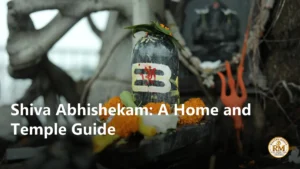
Shiva Abhishekam is an offering of water or other traditional substances to a Shiva lingam during worship. Home customs and temple procedures differ. Use a suitable object, follow your tradition and keep the prayer area clean and safe. Check temple rules before taking offerings.
For the wider background, read the Karthika Masam main guide.
At a Shiva temple, devotees may watch a stream of water being offered over the lingam while prayers are recited. Some families also perform a simple abhishekam at home as part of their regular worship. Interest in the practice is especially visible during Karthika Masam and on Mondays, although the details followed by households and temples can differ.
Abhishekam is an offering of water or other substances to a deity’s image as part of worship. When offered to a Shiva lingam, it is commonly called Shiva Abhishekam. Devotees may experience the act as a moment for remembrance, prayer and attention. The materials, sequence and accompanying recitations depend on the family tradition or the particular temple service.
A general guide cannot settle every question about a prescribed vrata. If you have undertaken a specific observance, ask the elder or priest who guides it. For an ordinary home prayer, begin by understanding your household custom and making sure that the object and space are suitable for the materials you intend to use.
Read the complete Telugu edition of this article.
Shiva Abhishekam during Karthika Masam
Many Telugu households give special attention to Shiva worship during Karthika Masam. Lamp lighting, temple visits, bilva offerings and Shiva nama smarana are among the practices seen on Mondays. Some devotees arrange an abhishekam at a temple, while others offer a small quantity of water at home.
The Kanchi Kamakoti Peetham’s published summary of the Skanda Purana includes descriptions of Shiva worship. A description in a traditional text provides devotional context, but it should not be assumed that every temple follows an identical procedure. Local custom and the rules of a particular service remain relevant.
For many worshippers the offering expresses devotion. Interpretations can differ, and it is better to explain the place of a material in a tradition than to promise a definite result from using it. Prayer can be approached with care and understanding rather than anxiety about collecting a long list of ingredients.
What should be prepared at home?
First check whether the lingam or other object in your home is suitable for abhishekam. Do not pour water on a paper picture, a framed photograph or a painted decoration that may be damaged by moisture. If you are unsure about a material, ask the person who supplied it or a priest familiar with the practice.
Choose a stable, clean surface. Keep a small vessel of clean water and another vessel beneath the lingam to collect the liquid. A cloth nearby makes it easier to wipe spills. Keep books and electrical devices away from water, and place any lamp at a safe distance from curtains, paper and loose decorations.
If your family normally uses flowers, bilva leaves or a prayer book, arrange those in advance. Collect only the leaves you need without damaging the tree, and ask permission before taking them from someone else’s property. When a customary item is unavailable, ask what alternative your household accepts.
Related reading Lamp and wick guide in Telugu
Offering water with care
After beginning the puja in the familiar family manner, a small amount of clean water can be offered over a suitable lingam. Some people recite a name of Shiva or a prayer as they do so. The quantity, mantra and order may differ in a formal service; consult a knowledgeable elder or priest about that particular procedure.
There is no need to assume that a large quantity of water is necessary for a simple home arrangement. Pour slowly so the vessel beneath can collect it. Wipe the floor promptly if water spills, especially where children and older people walk. Keep the water away from electrical fittings and ensure the lamp remains stable.
Afterward, a family may offer flowers or bilva according to its custom and continue its prayer. Care of the object depends on its material. Avoid cleaning agents or substances that can damage stone, metal, paint or other finishes. If you do not know how to care for it, seek instructions before trying something new.
Are milk and panchamrit compulsory?
Some traditions use milk, curd, honey or other ingredients during abhishekam. Panchamrit is a name used for a mixture of several ingredients in certain practices. Its composition, the order of offerings and the quantity can vary between families and temples. Do not assume that every ingredient is compulsory for an ordinary household prayer.
For a particular service or vrata, ask the priest about the prescribed materials. At home, preparing only the amount needed can reduce waste. Check that the substances are suitable for the object, and think beforehand about how the materials will be handled after worship under your family custom and local sanitation rules.
Do not treat unverified claims about abhishekam materials as medical advice. Handle food substances hygienically and do not give anyone a material to consume if its safety is uncertain. Questions about health should be addressed to a qualified professional rather than decided by a ritual description.
Related devotional guide Kedara Gowri vrata in Telugu
If there is no lingam at home
A household need not assume that an object suitable for abhishekam is required for every ordinary prayer. Some families pray before a picture and light a lamp; others attend worship at a temple. Ask an elder what is customary in your home. A picture can be respected as part of worship without pouring water on it.
If you intend to bring a lingam home, find out what it is made from and how it should be maintained. Where the family follows a particular practice, ask a knowledgeable priest about the arrangements. Decorative objects sold in a shop are not automatically suitable for repeated contact with water.
A small home may have limited space for a water vessel and lamp. Select a stable area away from electrical equipment and books. If a safe arrangement is not available, a familiar prayer without pouring water may be more practical, subject to your family tradition.
How to learn the accompanying prayer
Some households recite a specific mantra or stotra during abhishekam. A reliable book, a family elder or a trained priest can help explain pronunciation and meaning. Learning at a comfortable pace can make recitation more meaningful than rushing through words that are unfamiliar.
If you do not know a longer mantra, you may remember Shiva using a familiar name in an ordinary home prayer. A prescribed vrata or temple service may have its own recitation, so ask about that procedure instead of treating general advice as a substitute for it.
Children can learn a short portion at a time. Listening while an elder reads is another way to take part. Encourage questions and explain the meaning in age-appropriate language. People learn at different speeds, and a welcoming atmosphere helps the whole family participate.
Arranging a temple abhishekam
Temple service hours, ticket arrangements and the number of participants vary. Some temples have priests perform the abhishekam; others may allow devotees to participate at specified times. Check an official announcement or contact the information desk before travelling.
Ask whether milk, flowers or leaves may be brought from outside. If the temple supplies the materials, extra purchases may not be necessary. Find out where to register, when to join the queue and how many people can enter with a ticket. These details are particularly useful when travelling with children or older relatives.
Follow staff instructions in the temple and leave room for other devotees. Restrictions on photography, phones or bags near the sanctum should be respected. After receiving prasadam, place wrappers in the designated bin rather than leaving them in the temple grounds.
If work, distance or illness prevents a visit, consider the form of home prayer your family follows. Do not pressure an unwell relative to travel. Ask what would make them comfortable and ensure that food, medicines and other care remain available when needed.
Helping children understand the practice
Explain simply that abhishekam is an offering made during worship and that families or temples may have different procedures. A familiar story about Shiva can provide context, while questions about an unfamiliar detail can be taken to an elder or priest.
Children may arrange flowers on a plate or bring a prayer book. An adult should supervise water, oil and the flame. If a child is learning a verse, encourage the effort rather than scolding a mistake. They can also help tidy a dry, safe area after the puja.
The conversation can include care for plants and shared spaces. If bilva is used, explain why a family takes a small quantity without breaking a branch. At a temple, show children where wrappers belong and why a queue needs to move in an orderly way.
Fasting, health and available time
Some people fast on Karthika Mondays alongside Shiva worship. The food and timing permitted by a family custom may differ from another household’s practice. People with diabetes, pregnancy, chronic illness or medication requirements should seek medical advice before restricting food or water. Children and older adults should not be pressured to fast.
Work and travel may limit the time available in the morning. Plan a manageable prayer according to your household custom. If a specific vow requires a particular time, ask its guide. A family member can prepare a vessel while another arranges the prayer space, so that the work does not fall on one person alone.
Keeping vessels clean
Wash vessels before use and place them on a clean surface. A vessel for pouring and another for collecting water can help keep the area dry. Hold the pouring vessel steadily and ask an adult to manage it when young children are nearby. Afterward, wash and dry reusable vessels before returning them to their places.
Make sure cleaning products have been rinsed away. Discuss how your family handles the collected liquid and follow local sanitation rules. If flowers or other materials are mixed with it, consider in advance how they should be separated. Plastic bags and worship waste should not be placed in rivers or lakes.
Buying materials thoughtfully
Check what is already available before going to a shop. A family does not need to purchase every item another household uses. Ask how much is needed for your practice; perishable food bought in excess may spoil or be wasted.
Keep food ingredients clean and avoid leaving them in heat for a long time. If the household does not have a clear practice for handling the materials afterward, ask a priest in advance. Where health or food safety is in question, seek appropriate professional advice.
Fresh bilva may not be available everywhere. Buy a modest amount when it is available and ask about an alternative when it is not. Never damage a tree or enter another person’s property without permission to collect leaves.
After the worship
Handle water, flowers and other materials according to household custom and local rules. Clean spills, wash vessels and put books away from moisture. If a lamp was lit, extinguish it safely before it is left unattended and allow its holder to cool before moving it.
Share the work of cleaning and arranging the space. A short conversation afterward can help the family remember what materials were actually needed and what might be done differently next time. Questions that remain unanswered can be noted for a priest or knowledgeable elder.
| Question | Practical step |
|---|---|
| Can a picture be used for abhishekam? | Do not pour water on a picture that can be damaged. |
| Which substances are needed? | Check your household custom or the service instructions. |
| Can offerings be taken to a temple? | Ask the temple before travelling. |
| What if water spills? | Wipe it promptly to prevent slipping. |
Understanding the tradition, caring for the object and keeping the space clean all help a home puja proceed smoothly. For a formal observance, the priest’s guidance and the rules of the temple or family tradition provide the relevant details.
Frequently asked questions
What is Shiva Abhishekam?
It is an offering of water or other traditional substances to a Shiva lingam as part of worship. The procedure varies with the observance.
Can I offer water at home?
If you have a lingam suitable for abhishekam, you may follow your household custom. Ask a priest about a prescribed vrata.
Can I pour water on a photograph of Shiva?
Do not pour water on a picture that can be damaged by moisture. Families may pray before a picture according to their custom.
Are milk and panchamrit required?
Practices differ. Ask about your household tradition or the instructions for the specific service you are undertaking.
Can I bring ingredients to a temple?
Rules vary. Contact the temple or check its official announcement before taking offerings from outside.
Sources
This article consulted the Kanchi Kamakoti Peetham’s published Skanda Purana summary on Shiva worship. Household and temple procedures can differ.