
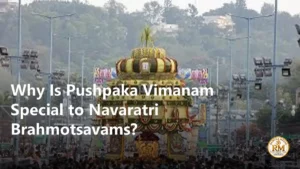
Why is the sacred Pushpaka Vimanam seva conducted on October 17 during Tirumala Navaratri Brahmotsavams? Occurring exclusively during the lunar Adhika Masa celebrations held once every three years, this rare procession features Malayappa Swamy gliding on Hanumantha Vahanam at 8:00 AM, Pushpaka Vimanam at 4:00 PM, and Gaja Vahanam at 7:00 PM.
Standing in the sacred precincts of a temple and beholding the divine, majestic form of the Lord brings profound peace of mind and incomparable spiritual solace to the human heart. Amid the relentless weariness and burdens of mundane everyday existence, witnessing the celestial vahana sevas of Lord Sri Venkateswara at Tirumala offers an uplifting sense of divine reassurance and grace.
On the auspicious sixth day of Sri Vari Navaratri Brahmotsavams, falling on October 17, three extraordinary processions are scheduled to grace the sacred hill shrine. Devotees visiting the sacred sanctum will have the rare privilege of witnessing the morning Hanumantha Vahanam, the resplendent evening Pushpaka Vimanam, and the regal nocturnal Gaja Vahanam on the four Mada streets.
Read the complete Telugu edition of this article.
For the wider festival background, read our Tirumala Salakatla and Navaratri Brahmotsavams main guide.
October 17 Morning, Evening, and Night — Three Sacred Sevas
The date of October 17 stands out as an exceptionally sacred and momentous spiritual milestone in the calendar of the Tirumala Sri Vari Navaratri Brahmotsavams. On this single magnificent day, Lord Sri Malayappa Swamy bestows His darshan upon throngs of visiting pilgrims along the four Mada streets in three distinct divine manifestations spanning the morning, twilight, and night hours. Traditionally, during the annual Brahmotsavam festivities, it is customary to conduct only two vahana sevas each day.
However, to amplify the spiritual enthusiasm and devotional joy of the gathering pilgrims on this landmark sixth day, the temple administration uniquely conducts three grand celestial processions. Beginning in the morning between 8:00 AM and 10:00 AM IST, the magnificent Hanumantha Vahanam, embodying the timeless ideal of selfless servant-devotion (dasya bhakti), proceeds in grand majestic splendor around the sacred shrine. Following this, at 4:00 PM IST in the pleasant afternoon daylight, the splendid Pushpaka Vimanam procession commences, offering an unforgettable visual and spiritual feast for assembled devotees.
As night falls over the holy hills, between 7:00 PM and 9:00 PM IST, the Lord rides majestically upon the grand Gaja Vahanam, representing supreme sovereign authority and imperial grace. According to official release number 334857 issued by the Chief Public Relations Officer of Tirumala Tirupati Devasthanams (TTD), these precise ceremonial timings have been confirmed for the festival schedule. Devotees must carefully observe these established timings to organize their pilgrimage schedule and darshan arrangements effectively.
When planning to watch all three services on 17 October, account for the gaps between them. Pushpaka Vimanam does not begin as soon as the morning service ends; it also has a different start time from the night’s Gaja Vahanam. Allowing for meals and rest during those gaps is a practical planning suggestion for visitors.
An essential distinction that visiting devotees must keep in mind is that the traditional wooden Great Chariot (Pedda Ratham) and the Golden Chariot (Swarna Ratham) are not scheduled for this specific date; the Golden Chariot seva takes place separately on the morning of October 19. Therefore, pilgrims planning to participate in the spiritual proceedings on October 17 should strictly verify and follow the published hours of these three unique sevas based strictly on authenticated official temple announcements.
Hanumantha Vahanam — The Eternal Bond of Devotion and Service
At 8:00 AM IST on the morning of October 17, Lord Sri Malayappa Swamy mounts the revered Hanumantha Vahanam to cast His compassionate gaze upon the assembled devotees. This magnificent vahana procession directly evokes the timeless, selfless service that Lord Hanuman dedicated to Sri Rama throughout the epic Ramayana. The sacred, unblemished bond that exists between the Supreme Lord and His devotee finds its highest, most sublime ideal in the dasya bhakti exemplified by Hanuman.
The breathtaking sight of Hanuman carrying the Lord upon his strong shoulders naturally dissolves personal pride, vanity, and egoism from the hearts of onlookers, replacing them with pure devotional reverence. The deeper esoteric significance of this morning vehicle reveals that absolute spiritual maturity is attained only when one surrenders everything in unconditional service to the Divine. It brings to life the sacred relationship between the enlightened Master and the dedicated disciple, who has fully absorbed the essence of Vedic wisdom and philosophical discernment.
As the Hanumantha Vahanam proceeds along the four Mada streets, diverse cultural and artistic troupes arriving from various Indian states present captivating traditional dance and musical recitals before the deity. Dedicated bhajan mandalis, folk artistes from the Dasa Sahitya Project, and vibrant kolatam performers move forward singing classical devotional compositions and glorifying the divine virtues of the Lord. These ancient devotional expressions unite upon a single vibrant cultural stage, imbuing the hill town with supreme spiritual splendor.
RECOMMENDED PRODUCT
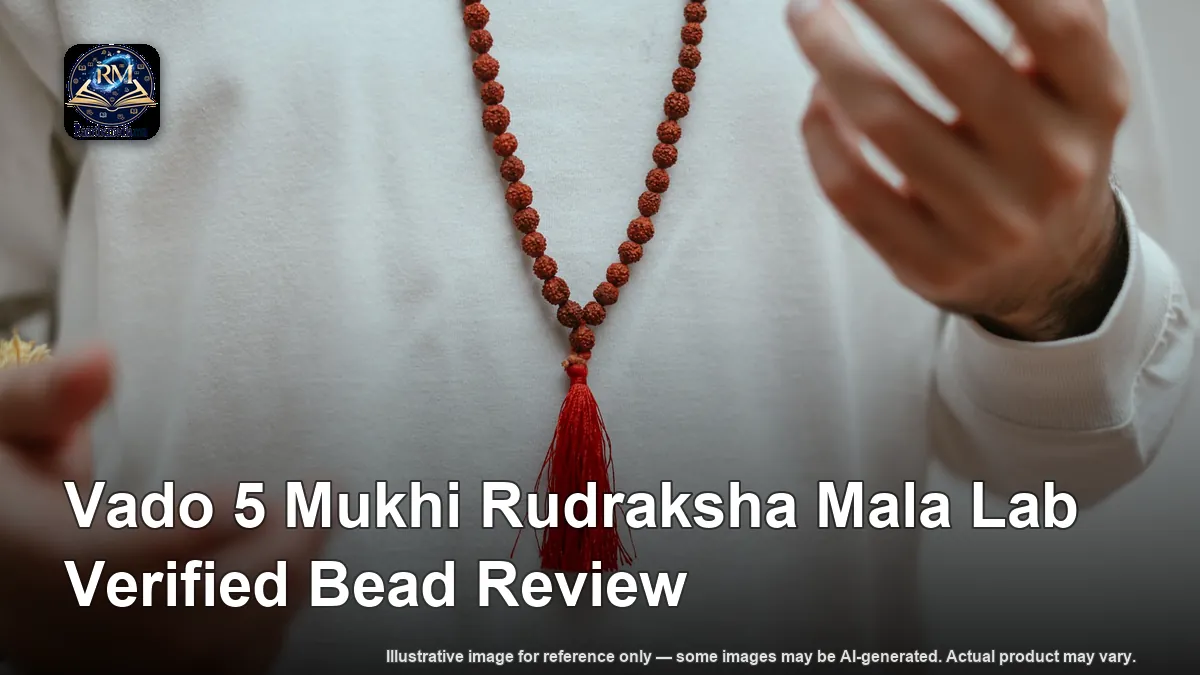
Vado 5 Mukhi Rudraksha Mala Lab Verified Bead Review : How can this product help you?
This review examines the Vado using verified buyer feedback and the manufacturer’s listed specifications. Establishing a dedicated daily mantra japa or meditation routine… The Vado Certified 5 Mukhi Rudraksha Mala directly addresses this practitioner requirement by supplying natural Panchmukhi beads strung with individual stabilising knots and… The Vado Certified 5 Mukhi Rudraksha Mala is an authentic 108-bead spiritual strand crafted from natural 7 mm Panchmukhi seeds with individual stabilising knots for daily…
Read more about this productBuy on Amazon
As an Amazon Associate, RamthaMedia earns from qualifying purchases.
Lord Sri Malayappa Swamy appearing in the majestic form of Sri Rama, gracefully holding the divine bow Kodanda, provides an immensely elevating visual experience for all seekers. Pilgrims firmly maintain the devotional belief that witnessing the Supreme Lord mounted upon Anjaneya—the foremost jewel among all devotees—bestows spiritual wisdom, clarity of intellect, and a profound spirit of selfless service. This sacred morning procession serves as an enduring spiritual inspiration, guiding the human mind away from material distractions onto the path of sincere devotion.
Moving steadily through the circumambulation avenues until 10:00 AM IST, thousands of pilgrims line the pathways to offer sacred camphor aartis and express their deepest adoration. Devotees contemplate how the Nishkama Karma Yoga practiced so flawlessly by Hanuman can be cultivated and applied in their own daily lives. Through this vibrant morning vahana, the eternal truth is conveyed that true and everlasting bliss is discovered only in loving surrender and selfless service to the Divine.
Why Pushpaka Vimanam Holds Special Significance in Navaratri
Scheduled at 4:00 PM IST on the sixth day of the Navaratri Brahmotsavams, the Pushpaka Vimanam seva emerges as one of the most enchanting and visually captivating highlights of the entire festival. By long-standing temple custom, this unique floral aircraft service is conducted exclusively during the lunar Adhika Masa Navaratri Brahmotsavams, an extraordinary festival cycle that occurs only once every three years according to the traditional Hindu lunar calendar. In the standard annual (Salakatla) Brahmotsavams, this particular Pushpaka Vimanam procession is not featured.
Temple tradition explains that Lord Sri Malayappa Swamy, accompanied by His divine consorts Sridevi and Bhudevi, ascends this splendid floral chariot to relax and find pleasant repose after the continuous exertion of daily vahana sevas and elaborate Snapana Tirumanjanam rituals. Through this exquisitely crafted floral service, the temple priests manifest the delicate concepts of divine leisure (upachara) and the enchanting sweetness of the Lord’s celestial pastimes (leela). This rare sight provides the gathered multitude with an unforgettable and deeply moving darshan experience.
TTD’s 2023 report describes a Pushpaka Vimanam made with coconut leaves and six varieties of flowers. That example of Salem artisans working with the Garden Department shows the role of craftsmanship in devotional service. Those particulars belong to that construction; they do not establish the dimensions or flower varieties of the 2026 vimanam.
A previous design can help explain the visual language of the floral vimanam. In 2023, TTD described three tiers with Ashta Lakshmi, Ashta Naga, Garuda and Anjaneya motifs. Keeping each detail attached to its year avoids confusion. The account illustrates how artistry, labour and devotional offering come together in floral service.
Devotees cherish the deep-seated spiritual belief that viewing this rare floral chariot brings fulfillment of righteous aspirations, peace of mind, and harmonious auspiciousness into their worldly lives. The divine, radiant form of the Lord seated amidst the enchanting fragrances of countless vibrant blooms becomes permanently etched in the memory of every beholder. The presence of the Pushpaka Vimanam vastly enhances the unique spiritual glory of the Navaratri festival in a year with Adhika Masa.
Reading the 2023 Govardhanagiridhara Alankaram as an Archival Record
A careful examination of past festival archives reveals that on October 20, 2023, during the sixth day of that year’s Navaratri Brahmotsavams, the Pushpaka Vimanam seva was celebrated with immense grandeur at 4:00 PM. On that specific historical occasion, Lord Sri Malayappa Swamy, flanked by His divine consorts Rukmini and Satyabhama, graced the four Mada streets in the divine decoration of Sri Krishna lifting the Govardhana hill (Govardhanagiridhara), as explicitly documented in official TTD Media Release No. 234938.
📖 How Does Chakrasnanam Conclude Navaratri Brahmotsavams?
According to those authenticated historical records, that floral aircraft was constructed on a grand scale, measuring approximately 27 feet in height, 15 feet in length, and 14 feet in width, with a total weight of nearly one ton. Employing an abundance of six traditional floral varieties, the structure was erected in three distinct, beautifully designed tiers. On either side of the majestic vimanam stood the divine, reverent forms of Sri Anjaneya Swamy and Sri Garutmanta, sculpted with joined palms in humble adoration.
The first tier of the aircraft was adorned with figures of the Ashta Lakshmis, the second level featured the Ashta Nagas encircled by ornate halos (Prabhavali), and the summit was decorated with sacred Tirunamam emblems and a majestic floral temple tower (Gopuram). A dedicated team of 20 expert artisans from Salem, Tamil Nadu, together with the personnel of the TTD Garden Department, spent a full week shaping the magnificent structure, supported generously by prominent Chennai-based donor Ramprasad Bhat, as stated in the official report.
It is crucial that this historical instance be treated strictly as an archival reference document rather than an assumption that the identical Govardhanagiridhara decoration will be replicated during the Pushpaka Vimanam seva on October 17, 2026. In strict accordance with Tirumala temple Agama traditions, the specific divine decorations and embellishments of Lord Sri Malayappa Swamy are creative, ceremonial decisions determined freshly for each occasion by the chief priests and the temple horticultural team.
By studying past archival reports, pilgrims gain a profound appreciation for Tirumala’s living cultural legacy and the breathtaking artistic excellence of its floral kainkaryam (service). During every successive Navaratri Brahmotsavam festival, skilled craftsmen continually manifest fresh, inspired floral wonders through their dedicated talent. Devotees should recognize that past records serve purely as historical testaments to that era’s artistic beauty and devotional expression.
The 2020 Pushpaka Seva — Contextualizing a Distinct Past Instance
Examining another significant historical benchmark, the Pushpaka Vimanam procession was also conducted during the Navaratri Brahmotsavams on October 21, 2020. However, in light of the prevailing global health circumstances and safety regulations of that year, the sacred service was performed in private seclusion (ekantam) inside the Kalyana Mandapam within the inner temple complex rather than on the outdoor public streets, as documented in official TTD Release No. 107640.
The archival records from 2020 indicate that the floral aircraft on that occasion was built with dimensions of 15 feet in height and 14 feet in width, weighing around 750 kilograms. It incorporated nine traditional flower varieties—including jasmine (malle), crossandra (kanakambaram), wild jasmine (mollalu), chrysanthemum (chamanti), lily, and lotus—utilizing approximately 150 kilograms of fresh floral material. The dedicated team of artisans spent ten continuous days assembling this exquisite sacred structure.
Within that 2020 floral design, the primary tier featured depictions of the Ashta Lakshmis, the secondary tier was embellished with sculpted floral elephants and sacred parrots, and the uppermost canopy was crowned with majestic serpent hoods (Naga Padagalu). Historical reports from that celebration confirm that Lord Malayappa was similarly decorated in the form of Govardhana Krishna, illustrating the ceremonial adaptability maintained during that extraordinary period.
When comparing the documented details of these two different years (2020 and 2023), it becomes entirely evident that the physical dimensions, the quantity of flowers utilized, and the specific structural motifs of the Pushpaka Vimanam naturally vary depending on contemporary requirements and artistic themes. Consequently, past dimensions cannot be interpreted as rigid, permanent rules, but rather as factual benchmarks illustrating the bespoke craftsmanship of each festival cycle.
These archival records clearly demonstrate that regardless of external conditions, the sacred lineage and spiritual traditions of Tirumala continue unbroken in complete accordance with scriptural tenets. By systematically understanding these historical precedents, pilgrims can appreciate the multifaceted brilliance of Tirumala’s ceremonial heritage with greater discernment. Past archives stand as valuable mirrors preserving the dynamic, sacred history of temple service.
Gaja Vahanam — Evoking Gajendra’s Absolute Surrender
On the night of October 17, from 7:00 PM to 9:00 PM IST, Lord Sri Malayappa Swamy mounts the majestic Gaja Vahanam in supreme grandeur to grant His celestial darshan to pilgrims lining the four Mada streets. This sacred vahana seva immediately evokes the famous Puranic episode of Gajendra Moksha, recorded in the sacred Bhagavata Purana. It stands as an eternal symbol of the divine salvation and immediate protection granted to a bound soul who takes refuge at the feet of the Supreme Lord when trapped in worldly strife.
RECOMMENDED BOOK

The Maya Simulation: Quantum Physics and the Science of Consciousness by A. Ravinder
Is the world around us real? Or is it just a Maya Simulation?
A guide that bridges the ancient wisdom of the Yoga Vasistha with quantum physics and modern consciousness science — for readers ready to question the nature of reality and calm the mind with practical tools like the Zero Voice Technique. It explores mind, maya and consciousness in plain language, and offers a practical path for the seeker on the spiritual journey. Available in print and ebook instant-read versions.
Buy on AmazonBuy on Ramthamedia
As an Amazon Associate, RamthaMedia earns from qualifying purchases.
When the noble elephant king Gajendra found his physical strength completely depleted in the clutches of the crocodile and realized that no earthly power could rescue him, he surrendered unconditionally, crying out in desperate agony: ‘Srimannarayana!’ Moved by the sincere call of His distressed devotee, Lord Hari instantly rushed upon Garuda to liberate Gajendra and grant him eternal freedom. Scholars and elders explain that this sacred narrative instills profound faith and total surrender (sharanagati) in the hearts of devotees.
From ancient times across Indian cultural history, the elephant (Gaja) has been revered as a supreme symbol of royalty, abundance, majesty, and extraordinary honor. In royal antiquity, kings and emperors honored illustrious dignitaries during coronation ceremonies by leading them in grand elephant processions. When Lord Venkateswara rides upon this mighty elephant mount in His radiant true form, Tirumala scholars proclaim that He openly demonstrates His supreme, unchallenged sovereignty over the entire universe.
Preceded by the majestic temple elephants walking with rhythmic grace, the nocturnal procession moves forward amidst melodious instrumental fanfares, synchronized kolatam dances by bhajan troupes, and the sacred recitation of Divya Prabhandam hymns by respected Jeeyangars. Thousands of pilgrims gathered on all four Mada streets fold their hands in devotional ecstasy and offer camphor lights. Bathed in the brilliant glow of electric illuminations, the Gaja Vahanam radiates extraordinary splendor, creating an unforgettable spectacle.
In accordance with sacred Puranic beliefs, devotees hold the firm conviction that witnessing Lord Sri Malayappa Swamy on the Gaja Vahanam liberates the soul from the accumulated sins and karmic bondages of past lifetimes. This nocturnal procession instills deep peace and unshakeable reassurance in the heart of every seeker, affirming that the Supreme Lord perpetually protects any devotee who, like Gajendra, places their complete trust and total reliance upon Him.
Vahanam, Alankaram, and Puranic Symbolism — Three Distinct Aspects
To develop a mature and profound understanding of the various processions during Tirumala Brahmotsavams, devotees must clearly distinguish between three distinct aspects: the Vahanam (mount), the Alankaram (decoration), and the Puranic Symbolism (spiritual significance). The first aspect, the Vahanam, is a permanent wooden or metallic structure strictly governed and ordained by Agama Shastra regulations. For instance, the Hanumantha Vahanam and Gaja Vahanam represent fixed, standard sacred mounts that remain consistent year after year.
The second aspect, the Alankaram, refers to the bespoke aesthetic form, thematic costume, or temporary floral styling presented to the Lord by the temple priests and horticultural department on special occasions. For example, during previous Navaratri festivals, Lord Malayappa was adorned as Govardhana Krishna upon the Pushpaka Vimanam. There is no rigid scriptural injunction requiring these decorative themes to remain identical during every festival cycle; they evolve through inspired artistic devotion.
The third aspect, the Puranic Symbolism, represents the timeless philosophical and spiritual message embedded within each particular service. The ideal of selfless servant-devotion (dasya bhakti) represented by Hanuman, the concept of divine leisure and serene repose embodied in the Pushpaka Vimanam, and the spirit of total refuge (sharanagati) signified by Gajendra are eternal spiritual teachings. Even when external decorative styles vary, these inner metaphysical truths remain eternally steadfast in the hearts of devotees.
If pilgrims fail to distinguish between these three core dimensions, misunderstandings can easily arise. Details regarding decorative styles featured in past festival years should never be mistaken for unalterable scriptural laws for upcoming celebrations. The correct analytical method is to understand that the Vahanam represents scriptural Agamic governance, the Alankaram expresses human creative devotion, and the Puranic Symbolism imparts deep metaphysical wisdom.
When pilgrims observe the celestial processions with this balanced perspective, they gain both external aesthetic delight and profound spiritual wisdom. The true greatness of Tirumala’s sacred traditions resides in this harmonious synthesis of Agamic discipline, artistic beauty, and spiritual philosophy. When sincere devotion is enlightened by clear understanding, the pilgrimage experience at Tirumala transforms into an enriching, transcendent spiritual journey.
Understanding the Visual Grandeur Through Archival SVBC Video Records
Official SVBC broadcasts are useful for people following the festival from home. The archive link labelled Pushpaka Vimanam on 20 October 2023 refers to an earlier celebration. Check the channel name and video date when opening it. Distinguishing that archive from a 2026 live broadcast prevents old footage from being mistaken for the forthcoming event.
A video’s title and date cannot verify everything said in its commentary. The dimensions and flower details in this article come from written TTD reports. We do not claim to have reviewed the complete video commentary. Readers exploring the archive should distinguish what they can observe in the footage from facts stated in the official written account.
Even while watching SVBC telecasts from the comfort of their homes, devotees can contemplate the holy name of Lord Srinivasa with the same purity of heart and sacred reverence as if they were present at Tirumala. Modern broadcasting technology bridges geographical distances, bringing the spiritual grandeur of Tirumala directly into millions of homes worldwide. Devotees believe that these telecasts play a vital role in nurturing spiritual awareness and sincere devotional values throughout society.
📖 Why Navaratri Brahmotsavams Again? Tirumala October 2026 Dates
When reviewing past video archives or reports, pilgrims must remember that specific calendar dates, procession hours, and decorative details applied exclusively to those respective years. To obtain real-time schedules, procession updates, and darshan arrangements for the 2026 Navaratri Brahmotsavams, devotees are strongly advised to rely solely on the official TTD website and recent authenticated press releases.
Engaging the mind in divine contemplation while appreciating the sacred form of the Lord through historical visual records is considered an uplifting devotional practice. The SVBC video archives stand as sacred repositories preserving the dynamic cultural and spiritual heritage of Tirumala Brahmotsavams. Scholars affirm that by thoughtfully exploring these visual records, devotees can cultivate a comprehensive and deeply inspiring appreciation for Tirumala’s timeless traditions.
Comparative Analysis of the Three Special Sevas on October 17
| Seva / Vahanam | Timings (October 17) | Spiritual Symbolism | Distinguishing Feature |
|---|---|---|---|
| Hanumantha Vahanam | 08:00 AM – 10:00 AM IST | Dasya Bhakti, Selfless Service | Malayappa Swamy appears in the divine form of Sri Rama |
| Pushpaka Vimanam | 04:00 PM IST | Divine Repose, Celestial Leisure | Conducted exclusively during triennial Adhika Masa Navaratri |
| Gaja Vahanam | 07:00 PM – 09:00 PM IST | Gajendra Moksham, Total Surrender | Majestic true-form darshan radiating universal sovereignty |
The Eternal Spiritual Message of the Hill Shrine
The three celestial vahana sevas conducted on October 17 illustrate the progressive spiritual journey of an aspiring soul seeking divine grace. These three stages clearly demonstrate the path: serving with humble servant-devotion like Hanuman in the morning, adoring the exquisite divine beauty and tranquil repose of the Lord upon the Pushpaka Vimanam in the afternoon, and attaining absolute, unreserved surrender like Gajendra at night.
Devotees witnessing the celestial vahana sevas at Tirumala should look beyond external decorations and cultivate in their own hearts the pure virtues of humble service and unconditional surrender.
Chapter Summary
On October 17, as part of the Tirumala Sri Vari Navaratri Brahmotsavams, three grand sevas take place: Hanumantha Vahanam at 8:00 AM, Pushpaka Vimanam at 4:00 PM, and Gaja Vahanam at 7:00 PM IST. The Pushpaka Vimanam, featured exclusively during triennial Adhika Masa Navaratri festivals, stands as a premier spiritual highlight.
Scripture Notes
- Main Message: Selfless servant-devotion and unconditional surrender are the supreme pathways to earning the Lord’s boundless grace.
- Philosophical Teaching: When the soul renounces ego to serve like Hanuman and seeks the Lord’s feet in total surrender like Gajendra, liberation from worldly bondage is attained.
- Connection to the Next Chapter: On the following day, October 18, the morning Surya Prabha Vahanam and the nocturnal Chandra Prabha Vahanam sevas are scheduled to take place.
Selfless service is the foundation of devotion, and absolute surrender is the doorway to spiritual liberation.
Contemplating the divine pastimes of the Supreme Lord calms the restless agitations of the mind and instills supreme inner peace.
Frequently Asked Questions
At what time does the Pushpaka Vimanam procession commence on October 17?
According to the official TTD schedule, the Pushpaka Vimanam seva commences at 4:00 PM IST on October 17, proceeding along the four sacred Mada streets.
What makes the Pushpaka Vimanam unique during Navaratri Brahmotsavams?
TTD’s earlier reports describe Pushpaka Vimanam as a service special to the Navaratri Brahmotsavams held as the second festival in a year with Adhika Masa. In 2026 it is scheduled for 4 PM IST on 17 October.
What is the spiritual significance of the morning Hanumantha Vahanam?
The Hanumantha Vahanam, held between 8:00 AM and 10:00 AM IST, symbolizes pure dasya bhakti (servant-devotion) and the selfless dedication of Sri Hanuman toward the Supreme Lord.
Which Puranic episode is commemorated during the nocturnal Gaja Vahanam?
Commencing at 7:00 PM IST, the Gaja Vahanam commemorates the Bhagavata episode of Gajendra Moksha, symbolizing the Lord’s immediate protection for those who surrender completely.
What decorative themes were featured on the Pushpaka Vimanam in past years?
Archival records from 2020 and 2023 show Lord Malayappa decorated in the form of Govardhana Krishna on the Pushpaka Vimanam, though floral themes and motifs naturally vary across festivals.
Is the Golden Chariot (Swarna Ratham) scheduled for October 17 in Tirumala?
No, the Golden Chariot is not scheduled for October 17; according to the Navaratri Brahmotsavam schedule, the Swarna Ratham procession takes place on the morning of October 19 at 7:00 AM IST.
Conclusion
Meditating upon the selfless service of Hanuman, the celestial beauty of the Pushpaka Vimanam, and the total surrender of Gajendra brings profound spiritual peace and divine contemplation to devotees.
External Source Links
- TTD October Navaratri Brahmotsavams Release
- 2023 Pushpaka Vimanam Seva Record
- 2020 Pushpaka Vimanam Report Details
- Sri Vari Gaja Vahanam Seva Details
Information checked: 28 September 2026. Cover background: TTD archive dated 2023-10-20; not a photograph of the forthcoming October 2026 festival. TTD News


